
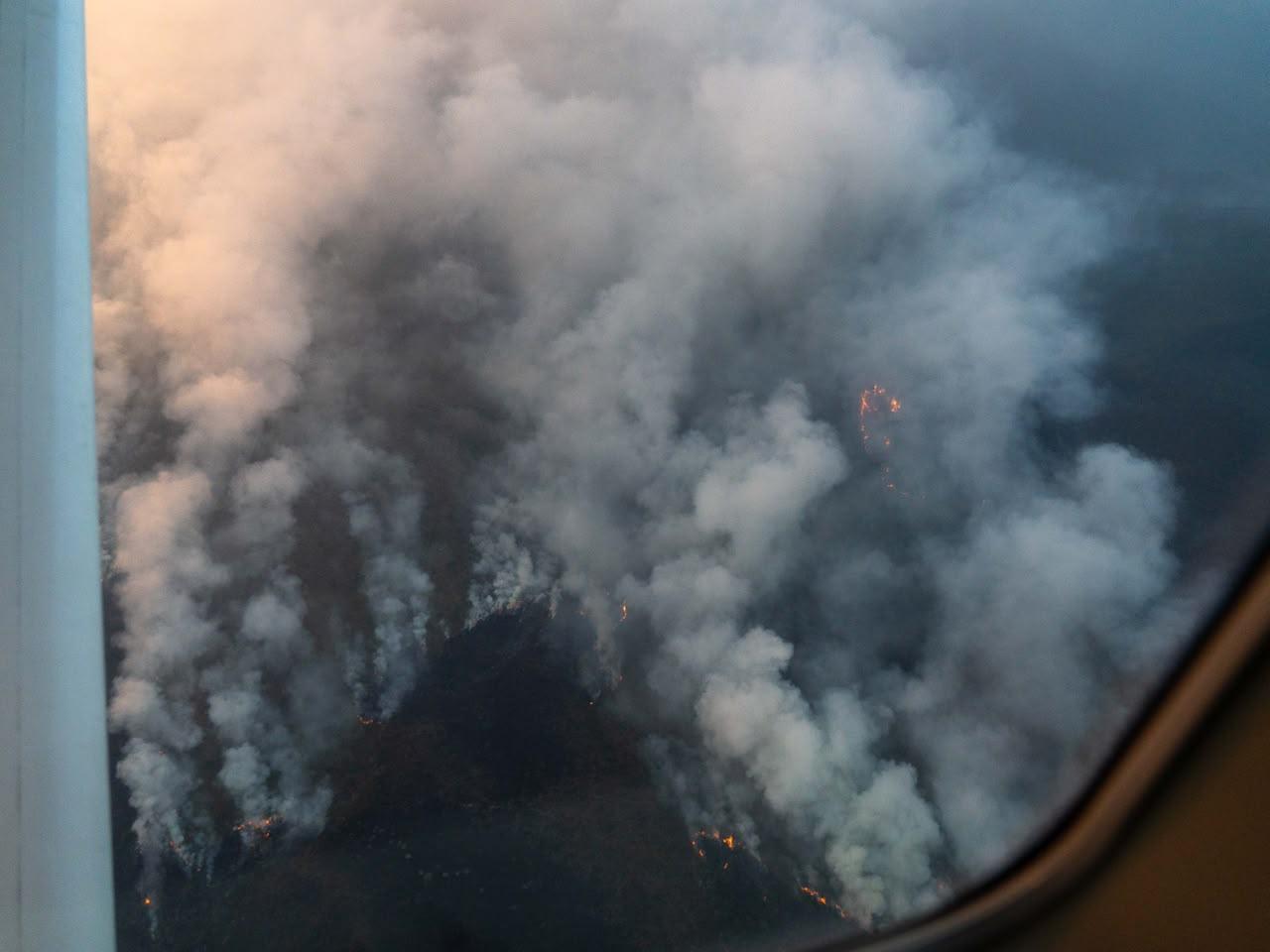
Mount Kenya’s latest fire raises questions over its vulnerable moorlands
About 8,700 hectares of high-altitude moorland have burned since a fire broke out near Rutundu Lodge, reviving questions about how the mountain’s upper slopes are responding to repeated large fires
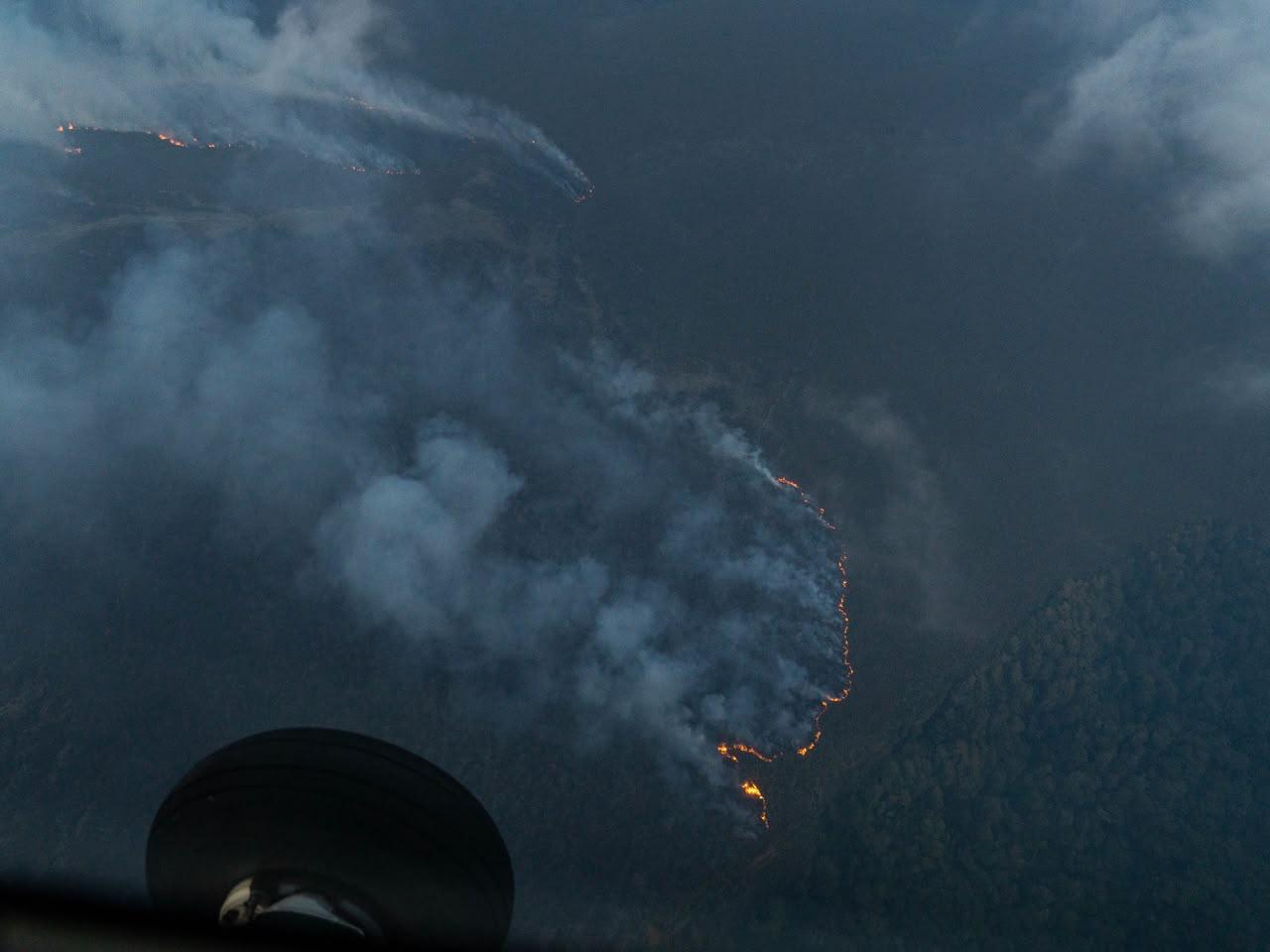
A wildfire that has swept through the high-altitude moorlands of Mount Kenya remained active on the mountain’s southern side on Tuesday, a week after it broke out near Rutundu Lodge.
At its height, as many as 17 fire points were visible at once, according to the Mount Kenya Trust, as flames moved across the mountain’s upper slopes.
“As fires were put out in the early hours, more were spreading by midday due to unbelievably high winds,” the Trust said.
The fire began on 1 September and spread in two directions, north towards Marania Forest and south-west towards Chogoria. Rhino Ark Charitable Trust said about 8,700 hectares of moorland had burned by 6 September.
By Monday, the northern section had been contained, but firefighters were still working to control the southern front.
Large fires have burned Mount Kenya’s upper slopes before.
In 2019, an estimated 20,000 hectares of moorland were burned, according to the Mount Kenya Trust, making it one of the most destructive fires in the mountain’s recent history.
In 2022, a fire that burned for more than two months escalated on the northern slopes, threatening moorland and forest habitats.
Fire has long been part of Mount Kenya’s high-altitude ecosystem.
A 2017 study study published in GeoResJ, reconstructed 16 years of fires on the mountain using satellite imagery. The researchers found that more than 10% of Mount Kenya had burned during that period, including about 33% of its alpine moorlands.
Most fires were concentrated in the lower moorlands just above the treeline. The researchers found no clear increase in the total amount of land burned over the study period, but they identified a shift in the timing of fires and greater variation from one year to the next.
They said it remained unclear how the plants that dominate the moorlands would respond if the pattern of fires changed.
The moorlands are home to grasses, sedges and other plants adapted to the cold, high-altitude environment. The wider alpine ecosystems support biodiversity and play important roles in regulating water and storing carbon.
A separate 2017 study published in the journal CATENA looked at the effects of a large 2012 fire on soils three years after it had burned almost 100 sq km of the mountain’s upper south-western slopes.
Most of the soil properties they measured showed no significant difference between burned and unburned areas, although some changes were recorded. The researchers concluded that the effect on soil properties appeared relatively small after three years.
The earlier fire study found that most fires on the mountain were relatively small and of low to moderate severity, although individual fires varied greatly in size.
At about 8,700 hectares by 6 September, the current blaze is among the larger fires recorded on the mountain.
Environment, Climate Change and Forestry Cabinet Secretary Deborah Barasa said 85% of the fire had been contained and more than 400 personnel had been deployed, including 100 Kenya Forest Service officers and 144 Kenya Defence Forces personnel, alongside community members and other partners.
Barasa said certain invasive plant species in the area had helped the fire spread quickly by providing dry fuel.
No human casualties had been reported. Barasa said some small animals, including rats and squirrels, had been burned, while large wildlife had not been affected.
The government said the fire had exposed the need to improve wildfire mitigation and the speed at which resources can be deployed when fires break out in difficult terrain.
Rhino Ark joined the response alongside the Kenya Forest Service, Kenya Wildlife Service, Mount Kenya Trust and other conservation partners. It has also been working with Tropic Air on daily aerial reconnaissance flights to help plan firefighting operations.
During the 2022 fire, the Mount Kenya Trust coordinated the response with Rhino Ark, KFS and KWS, deploying up to 35 trained personnel a day and between 150 and 200 community members. Helicopter support was used to move personnel and drop water on the fires.
The Trust now says it has constructed more than 11km of firebreaks along high-altitude tracks and trained 140 scouts from six community forest associations to provide first response and support fire mitigation.
UNESCO identifies fire as a major threat to Mount Kenya’s high-altitude moorlands, and stakeholders have developed a strategic fire plan for the ecosystem.
For now, firefighters are still working to contain the southern front and prevent the fire from spreading into new areas.
The latest fire is another large burn in an ecosystem where scientists still do not know how high-altitude vegetation will respond to changes in the pattern of burning.