
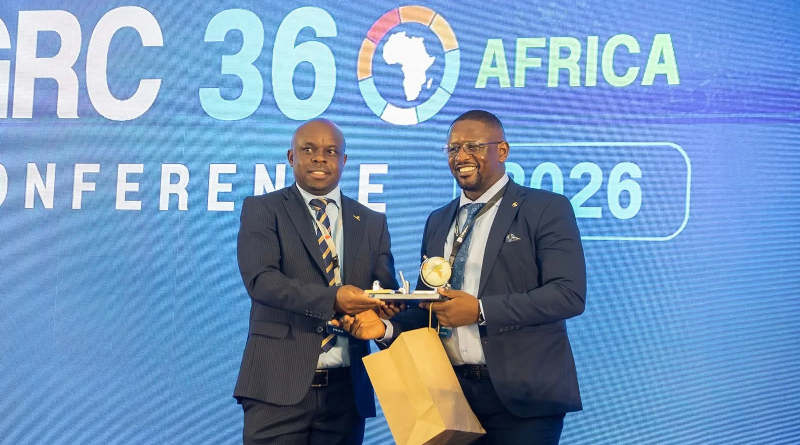
AI Governance: ISACA Kenya Urges Stronger Oversight As Autonomous Technology Advances
By Samson Kurgat | NAIVASHA,
As autonomous intelligence rapidly transforms Africa’s economic and public service landscape, top governance, risk, and technology leaders gathered in Naivasha today with a clear directive: rapid AI adoption must be matched by equally robust, human-led oversight.
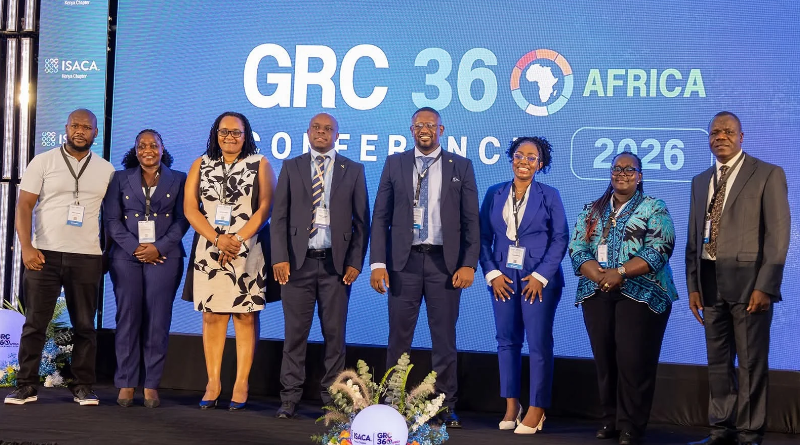
The call to action was delivered at the ISACA Kenya Chapter’s flagship GRC 360° Africa Conference 2026 at Sawela Lodges, held under the theme “Trusted AI: Governing Risk, Resilience, and Digital Trust in the Age of Autonomous Intelligence.”
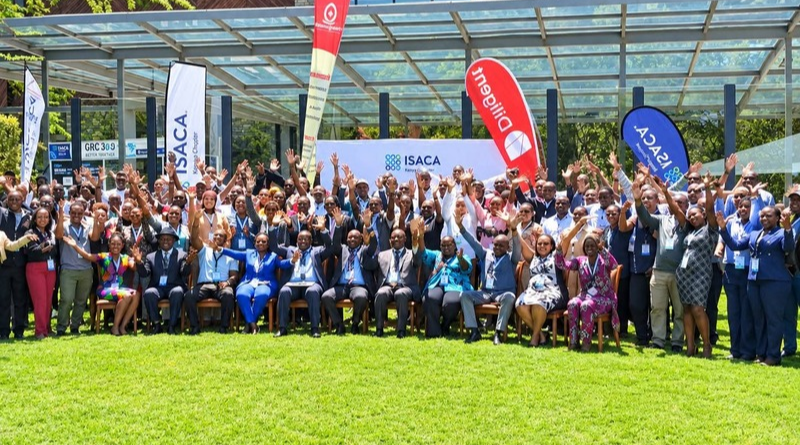
Delivering key remarks on behalf of the Chief Guest, Prime Cabinet Secretary Musalia Mudavadi, CPA Dr. Sammy Kimunguyi—Internal Auditor-General at the National Treasury—underscored that public confidence remains the bedrock of digital transformation. Noting that AI is already actively shaping decisions in mobile lending, healthcare, agriculture, and public service, he stressed that institutions must be able to explain how automated decisions are made, who holds ultimate responsibility, and where citizens can seek redress when affected.
Dr. Kimunguyi highlighted Kenya’s proactive steps toward responsible AI governance, pointing to national milestones such as the Kenya National Artificial Intelligence Strategy (2025–2030), the Standing Cabinet Committee on Artificial Intelligence, and the Draft Kenya AI and Emerging Technologies Policy. He emphasized that building a resilient digital economy requires tight alignment across digital public infrastructure, data protection laws, and cross-sector collaboration between government, private industry, academia, and professional bodies.
Addressing escalating cyber threats, Dr. Kimunguyi warned that AI is empowering bad actors to deploy highly convincing voice-cloning and video-manipulation technologies, making frame-by-frame vigilance a matter of national security. He urged risk professionals, internal auditors, and board members to expand their focus beyond traditional infrastructure to cover the integrity and source data used to train AI models, vet third-party vendor algorithms, and maintain strict adherence to data protection statutes and cybercrime laws.
Echoing these sentiments, ISACA Kenya Chapter President Bonface Asiligwa called for a fundamental shift in how organizations approach IT governance. With autonomous AI agents now capable of calling APIs, querying databases, and executing complex tasks with minimal human intervention, legacy perimeter controls are no longer sufficient. Organizations must move beyond traditional access management to define precise boundaries for what autonomous systems are authorized to execute, for what purpose, and within what limits, ensuring that ultimate accountability remains firmly with human leadership.
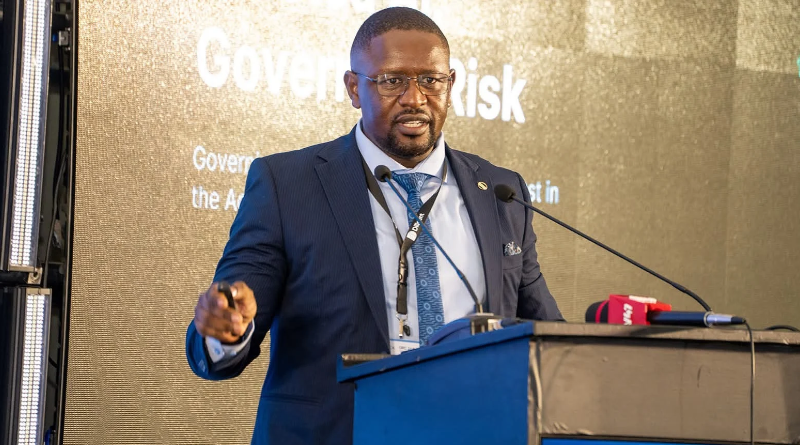
Asiligwa cautioned that the greatest systemic threat facing organizations today is not the technology itself, but the widening gap between the speed of AI deployment and the slower evolution of governance frameworks, institutional capabilities, and regulatory policies. To close this gap, he urged boards of directors to prioritize AI literacy, technology leaders to integrate continuous assurance mechanisms monitoring algorithmic bias and model drift, and auditors to upskill rapidly in specialized algorithmic assurance.
Bringing together policymakers, regulators, auditors, board members, cybersecurity leaders, and academic minds from across the region, the GRC 360° Africa Conference continues to serve as a vital crucible for practical solutions. By bridging the gap between innovative potential and rigorous oversight, the ongoing discussions aim to cement a unified foundation for sustainable resilience, ethical compliance, and enduring digital trust across the continent.