
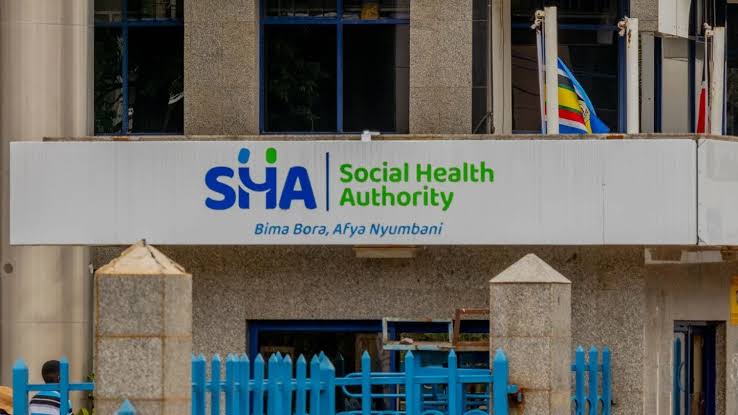
SHA gives hospitals one month to complete digital health transition
Hospitals and clinics have been given another month to complete a digital health transition that will determine whether they can continue participating in the country’s public health insurance system.
The Social Health Authority (SHA) extended the deadline from 1 September to 30 September in a notice issued by its chief executive, Dr Mercy Mwangangi, on Tuesday.
The extra month comes as healthcare providers move away from the SHA Provider Portal towards Health Management Information Systems (HMIS) connected to the national digital health infrastructure under the Taifa Care program.
For hospitals, the change is not simply a matter of replacing one portal with another. Their own systems must be certified and able to exchange information with the government’s health platform.
There is a financial consequence for those that do not make the change. SHA has said accredited HMIS will be a requirement for the 2026/28 contracting cycle, meaning facilities that fail to meet the requirements will not be eligible for new contracts, renewals or continued participation in SHA-funded schemes.
The migration has already begun in public hospitals.
On 29 June, SHA moved claims processing for Level 4 public facilities from the Provider Portal to Taifa Care HMIS after testing and approval by SHA and the Digital Health Agency (DHA).
At the time, the Ministry of Health said 5,078 facilities were operating on the SHA HMIS and 2,978 were actively submitting claims electronically. It said 6,228 public facilities, or 93% of the public facilities in the country, had undergone digital transformation.
The system being introduced is part of a wider change in how health information is collected, stored and shared.
The Digital Health Act of 2023 gives the DHA responsibility for developing and maintaining an integrated health information system, as well as establishing national registries and standards that allow health systems to exchange information.
Digital health regulations that came into force in 2025 require digital health solutions used by healthcare providers to be certified by the agency.
That certification goes beyond whether a hospital’s software works. The regulations cover data quality, security and privacy, reporting, backup and recovery, cybersecurity and the ability of systems to exchange information through the national interoperability framework.
The aim is to make different parts of the health system communicate with each other.
The Digital Health (Data Exchange Component) Regulations provide for national registries including a client registry, intended to provide a single reference for identifying people receiving healthcare, and a facility registry containing information on health facilities.
The DHA’s digital health architecture also includes a health information exchange, client, worker and facility registries, claims management and analytics.
For patients, little of this may be visible when they walk into a hospital.
A consultation will still look like a consultation. A nurse will still take a history, a clinician will still examine a patient and treatment will still be prescribed.
But behind those encounters, more of the information is expected to move through connected government systems.
The government says the system will allow patients to be verified electronically, make it easier to exchange health information and support electronic claims processing. It also says the connected systems will give SHA better tools to identify irregularities in healthcare payments.
At a consultative forum with healthcare provider associations on 29 June, Health Cabinet Secretary Aden Duale said the migration would be carried out in phases and that provider records, beneficiary information and historical claims data would remain secure.
The ministry said providers would receive technical support, onboarding and training during the transition.
For facilities that have yet to complete the change, the extension gives them until the end of September.
SHA has directed providers facing technical difficulties to seek assistance from the Digital Health Agency. The agency lists helpdesk@dha.go.ke for support and 147 for urgent system assistance.
By then, hospitals and clinics seeking to remain part of the next SHA contracting cycle will have to show that their systems can meet the new requirements.
The old Provider Portal is being phased out. What replaces it is a system in which a hospital’s ability to work with SHA increasingly depends on its own digital systems being connected to the national health network.