
Kenyans Growing More Pessimistic as Economic Hardships Bite, TIFA Poll Shows
By Samson Kurgat | NAIROBI,
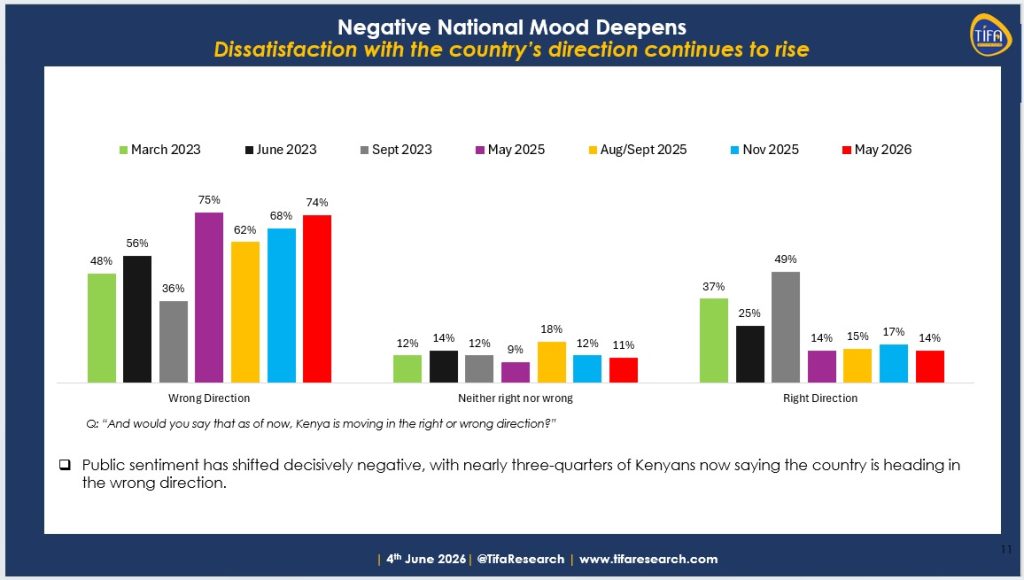
A new TIFA survey paints a bleak picture of the country’s economic outlook, with a growing majority of Kenyans saying both their personal finances and the nation’s direction have worsened. The poll, conducted between May 2 and May 11 among 2,013 adults across all 47 counties, found that 74 per cent of respondents believe Kenya is heading in the wrong direction, while only 14 per cent feel the country is on the right path.
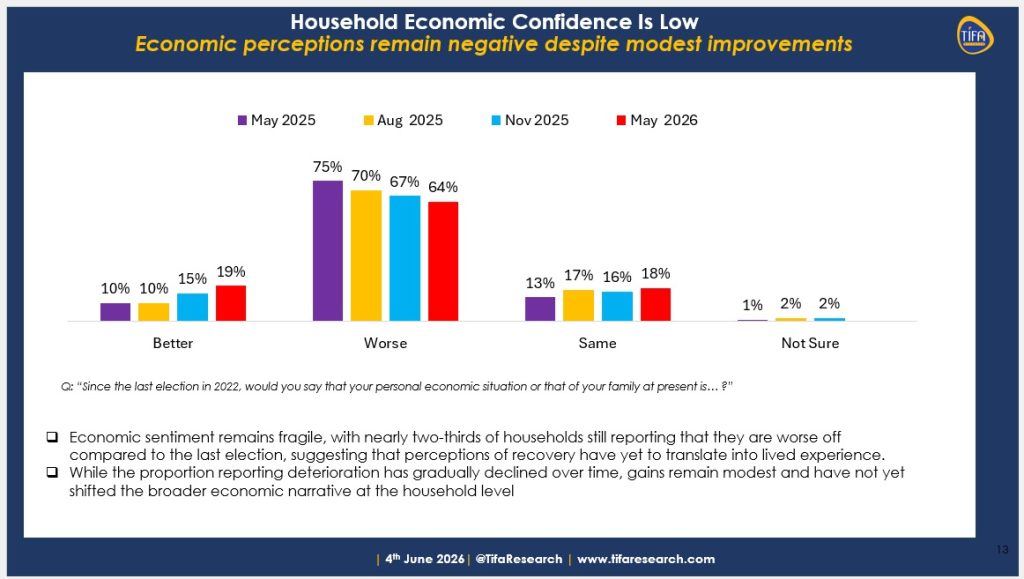
Economic struggles appear to be at the heart of the public’s frustration. Nearly two-thirds (64 per cent) of Kenyans said their household economic situation is worse today than it was after the 2022 General Election, with only 19 per cent reporting improvement. The survey also shows unemployment remains unchanged at 17 per cent despite government efforts to create jobs, while household income levels have largely stagnated.
The rising cost of living has emerged as the dominant concern for many households. Forty-seven per cent of respondents identified inflation, high prices and taxation as the country’s most serious problem, while another 23 per cent pointed to unemployment, poverty and the weak economy. The findings suggest that economic pressures now outweigh concerns about corruption, governance and other social issues.
Public dissatisfaction is also reflected in perceptions of government performance. Taxation received the harshest rating, with 74 per cent of respondents saying government policies in the area have made life worse. Healthcare, security and education also received predominantly negative assessments. In addition, three out of four Kenyans said the recent fuel price increases were unnecessary, with most expecting higher food and transport costs as a result.
The survey concludes that while some macroeconomic indicators may point to gradual recovery, many Kenyans are yet to feel the benefits in their daily lives. With inflation, taxation and joblessness continuing to squeeze household budgets, the findings signal a widening gap between official economic narratives and the lived realities of ordinary citizens as the country heads toward the 2027 election.