Rhino Charge Enters a Generational Handover After 37 Editions
By Chemtai Kirui | Ngilai Conservancy, Samburu County
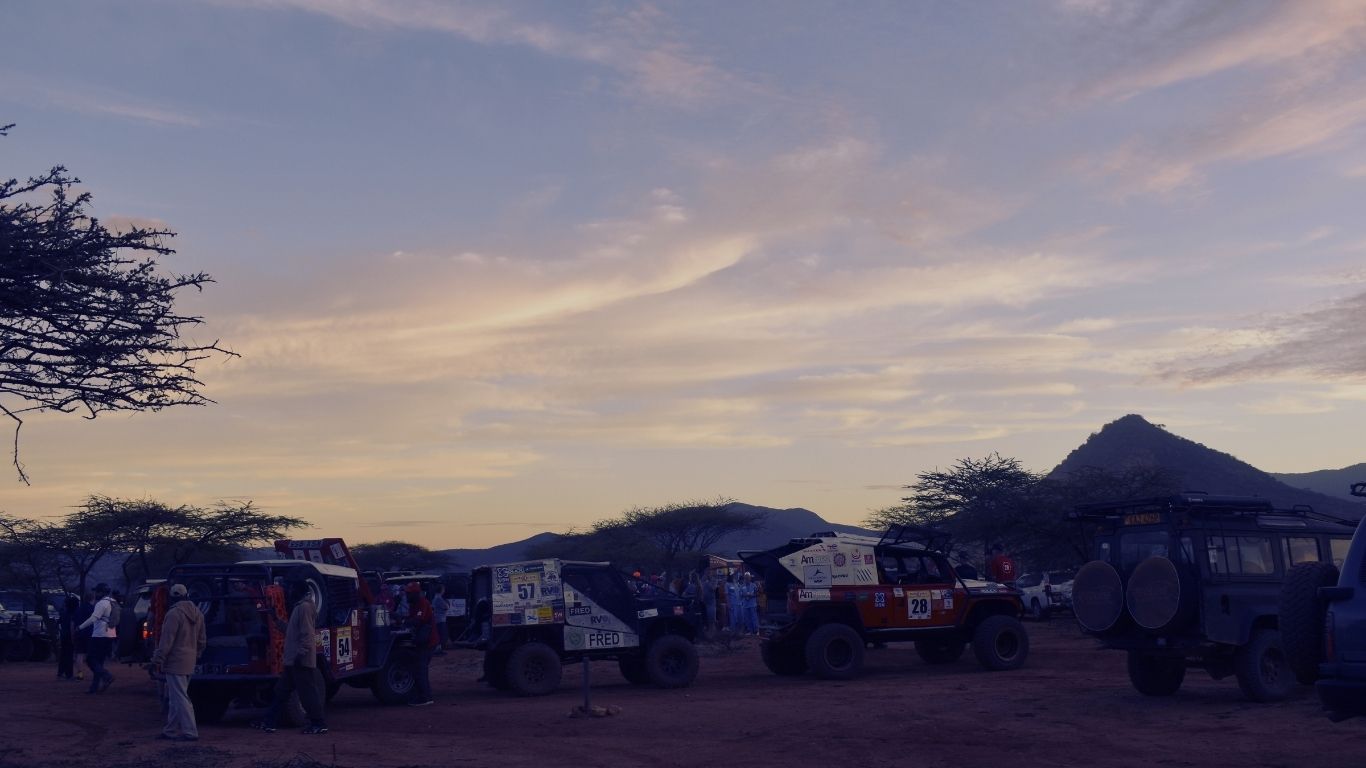
At 4 a.m., the Rhino Charge camp was already awake.
Headlamps moved through the darkness as mechanics crawled beneath vehicles making final checks. Drivers studied maps under torchlight. Volunteers hurried between control tents and campfires while competitors prepared for a day that would test machines, endurance and judgment.
Among them was Tor Allan, a first-time driver who had spent years attending Rhino Charge as a spectator before finally entering the competition himself.
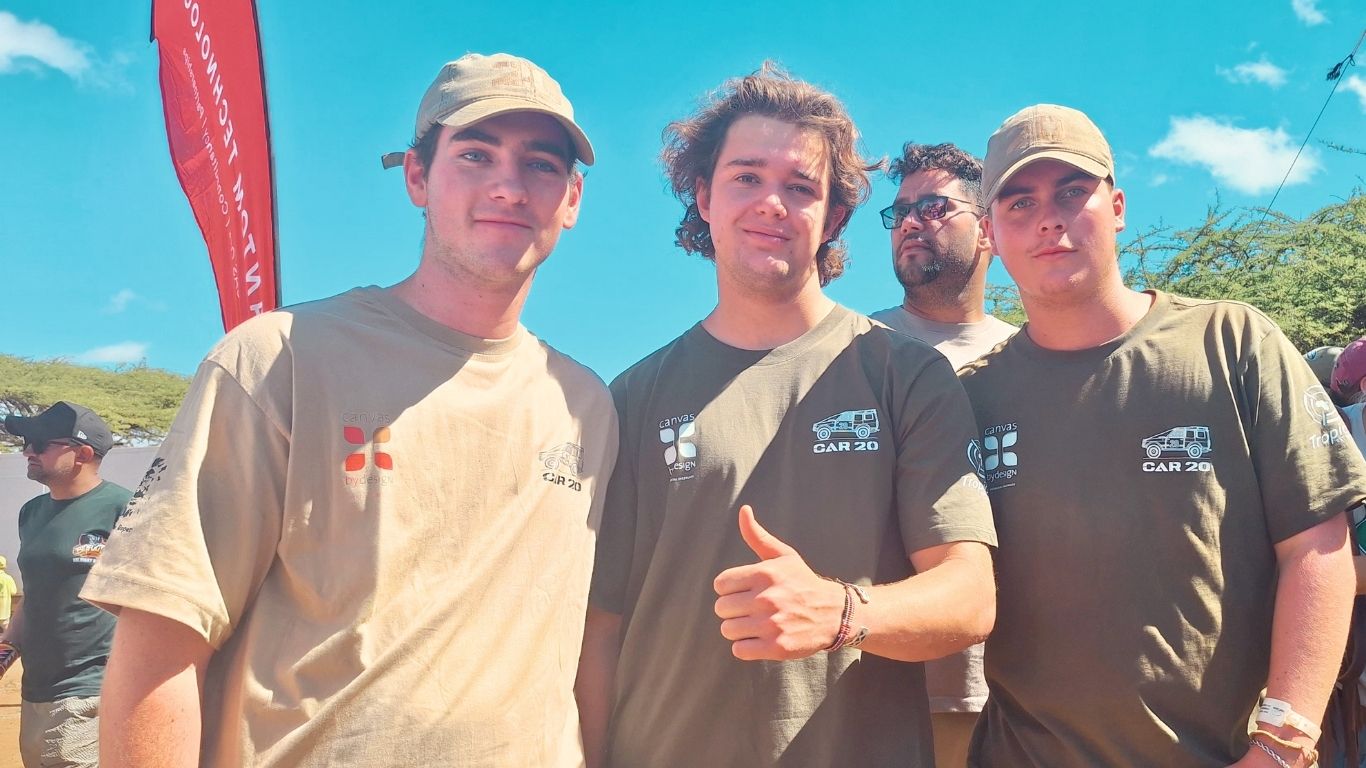
For years, Rhino Charge has been a gathering of fathers, veterans and long-time competitors. In 2026, a new generation was beginning to take its place alongside them.
At Ngilai Conservancy, the generational shift was unfolding in real time. Veterans who helped build Rhino Charge were now sharing the course with their children, who had moved from watching the event to competing in it.
The 65 teams navigated rugged hills, dry riverbeds and rocky escarpments in pursuit of 13 checkpoints scattered across the conservancy.
This year’s edition raised a record KSh365.4 million and marked a structural shift for Rhino Ark, including the launch of a conservation endowment fund and its first comprehensive impact report.
Taken together, these milestones point to an organisation entering a new phase—one increasingly focused not just on building conservation infrastructure, but on sustaining it.
This event’s location sat deep inside Ngilai Conservancy in Wamba, a landscape of acacia-dotted plains, steep rocky ridges and dry seasonal riverbeds stretching toward the Mathews Range.
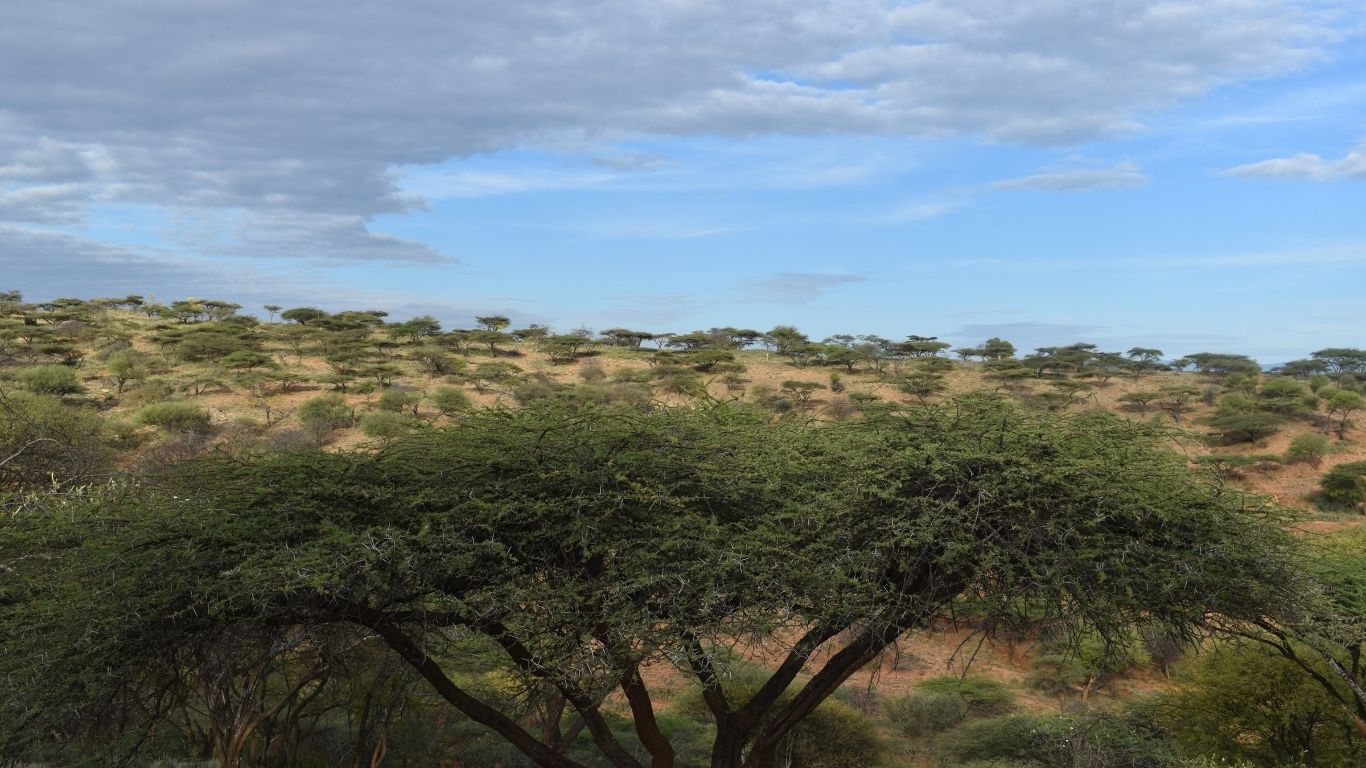
Ngilai Conservancy received KSh9.1 million from this year’s event for community projects selected by local residents.
For manager Elly Lolonjore, the benefits extend beyond the funding itself.

“Hosting an event like Rhino Charge is very big for us,” he said. “It has put us on the global map and brought many guests to our conservancy who can now know where Ngilai Conservancy is.”
Established under Kenya’s Community Land Act, Ngilai Conservancy is home to elephants, giraffes, buffaloes and other wildlife species.
Before the event, some residents worried that dozens of off-road vehicles could damage vegetation. Those concerns largely faded after the competition.
“Some people thought there would be massive destruction,” Lolonjore said. “But what we witnessed was a very competitive race and we have not seen a lot of challenges or negative impacts.”
Reaching Ngilai required hours of travel beyond the tarmac.
Dust hung in the air behind every passing vehicle. By the time visitors arrived, clothes, cameras, notebooks and luggage carried the same pale-brown colour as the surrounding landscape.
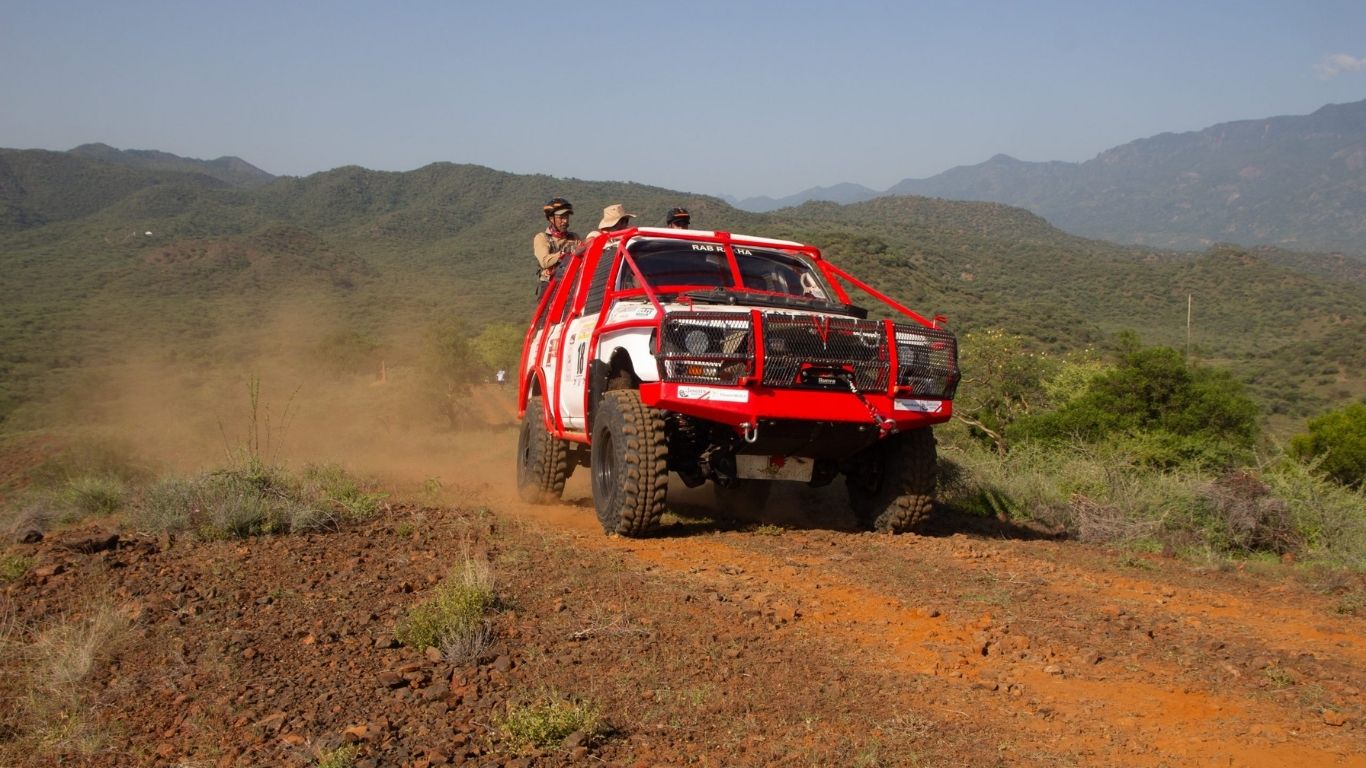
Along the roadside, Samburu children paused with their livestock to watch convoys of four-wheel drives disappear into clouds of dust as they crossed the conservancy.
Former Rhino Charge chairman John Tot once described the event as “an event based on insanity” — 65 vehicles, 13 checkpoints, no roads and up to 10 hours navigating some of Kenya’s toughest terrain.
Yet the challenge alone does not explain why participants keep returning.
Rhino Charge began in 1989 as an unusual conservation fundraiser built around a simple premise: reach as many checkpoints as possible across difficult terrain without the aid of roads.
Over time, it evolved into Rhino Ark’s flagship fundraiser, financing projects aimed at protecting Kenya’s mountain forests and water towers.
According to Rhino Ark, proceeds from the event have funded 853 kilometres of electric fencing around key conservation landscapes.
Those projects now help protect approximately 652,000 hectares of habitat while reducing human-wildlife conflict affecting more than 90,000 households.
The newly launched impact report documents that conservation legacy for the first time.
Together with the endowment fund, the report signals a shift from annual, personality-driven fundraising to a longer-term financing model for maintaining conservation infrastructure.
“Over the past 37 years, Rhino Ark’s impact has been tremendous,” said Rhino Ark chairman Peter Kinyua.
“The board has kept Rhino Ark focused on its core mandate: protecting forests, reducing human-wildlife conflict, strengthening the livelihoods of forest-adjacent communities and increasing the resilience of our vital mountain ecosystems.”
Success, however, has created a new challenge.
Many of Rhino Ark’s major fencing projects are now decades old, requiring long-term maintenance rather than new construction.
Recognising that annual fundraising alone may not be enough to sustain those investments, Rhino Ark used this event to launch a conservation endowment fund backed by an initial KSh100 million commitment from its board.
Speaking during the prize-giving ceremony, President William Ruto pledged an additional KSh200 million in government support over two years.
But the clearest signs of continuity were not in funding announcements, but in who was now taking part.
You could see it across camp.
Allan’s connection to Rhino Charge also runs through his father, who worked as a pilot in the event’s support operations. He is among a growing number of first-time competitors whose entry follows family ties to the event.
Among the newest entrants was Jacob Lowe, who turned 18 just two days before the event and had attended every Rhino Charge since he was one year old. This year, for the first time, he arrived not as a child watching from camp but as part of a competing team.
Some teams included second-generation competitors whose parents had previously participated. Others brought children and younger relatives into support roles, introducing them to the event long before they became drivers or navigators themselves.
Martin Kinyanjui of Car 62 described how his family’s involvement had stretched across generations.
“Our father used to charge before us,” he said. “He retired from charging and now we’ve taken over.”
Nearby, Moses Kinyanjui was participating in his first charge after years of attending as a spectator.
“It’s a family thing,” he said. “My uncle has done it, my dad has done it, my cousin has done it.”
Rhino Ark Executive Director Christian Lambrechts said maintaining that continuity has become increasingly important.
“Clearly, some of the Rhino Chargers are getting very old,” he said. “At some stage they pull out. If they do not have kids to take over from them, we have to make sure that there is continuity of Rhino Chargers to sustain this event.”
One of the clearest examples is Car 5, a team that has competed in every Rhino Charge since 1989. For decades it was led by Alan McKittrick, one of the event’s longest-serving competitors. Today, leadership has passed to his son Graham, extending a family presence that has run through the event’s entire history.
Nearby, Car 6 now brings together three generations of the same family, while several other long-running teams are also undergoing similar handovers, with founders gradually stepping back and younger relatives moving into leadership roles.
In the Classic Charge category, several new entrants are themselves the sons and daughters of long-time Rhino Charge participants.
All-female teams are beginning to appear. Daughters of long-time chargers are entering a competition once dominated by men.
Agnes Mwangi of the all-female Team Zambarau said the group joined the event both to support conservation and to encourage more women to participate in the sport.
“We want to show other women out there that ladies can also take part,” she said. “We want to show girls that anything is possible.”
Back on the course, the terrain remained unforgiving.
Allan and his team reached 11 of the 13 checkpoints before mechanical problems and difficult terrain brought their challenge to an end.
At one point, they spent hours trying to climb a single hill. They repeatedly winched the vehicle free after becoming stuck and lost a tyre along the way.
“We thought we were going to finish,” he said.
Despite the setbacks, he plans to compete again.
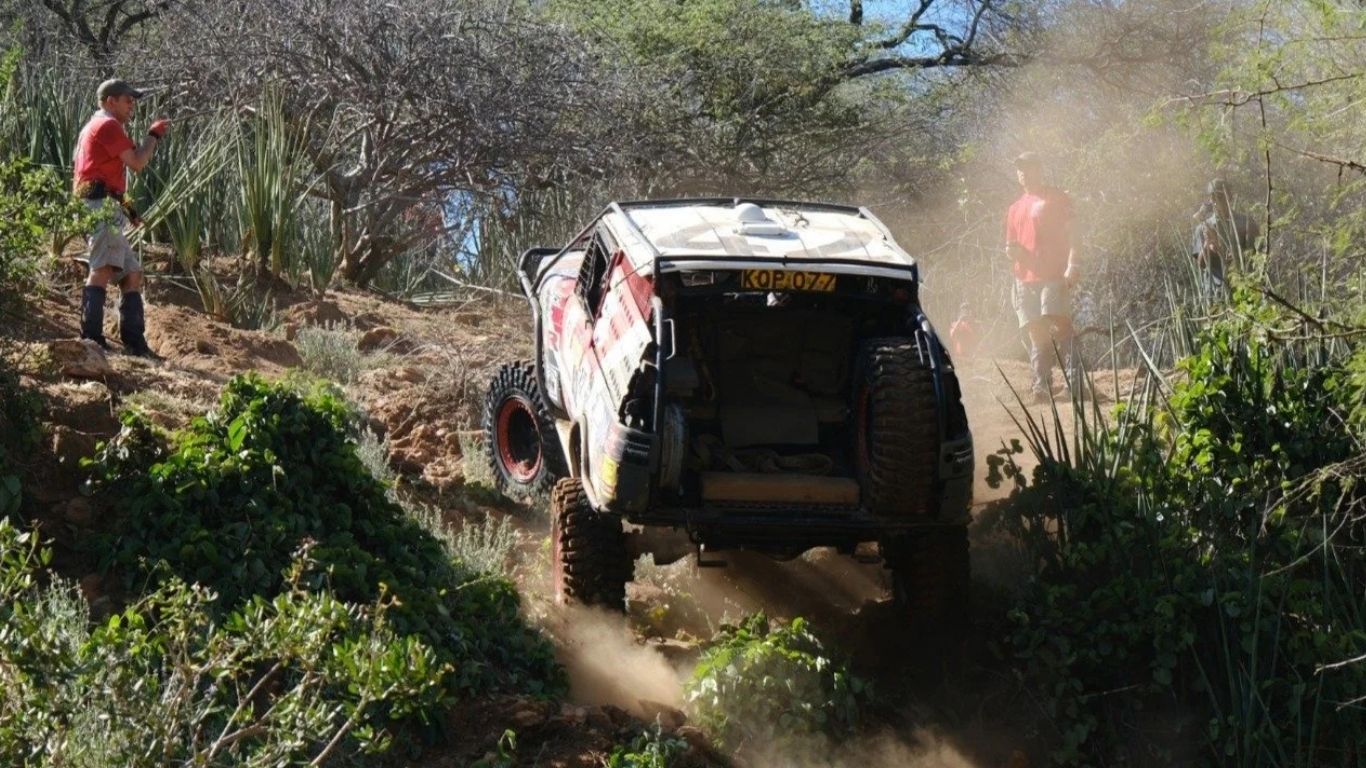
Thirty-seven years on, the challenge is no longer only how to raise money for conservation, but how to sustain the community, institutions and support that have made Rhino Charge possible.
Holding Rhino Ark’s newly released impact report after the prize-giving ceremony, Clerk of Course Don White reflected on what has kept the event alive through nearly four decades of dust, breakdowns and changing landscapes.
“If this was not about something that really meant something,” he said, “I’m not sure the event would still be here today.”
Allan stood at the edge of the ceremony as applause rose and teams began breaking camp.
“We’ll be back,” he said.
Around him, vehicles were being loaded onto trailers, still caked in dust from the course.