Mombasa’s ocean pledges leave high-seas protection unresolved
By Chemtai Kirui
The Our Ocean Conference announced billions of dollars in voluntary commitments, but the figures raise questions about how much support will reach marine protection and enforcement in international waters.
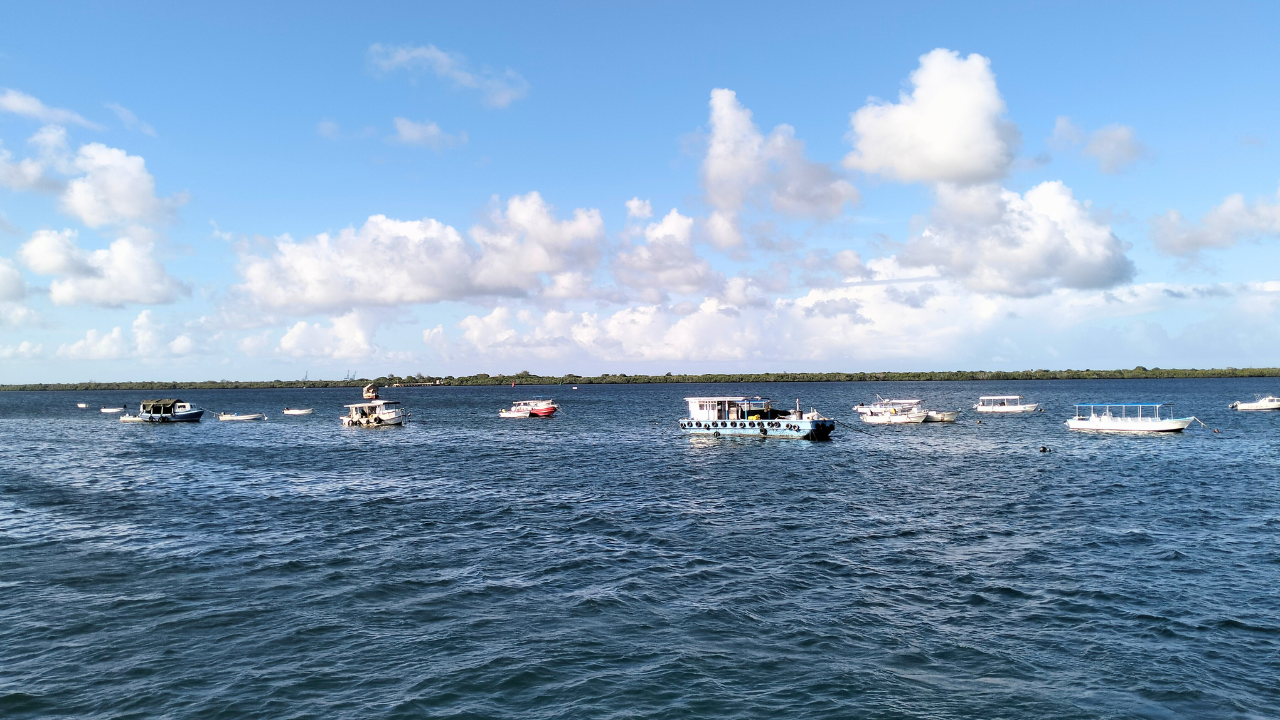
Thousands of government officials, diplomats, scientists, activists, journalists, artisanal fishers and Indigenous leaders gathered under the warm, ocean-breezed coastal air of Mombasa—perched on the northern coast, bordering Kilifi County—for the 11th Our Ocean Conference (OOC11).
Since Mombasa was awarded the hosting duties during the 10th Our Ocean Conference (OOC10) in Busan, South Korea, expectations had been high that the conference’s Africa debut could be a turning point in who shapes the global ocean agenda—giving African coastal communities greater influence while testing how far a decade of voluntary pledges had translated into measurable action.
But there were concerns that OOC11 risked repeating the disappointments of previous summits, generating further pledges while existing commitments remained incomplete and questions of financing, accountability and community participation remained unresolved.
Representatives of small-scale fishing associations, Indigenous Peoples’ organisations, youth networks and civil society, convened during a Rise Up working session alongside OOC11, with a pointed expression, “No More Empty Pledges”. They called for meaningful community participation, enforceable accountability and transparent financing.
“Ocean governance that does not include us,” its signatories said, “is governance that will fail both people and the planet.”
The Our Ocean Conference is an international forum for securing voluntary commitments and investment to protect the global ocean. Its work spans six areas: marine protected areas, sustainable fisheries, marine pollution, the sustainable blue economy, maritime security and climate change.
Hosted by a different country for each edition, the conference’s Secretariat is hosted by the World Resources Institute (WRI), a global, data-driven research non-profit, through its Ocean Program, which tracks commitments and monitors their implementation across successive editions. Its assessments rely on information reported by governments and other commitment-makers, cross-referenced with host governments’ conference outcome reports.
At the close of OOC11, that voluntary pledge-and-review system yielded a final tally of KSh824.51 billion (USD6.4billion) across 320 voluntary commitments from 104 countries, with sustainable fisheries, accounting for accounting for KSh225.45 billion (USD1.75 billion) across 51 individual pledges, the second-largest funded category at the conference, trailing only the sustainable blue economy, which attracted KSh368.97 billion (USD2.864 billion) across 86 pledges.
During the closing ceremony, Principal Secretary for the State Department for Blue Economy and Fisheries Betsy Njagi detailed the breakdown across the remaining four focal areas: KSh152.02 billion (USD1.18 billion) for the ocean-climate nexus across 57 commitments, KSh45.73 billion (USD355 million) for marine protected areas across 67 commitments, KSh28.73 billion (USD223 million) for marine pollution across 45 commitments, and KSh3.61 billion (USD28 million) for maritime security across 14 commitments.
While the metrics read by Njagi have led to triumphant headlines overnight, a closer look indicates that direct allocations for spatial conservation KSh45.73 billion (USD355 million) and maritime security KSh3.61 billion (USD28 million), combined accounted for KSh49.34 billion (USD383 million), or 5.98 percent of the total capital pledged.
This statistical distribution stands alongside the conference’s primary diplomatic agenda item: the implementation of the first High Seas Marine Protected Area bids under the Biodiversity Beyond National Jurisdiction (BBNJ) Treaty.
While the BBNJ Agreement officially entered into force on January 17, 2026, the conference pledge ledger reflects that the majority of spatial conservation funds remain designated for domestic coastal initiatives rather than dedicated high-seas monitoring, mapping, or enforcement mechanisms.
Addressing delegates at the tail end of the conference, the UN Secretary-General’s Special Envoy for the Ocean, Ambassador Peter Thomson, framed this distribution within the broader timeline of international ocean diplomacy, noting that achieving global targets is an “incremental process” rather than a single breakthrough at one conference.
“Now with the ratification of the BBNJ High Seas Treaty, we expect to achieve early establishment of MPAs in international waters,” Thomson said, pointing to the upcoming treaty meeting in New York where delegates will “enter a new era of legal ocean governance when we assemble in New York next January for COP1 of the BBNJ High Seas Treaty.”
He added that establishing high-seas marine protected areas relies on sequential legislative, technical, and financial steps.
Earlier in the week, during Tuesday’s opening session, State Secretary in Germany’s Federal Ministry for the Environment, Jochen Flasbarth, highlighted the urgency of moving from legal ratification to operational designation.
“Now that the UN’s Biodiversity Beyond National Jurisdiction (BBNJ) Agreement has entered into force, we must move quickly to designate marine protected areas in the world’s oceans,” Flasbarth said, adding that “cooperation with countries in the Global South must be stepped up as we implement the agreement.”
According to the Preliminary Commitments Outcome Report published by the WRI and the OOC11 Secretariat, specific targeted initiatives were introduced in Mombasa to fund that initial technical preparation.
This includes the KSh8.73 billion ( EUR60.5 million) Sustainable Western Indian Ocean Program (SWIOP), which was explicitly established under the UN Environment Program’s Nairobi Convention to structurally overhaul ocean governance and build legal and technical BBNJ capacity across nine East African nations.
Parallel to this, Germany pledged support through its KSh2.89 billion (EUR20 million) “Living High Seas” initiative to assist partner states—including Senegal—in drafting high-seas MPA proposals.
The World Bank also announced a KSh128.83 billion (USD1 billion) commitment for the blue economy over the next two years, blending regional development financing with dedicated technical assistance grants specifically to help developing nations fund the legal frameworks and satellite tracking tools required to participate in the treaty.
As the treaty legally allows nations to establish Marine Protected Areas (MPAs) in international waters for the first time, the Mombasa conference, coming only 5 months since the treaty entered into force, became the “drawing board,” where regional blocks used OOC11 to map out the very first generation of high seas MPAs.
A new transboundary alliance consisting of Senegal, Mauritania, The Gambia, and Guinea-Bissau used OOC11 to develop a concrete proposal for a massive high-seas MPA in the Convergence Zone of the Canary and Guinea Currents.
But turning these regional blueprints into enforceable international law requires navigating a rigid UN legal pipeline before BBNJ COP1 in New York. Under Article 19 of the High Seas Treaty, proposals like the Canary–Guinea corridor must undergo time-bound global consultations and cross-sectoral reviews with bodies like the International Commission for the Conservation of Atlantic Tunas (ICCAT) for fisheries and the International Maritime Organization (IMO) for shipping corridors.
Without clearing those formal UN consultation loops, voluntary momentum in Mombasa cannot translate into legally binding protection on the water.
“The High Seas Treaty is a landmark Agreement that changes the face of ocean governance for the world,” said Rebecca Hubbard, Director of the High Seas Alliance. “The challenge is now to change this promise to action in the water. How will we do that? Three cornerstones are key to this—protection, equity, and good governance, underpinned by strong partnerships and alliances.”
Demonstrating the speed at which Global South nations are moving ahead of formal UN timelines, the East African nation of Comoros formally deposited its instrument of ratification five days ahead of the summit, joining the expanding bloc of state parties locking in the High Seas Treaty.
The Mombasa summit also saw the first generation of High Seas MPAs to present at the upcoming BBNJ COP1 in January 2027, where the governments of Fiji and Panama, alongside Ocean Conservancy and the Marine Conservation Institute, launched the Mesopelagic Zone Conservation Challenge at OOC11.
Signatory nations formally signed a Charter pledging to apply the precautionary principle and restrict commercial extraction until the ecosystem is fully understood.
The mesopelagic zone—often called the ocean’s “twilight zone”—lies between 200 and 1,000 meters below the surface. It accounts for only 20% of the ocean’s total volume, yet it holds an estimated 90% of global fish biomass
“Every day, billions of mesopelagic animals migrate to the surface to feed, transporting carbon back down,” Dr. Lance Morgan, President of the Marine Conservation Institute said, pointing out that this biological pump transfers between two to six gigatons of carbon annually to the deep ocean—an amount equivalent, on the lower end, to double the annual emissions of all cars worldwide.
“We cannot afford to let commercial exploitation outpace our understanding of this system.” Morgan said.
Analysis presented at the summit by Ocean Conservancy revealed that twilight-zone species form the vital food base for Kenya’s offshore fisheries, accounting for 81 percent of swordfish diets and 46 percent of yellowfin tuna diets locally—an industry that generated KSh425.14 million (USD3.3 million) in 2023 earnings and supports hundreds of artisanal fishers along the coast.
But, critics at the summit countered that political ambition for high-seas conservation is running far ahead of the operational capacity needed to deliver it.
“It is insufficient for marine 30×30 to just be a designation challenge,” said Dr. Vanessa Constant, Associate Director for the Arsht Resilience Initiative at the Smithsonian Tropical Research Institute (STRI). “It has to become an implementation challenge, backed by complementary investment in people, institutions, and long-term stewardship so that protected areas become more than lines on a map.”
A report released at the summit by STRI, titled Closing the Implementation Gap, indicates that while designated MPAs cover 9.8 percent of the ocean, at least half of existing protected areas remain unimplemented or operationally ineffective—functioning as paper parks.
“Protecting 30 percent of the world’s ocean by 2030 is not a slogan. It requires new marine protected areas and the resources necessary to enforce them,” said John Kerry, former U.S. Secretary of State —who launched the inaugural OOC1 summit in 2014, adding that “It doesn’t do any good just to stand up and say, well, we’re creating a marine protected area here. But you don’t protect it.”
Kerry said that in too many parts of the world— about 3 percent of the world’s announced marine protected areas are actually fully protected stressing that the summit’s primary mandate was to move the High Seas Treaty “from promise to practice” and shift ocean diplomacy “from commitments to implementation.”
From the inaugural 2014 summit in Washington through the 10th conference in Busan last year, the Our Ocean platform mobilized 2,895 voluntary commitments valued at KSh21.80 trillion (USD169.2 billion). Yet, audits by the WRI indicate that, while KSh3.41 trillion (USD26.5 billion) has been fully spent across 1,200 completed projects, KSh13.72 trillion (USD106.5 billion) remains tied up in ongoing initiatives, and 18 percent of all registered promises—521 commitments—have stalled without logging progress.
Though the platform has driven 8.5 million square kilometers of spatial protection globally,KSh11.18 trillion (USD86.8 billion) of active funding has gravitated toward coastal renewable energy and blue carbon, leaving direct high-seas spatial enforcement to compete for smaller operational budgets.
For OOC11, the historical pattern problems of money remaining local persisted, as it did not provide the massive, direct financial budgets needed to patrol international waters; however, the regional maps and treaty frameworks advanced in Mombasa will be used to govern the global high seas as structural baselines to fast-track the legal designation of the world’s first High Seas Marine Protected Areas when the first Conference of the Parties to the High Seas Treaty convenes in January 2027 at United Nations headquarters in New York.
When President William Ruto took to the podium to close the 11th Our Ocean Conference, the first in the conference’s 12-year history to be held in Africa, he announced Kenya’s KSh141.71 billion (USD1.1 billion) in commitments against the KSh824.51 billion (USD6.4 billion) pledged globally.
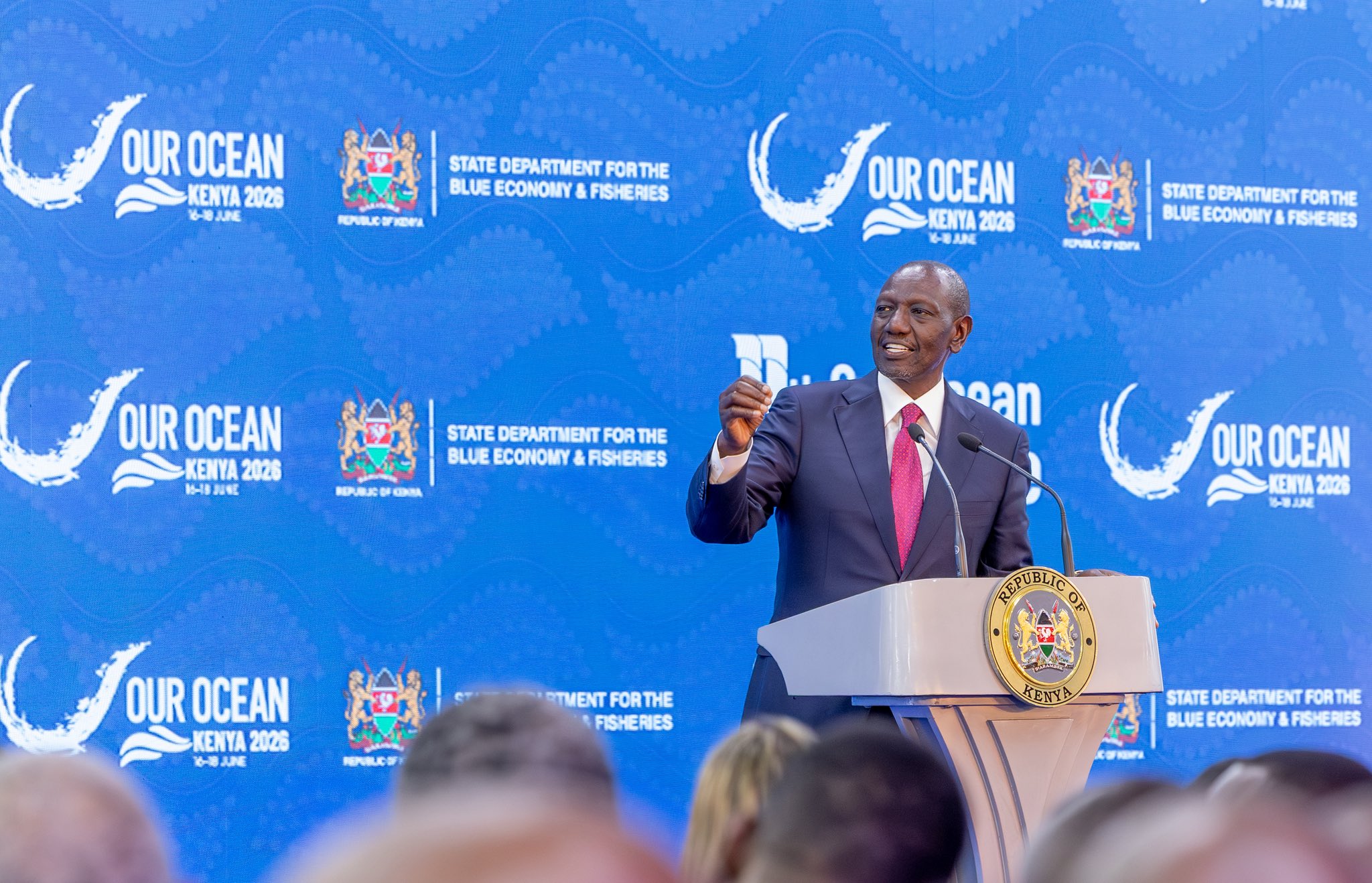
The government’s commitment, amounted to more than 17% of the total, spread across between 40 and 50 individual pledges, pending the state department’s final breakdown. Ruto also pointed to KSh20.3 billion (USD157.57 million ) in domestic investment over the preceding three years, spanning the blue economy, fisheries infrastructure and ports, research facilities, patrol vessels, maritime safety and search-and-rescue operations, and direct funding for coastal communities.
“Commitments without the means to deliver them will never match the urgency or the scale of what the oceans now demand of us.” President Ruto said.
“ We did not come to Mombasa to add our names to a longer list of promises. We came to turn the tide. Let the measure of this conference not be what we pledged on the shore, but what we deliver in the waters.”