The killing of Dr Victoria Mutiso: the threats, the phone trail and the suspects who fled to Uganda
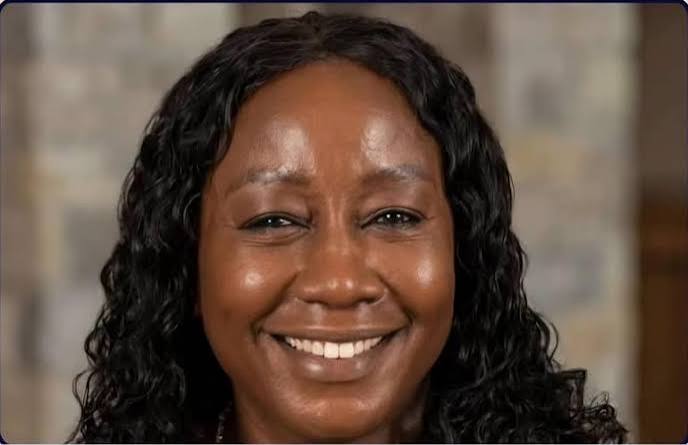
On the morning of 29 July, Dr Victoria Nthunya Mutiso was on her way to work in Nairobi.
She was travelling in a hired Uber taxi when, investigators say, a black Toyota Prado began following the vehicle.
Another Prado then moved across the taxi’s path in Upper Hill. A motorcycle carrying a gunman approached.
Mutiso was shot.
The taxi driver drove her to Kenyatta National Hospital, where she was pronounced dead.
But the events leading up to her death had begun weeks earlier.
On 7 July, Mutiso was driving along Ngong Road near Junction Mall when, according to an affidavit by DCI homicide investigator Corporal Romana Odu0r, two men on a motorcycle approached her. One of them allegedly pointed a pistol at her.
One of them allegedly pointed a pistol at her.
She got away and reported the incident at Kilimani police station. Investigators say that after the incident, she stopped driving her own car because she feared for her safety and began using hired taxis instead.
She later told police and her husband that she recognized the pillion passenger as Chris Mulwa, the son of her husband’s former wife, Rose Mbithe Mulwa.
That identification appears in an investigative affidavit and has not been tested at trial.
There was another incident on 27 July.
According to court documents, Mutiso was allegedly followed by men on a motorcycle as she drove from her home towards work.
Two days later, she was dead.
Detectives are now examining whether those earlier incidents were connected to the killing.
Before she became the focus of a murder investigation, Mutiso was known for something very different.
She had spent years working to improve mental-health care in Kenya, particularly for people who had limited access to specialist services.
A clinical psychologist with a master’s degree and PhD from the University of Nairobi, she was Director of Research and Administration at the Africa Institute of Mental and Brain Health, formerly the Africa Mental Health Research and Training Foundation.
Her work included child and adolescent mental health, substance-use disorders, trauma and depression.
She worked with county governments and international research partners on bringing mental-health services into primary healthcare and programmes for vulnerable communities.
To colleagues and students, she was a researcher and mentor.
Now investigators are trying to establish why, and by whom, she was targeted.
A dispute over property
The possible motive put forward by investigators reaches back decades, to the marriage between Prof David Musyimi Ndetei and Rose Mbithe Mulwa.
They married in 1971, when Ndetei was a medical student and Mulwa was a nurse.
During their marriage, they acquired and developed property that would later become the subject of a prolonged legal dispute.
The couple eventually divorced, but disagreements over property continued.
One of the disputes is now before the Environment and Land Court in Machakos in case ELC/E111/2025.
Ndetei later married Mutiso.
Court pleadings show that Mutiso and Ndetei occupied property that Rose Mulwa and her children, Angela and Chris Mulwa, claimed an interest in.
The dispute eventually moved into eviction proceedings, bringing Mutiso directly into the legal fight.
Investigators say she lodged caveats over some of the disputed properties.
The DCI has presented the property dispute, and Mutiso’s involvement in it, as a possible motive for her killing.
The prosecution’s case is that the dispute had moved beyond a civil disagreement.
The defence disputes that account. Rose Mbithe has denied killing Mutiso, telling the court: “I’ve not killed anybody, and I’ve done nothing.”
Chris Mulwa has also challenged the prosecution’s case, arguing that the murder proceedings were being used to influence the separate property dispute.
Their lawyers have questioned the alleged motive and the timeline investigators have put forward, including whether a dispute dating back decades can establish a conspiracy to murder Mutiso.
The property case remains before the courts. So does the question of whether it provides a link to the killing.
The defence disputes parts of that account.
The legal battle over the property remains before the courts. The criminal investigation is now examining whether the same dispute provides an explanation for Mutiso’s death.
Another killing
There is another name in the history of the dispute.
Mathew Kyalo Mbobu, a lawyer who represented Prof Ndetei in the property case, was shot dead in Nairobi on 9 September 2025.
Almost a year later, detectives investigating Mutiso’s killing are examining whether the two cases are connected.
Investigators say some of the suspects in the Mutiso case may also be linked to the earlier shooting.
No definitive connection between the two murders has been established.
The investigation has also turned to telephone records.
According to call-data analysis cited in reporting on the case, police say police constable Collins Kiplangat Bett was in contact with a woman in Busia on 17 June.
The same woman was also communicating with Pius Muiru Mbugua.
Investigators say location data placed Mbugua in Nairobi while the woman was near the Busia border.
The following day, they say, Mbugua travelled towards Busia.
The woman has not been publicly identified.
What the calls were about, and whether they were connected to the killing, has not been established publicly.
But the phone records form part of the trail investigators have been following.
The journey to Uganda
After Mutiso was killed, detectives say, three men left Kenya.
By 29 August, they had traced Bett, Mbugua and Samuel Karanja Gathoni to Kyanja Heights flats in Kampala.
Ugandan police arrested them there.
They did not face murder charges in Uganda.
Instead, they pleaded guilty to immigration offences arising from their unlawful entry and stay in the country. A Ugandan court cautioned them and ordered their deportation to Kenya.
They were therefore returned to Kenya through immigration proceedings, rather than extradited to face the murder case.
Back in Nairobi, investigators asked a court for more time to question them.
They told the court the men were flight risks and could interfere with the investigation or contact other suspects.
Their lawyers opposed the application.
On 2 September, Milimani Senior Principal Magistrate Teresia Nyangena allowed police to hold the three men for 30 days as investigations continued.
They are due back in court on 1 October.
The three are not the only suspects in the case.
Rose Mbithe Mulwa, her children Chris and Angela Mulwa, and police constable Elijah Kibelion Kimoi are already facing murder proceedings before the High Court.
Their plea was postponed while they underwent mental assessments.
Seven people are now in custody in connection with the investigation.
None has been convicted.
The gun
One of the most important pieces of physical evidence is a firearm.
According to investigative material presented to court, a Mini Jericho pistol was recovered and subjected to ballistic examination.
Detectives say the weapon was matched to spent cartridges and a bullet fragment recovered from the scene of Mutiso’s killing.
Investigators further allege that the firearm had been issued to a senior police officer, Kenneth Sang, who remains at large.
In August, the DCI said its investigation had identified serving police officers it believed were involved in organising the killing.
Court papers allege that PC Elijah Kibelion Kimoi was the officer who fired the fatal shots.
The prosecution’s account therefore places a serving police officer at the centre of the alleged operation.
But the court will ultimately have to determine whether the evidence supports those allegations.
A payment months earlier
There is also evidence that investigators say takes the case back to April.
Detectives allege that Sh300,000 was paid on 24 April as a deposit for an earlier attempt to kill Mutiso.
They say that attempt failed.
The allegation was made in connection with Angela Mulwa, who investigators say was present when the money was allegedly paid.
They also allege that she remained in communication with Sang.
If proved, the alleged payment would place the beginning of the suspected plot months before Mutiso was killed.
It would also suggest that 29 July may not have been the first attempt to target her.
That remains an allegation before the court.
Who did what?
Investigators are still trying to establish the precise roles of the three men who were returned from Uganda.
They allege that Bett and Mbugua were involved in planning and communications surrounding the operation.
Gathoni is alleged to have driven the Prado that followed Mutiso’s taxi.
Police also allege that the men were involved in monitoring her movements before her death.
Taken together, the evidence described in court so far points to a case involving more than the person who fired the shots.
There are allegations of surveillance before the killing, telephone contacts between people in different parts of the country, vehicles used to follow Mutiso, a firearm that investigators say has been linked ballistically to evidence from the scene, and an alleged payment months before her death.
But the investigation has not yet established publicly how all those pieces fit together.
A senior police officer named in the investigation remains at large.
The identity and role of the woman traced through the phone records have not been made public.
And the possible connection with Mbobu’s killing remains unresolved.
For now, the account of what happened to Dr Victoria Mutiso is being assembled from affidavits, phone records, forensic evidence, court proceedings and the accounts of investigators.
The evidence will have to establish whether those separate strands form a single plan, and who, if anyone, was responsible for her death.