First imported Ebola case confirmed after patient dies in Nairobi
The Ministry of Health has confirmed the country’s first imported case of Bundibugyo Ebola virus disease after a citizen who had lived in the Democratic Republic of Congo for seven years died in Nairobi.
Twenty-eight contacts, including family members and healthcare workers, have been identified, while health authorities are tracing a further 23 passengers and four crew members who were on the flight that brought the patient from Kampala to Nairobi.
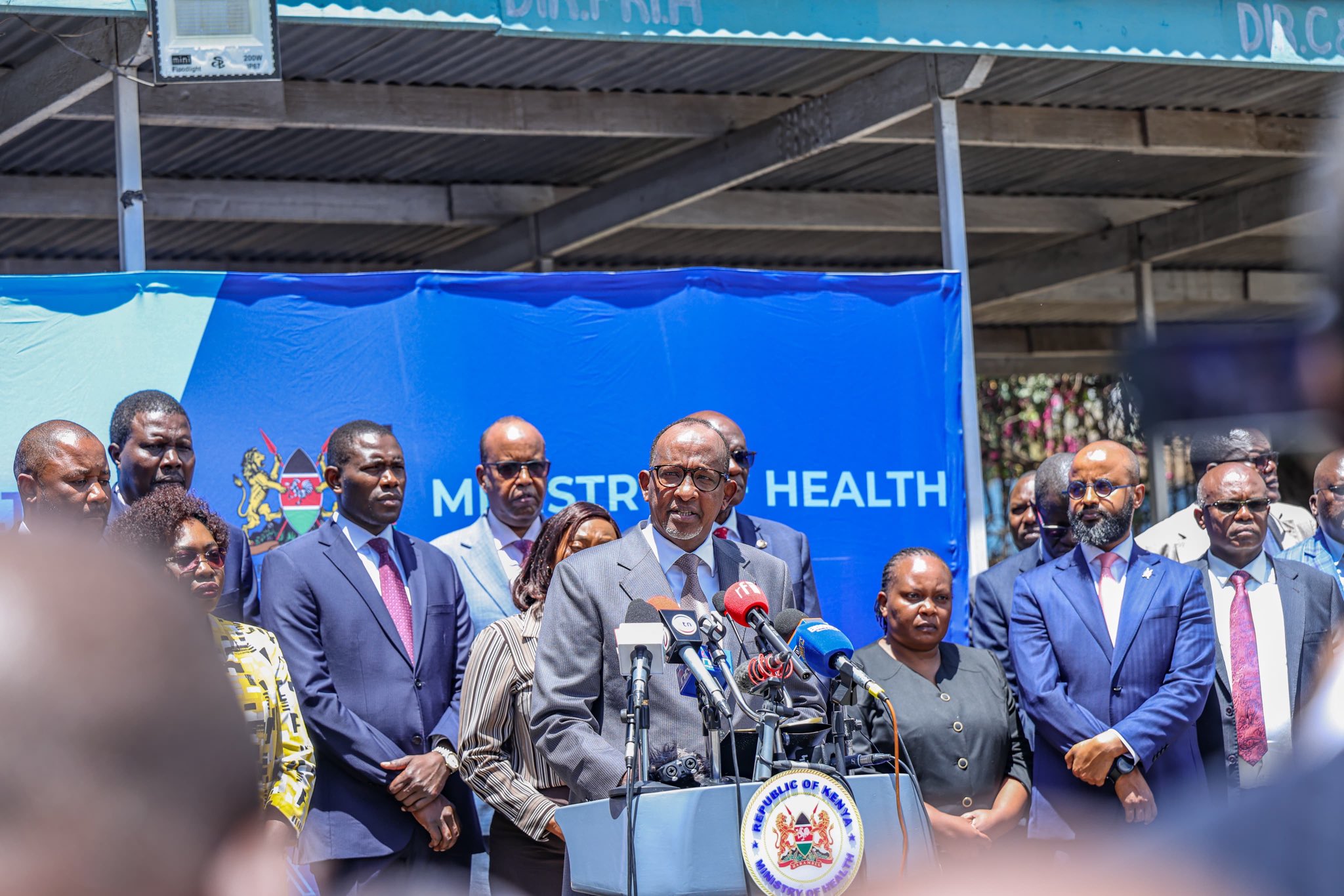
Health cabinet secretary Aden Duale said the patient had fallen ill about a month ago and received treatment at several hospitals in the DRC before travelling by road to Kampala and boarding Jambojet flight 8523.
He arrived at Jomo Kenyatta International Airport at 1.10pm on Saturday, 3 October, and underwent routine public health screening before clearing immigration.
Director general for health Patrick Amoth said medication the patient had been taking may have masked some of his symptoms.
“It is potentially possible that some of the medications that he was taking could be able to mask some of the symptoms,” Amoth said.
The patient was picked up at the airport by a relative and a friend and driven directly to Nairobi Hospital. He was isolated in a separate room in the accident and emergency department before being transferred to the hospital’s East Wing Isolation Facility, which was established during the Covid-19 pandemic and has more than 145 beds.
He presented with fever, chills, fatigue and weakness, muscle pain, painful swallowing, a sore throat and bleeding under the skin at injection sites.
Samples tested independently at the National Virology Reference Laboratory and the Kenya Medical Research Institute confirmed Bundibugyo Ebola virus disease.
The patient received supportive treatment but died at about 11.30pm on Monday.
“Arrangements for safe and dignified burial of the deceased are ongoing, and the burial is planned for later today in line with the Ebola safe and dignified public health protocols,” Duale said.
The 28 contacts identified so far include relatives and healthcare workers who attended to the patient.
“So far, we have listed 28 contacts of the deceased, including family members and healthcare workers who attended to the deceased. We are also pursuing a further 23 passengers and four crew members who were on the same flight with the deceased,” Duale said.
“Arrangements for the quarantine of those at risk are ongoing to protect public health, and the facilities where they will be quarantined are ready,” Duale said.
The confirmation comes as a large outbreak of Bundibugyo virus disease continues in the DRC. As of 23 September, the country had reported 7,890 confirmed cases and 3,799 deaths across 63 health zones in seven provinces, according to the World Health Organization. WHO has described it as the largest Ebola disease outbreak ever recorded in the DRC.
The outbreak also spread to Uganda, which recorded 20 cases and two deaths. WHO declared the country free of the disease in August after the required 42-day monitoring period without a new confirmed case.
Bundibugyo is one of the Ebola virus species known to cause disease in humans. There is no approved vaccine or specific treatment for the disease, although candidate vaccines and treatments are being studied.
WHO has said the licensed Ebola vaccine Ervebo should be used against Bundibugyo virus only within a research protocol because its effectiveness against the disease remains unknown.
The virus spreads through direct contact with the blood, secretions, organs or other bodily fluids of an infected person, or through contaminated materials and surfaces.
People infected with Bundibugyo virus are not infectious before symptoms appear, according to WHO.
Health authorities have maintained heightened surveillance since the outbreak began in May.
By 6 October, 652,584 travellers had been screened and 267 samples tested across five