Government pushes local mineral processing as investors eye rare earth tender
By Chemtai Kirui | Nairobi
The government has opened a tender for the Mrima Hill rare earth deposit in Kwale, with officials estimating it could hold minerals worth up to Ksh8.1 trillion, as President William Ruto pushes to expand local processing and reduce raw exports amid rising global competition for critical minerals.
The moves come as demand for minerals used in electric vehicles, renewable energy and electronics accelerates, drawing growing international interest in Africa’s resource base.
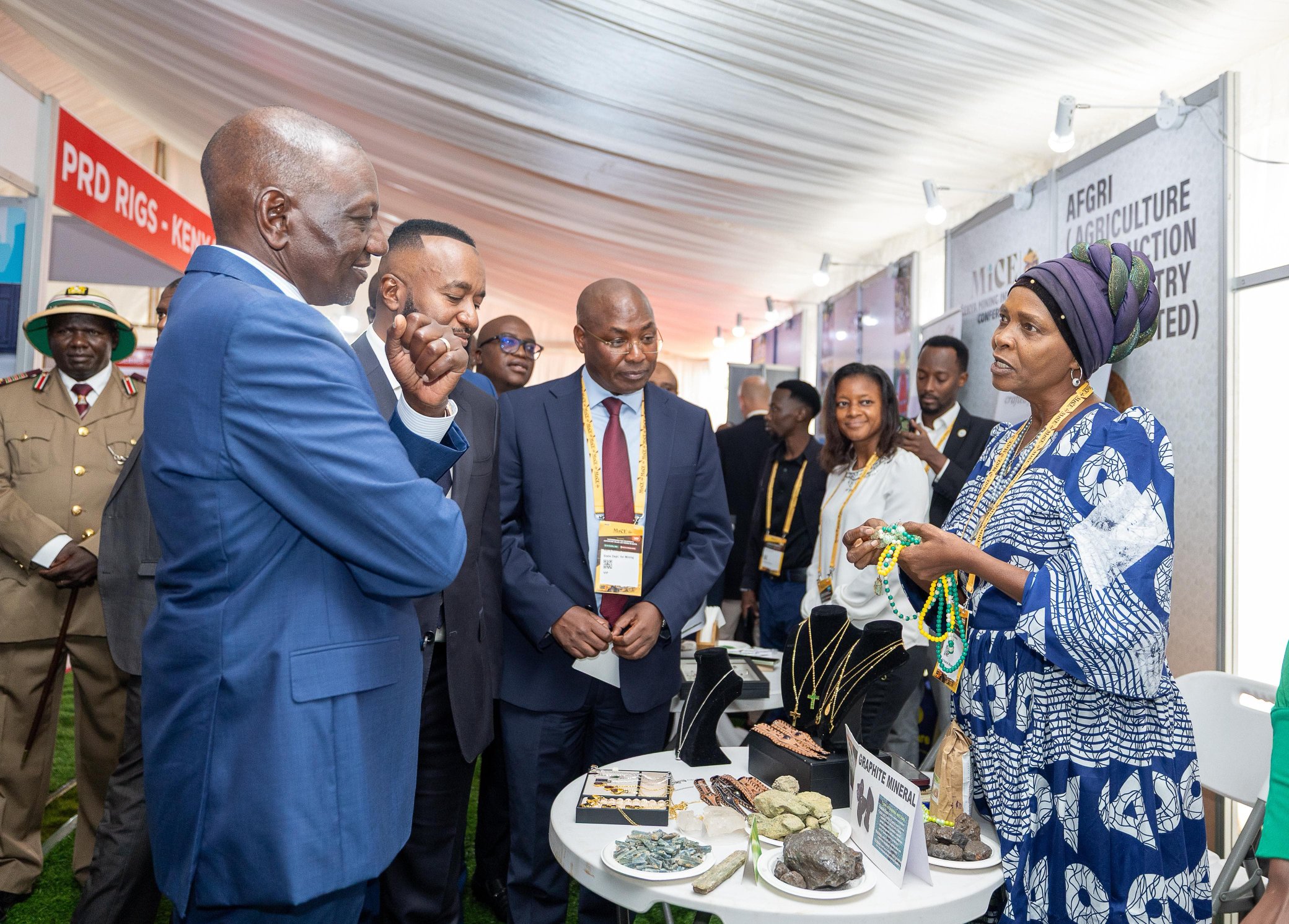
Speaking at the Mining Investment Conference and Expo 2026 in Nairobi, Ruto told more than 500 delegates that the country aims to shift from exporting unprocessed minerals to building domestic refining and manufacturing capacity.
“We must stop exporting jobs and value,” he said, framing the move as part of a broader strategy to increase returns from natural resources.
U.S. officials at the expo proposed a “preferential trade zone” to protect minerals from price manipulation, signaling growing geopolitical interest in the sector.
U.S. Chargé d’Affaires Susan Burns told delegates the framework could include price stabilization measures and tariff tools aimed at protecting emerging producers from market distortions and unfair competition.
She said the United States had mobilized financing through its Office of Strategic Capital to support infrastructure and mineral processing in partner countries.
Mining currently contributes less than 1% to gross domestic product, but the government says it is targeting a tenfold increase to about 10% by 2030.
Mining Cabinet Secretary Hassan Joho said new licenses would prioritize investors willing to establish processing facilities locally, as the government looks to capture more value from minerals such as rare earth elements and coltan, which are used in electronics and clean energy technologies.
The tender for Mrima Hill, long delayed by legal and ownership disputes, is expected to attract interest from investors in the United States, India and China due to its deposits of niobium and rare earth elements.
Joho said the shift toward local processing was central to the government’s economic strategy.
“The choice we have as a government is whether we want to remain poor or build prosperity,” he said.
He added that the government would safeguard small-scale operators, including artisanal miners, through formalization measures and aggregation centers aimed at reducing exploitation by intermediaries.
As part of the shift, the government has designated a group of minerals, including coltan, lithium and rare earth elements, as strategic resources subject to stricter local processing requirements.
Joho also raised concerns over delays in the disbursement of mining revenues, saying funds collected at the national level were not reaching counties and communities as provided under the revenue-sharing framework.
“It is unjust for communities to remain impoverished while proceeds from their land are held at the central level,” he said.
Officials also pointed to early signs of industrial investment, including an 11 billion shilling iron ore palletization plant planned in Taita Taveta that is expected to create about 3,000 jobs.
Industry players have, however, raised concerns about high energy costs and infrastructure gaps that could affect the viability of large-scale processing.
Under new regulations, mining royalties will be shared at 70% for the national government, 20% for counties and 10% for local communities.
The policy direction follows criticism of past projects, including titanium mining at the Coast, where authorities say most value was realized abroad despite large-scale extraction.
The conference is part of a broader push to attract international investors into the mining sector, particularly in minerals linked to electric vehicles and digital technologies.
Officials say the country is positioning itself as a regional hub for mineral processing, targeting partnerships with firms from the United States, India and other markets seeking to diversify supply chains.
Industry representatives, including the American Chamber of Commerce in Kenya, signaled growing interest as global firms look to diversify supply chains.
However, investors have raised concerns about the cost of doing business, including energy prices and infrastructure.
The government is also promoting new royalty-sharing regulations aimed at reducing disputes and resistance that have historically delayed projects.
But questions remain over how “community” beneficiaries will be defined in law, an issue that has drawn scrutiny from civil society groups and local stakeholders.
Beyond investment, the expansion of mining is expected to bring social and environmental pressures, including land acquisition and resettlement in resource-rich areas.
The conference also carried a diplomatic undertone, with officials signaling closer engagement with African partners, including Nigeria, as part of a broader push for regional cooperation in mineral development.
Some investors say the success of the strategy will depend on whether long-standing issues around cost, transparency and community trust can be resolved.
The Nairobi conference comes as the country seeks to reposition mining as a driver of industrial growth, with investors and policymakers watching whether policy commitments can translate into viable projects amid rising costs and growing global competition.