
CIPS Opens Kenya Office to Strengthen Procurement Profession Across East Africa
By Shadrack Mutai | NAIROBI,
The Chartered Institute of Procurement & Supply (CIPS), the world’s largest professional body for procurement and supply, has officially opened its Kenya office in Nairobi, marking a significant step in its efforts to strengthen the procurement and supply profession across Kenya and East Africa.
The new office, launched at the Nairobi Serena Hotel, brought together chief procurement officers, supply chain leaders, regulators, academics and corporate partners. The event was led by CIPS Global Chief Executive Ben Farrell, MBE, who reaffirmed the organisation’s long-term commitment to professionalising procurement across the continent.

“We’re here, we’re here to stay, and we’re firmly committed to the professionalisation of procurement across this continent,” Farrell told guests.
He also announced that Nairobi will host a Pan-African Procurement Conference on 2–3 March, bringing together procurement and supply professionals from across Africa to discuss emerging trends, challenges and opportunities shaping the sector.
Deepening partnerships in Kenya
The opening of the Nairobi office followed a week of engagements aimed at strengthening collaboration and professional development within Kenya’s procurement sector.
Earlier in the week, Farrell addressed the Kenya Institute of Supplies Management (KISM) conference in Mombasa, where CIPS and KISM signed a Memorandum of Understanding to enhance cooperation and advance professional standards in procurement.
CIPS also held discussions with the Public Procurement Regulatory Authority (PPRA) on the professionalisation of the sector and the adoption of global standards in public procurement.
Nairobi to serve as regional hub
CIPS East Africa General Manager Letticia Nkumbula said the new Nairobi office will provide a local platform through which the organisation can support procurement professionals and organisations across the region.
“Kenya is the gateway to every corner of East Africa. Organisations that want a presence in the region start by looking at Kenya, and so did we,” Nkumbula said.
The office will provide access to CIPS qualifications, membership services, corporate programmes and professional development opportunities, while helping organisations strengthen procurement capabilities and professional standards.
CIPS Business Development Manager Gladys Gacheru said the organisation’s role extends beyond providing professional qualifications to helping employers assess capabilities, identify skills gaps and build stronger procurement teams.
“Procurement is increasingly a function that enables growth, resilience and innovation, and enables organisations to compete,” she said.
Emphasis on ethical procurement
Ethics, integrity and professional standards remain at the centre of CIPS’ agenda.
During the Nairobi launch, Absa Bank Kenya, Coca-Cola Beverages Africa (CCBA) Kenya and KCB Bank Kenya received the CIPS Corporate Ethical Kite Mark in recognition of their commitment to embedding ethical procurement practices within their organisations.
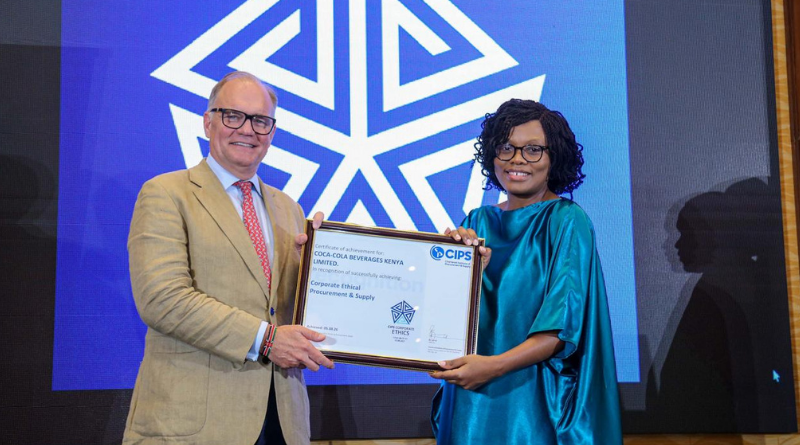
The recognition underscores the growing importance of transparency, integrity and responsible decision-making in procurement and supply chain operations.
Preparing procurement professionals for the future
The Nairobi office launch also coincided with CIPS’ global Great Conversation, a consultation examining the future skills and competencies required by procurement professionals as organisations navigate geopolitical uncertainty, supply-chain disruptions, sustainability demands, technology and artificial intelligence.
Farrell said procurement was undergoing a significant transformation, with organisations increasingly relying on procurement leaders not only to manage costs but also to protect business continuity and build resilience.
“Where cost was a primary driver for supply, people are now talking about resilience, both in the private and public sectors,” he said.
He challenged procurement professionals to take greater ownership of their organisations’ performance and outcomes. “It is time to own the outcome,” Farrell said.
The establishment of the CIPS Kenya office represents a major investment in the country’s procurement profession and positions Nairobi as a stronger regional platform for advancing professional standards, skills development, ethical practice and supply-chain resilience across East Africa.