
‘The most fertile period is between 25 and 35’: the Kenyan women turning to IVF
By Chemtai Kirui
At Myra IVF Centre in Nairobi, Dr Sarita Sukhija sees women in their late 20s and 30s who have put off having children, alongside couples who have been trying to conceive for more than a year.
Some have blocked fallopian tubes. Others have low sperm counts or other fertility problems. Some are offered intrauterine insemination before moving on to in vitro fertilisation.
Many of the women Sukhija sees are urban professionals, she says.
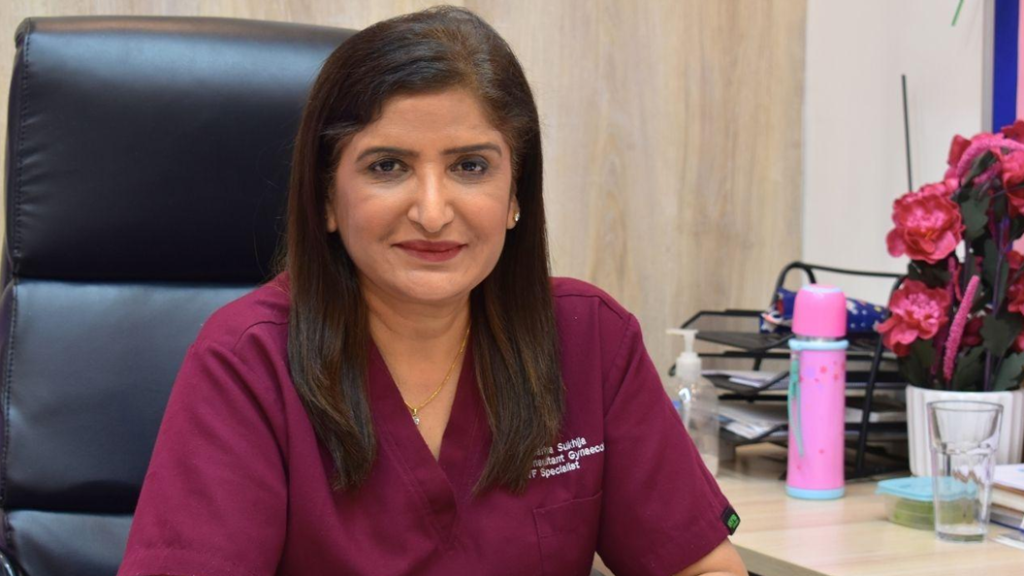 Dr. Sarita Sukhija at Myra IVF Centre, Nairobi, discussing IVF, egg freezing, and genetic testing. Photo: Chemtai Kirui/Kass Media Group
The total fertility rate fell from 4.6 children per woman in 2008-09 to 3.9 in 2014 and 3.4 in 2022, according to the Kenya Demographic and Health Survey. The rate was 2.8 in urban areas.
For women who postpone pregnancy, age can become another consideration.
Female fertility begins to decline in the early 30s and more rapidly after 37, as the number and quality of eggs decrease, according to the American College of Obstetricians and Gynecologists. As women age, the risk of chromosomal abnormalities and miscarriage also rises.
“The most fertile period for women is between 25 and 35 years,” Sukhija says.
Myra offers fertility preservation to women who expect to delay pregnancy. Sukhija says eggs frozen at a younger age are more likely to retain their potential for a future pregnancy, before the decline in egg quality accelerates.
But freezing eggs is expensive.
A full IVF cycle at Myra costs about KSh550,000, Sukhija says. The hormone injections used during treatment cost another KSh120,000.
Published fees from several Nairobi fertility centres put standard IVF packages at about KSh350,000 to KSh700,000, although prices and what is included vary between clinics. Medication, intracytoplasmic sperm injection, embryo freezing and genetic testing can cost extra.
Much of the bill is paid by patients themselves.
Insurance coverage varies. Some public-sector medical schemes provide IVF benefits for eligible members, while standard health insurance policies generally exclude assisted conception.
Under the public officers’ medical scheme, IVF is covered subject to eligibility and prior authorisation, with limits on the number of attempts and the amount payable.
There are other decisions once treatment begins.
Transferring two embryos increases the chance of a twin pregnancy. Sukhija says the twin pregnancy rate is about 20-30% when two embryos are transferred.
An IVF pregnancy, once established, is generally similar to one conceived naturally, she says. But multiple pregnancies carry greater risks and require closer monitoring.
Myra also offers preimplantation genetic testing, which can screen embryos for chromosomal abnormalities and, in appropriate cases, specific inherited genetic conditions.
The testing can also reveal an embryo’s chromosomal sex.
The clinic advertises “family balancing”, in which that information can be used when selecting embryos.
Embryos can be frozen and stored for several years, allowing couples to preserve them for possible use in a later pregnancy.
The technology is advancing while Kenya is still putting rules around it.
The Assisted Reproductive Technology Bill, 2022, passed the National Assembly in November 2025 and was sent to the Senate for consideration. The Bill would provide a legal framework for IVF, embryo and gamete donation and surrogacy, as well as licensing and oversight of assisted reproductive technology facilities. It also proposes prohibitions on some practices, including non-medical sex selection.
The Senate considered the Bill at second reading in 2026. It had not become law as of September 2026.
For Sukhija, fertility treatment should begin with an assessment rather than automatically with IVF.
“Couples need to seek advice early. Both partners should adopt a healthy lifestyle, get tested, and understand the process, including costs and procedures,” she says.
Publication history: Originally published August 2025. Revised and updated September 2026.