
Kenya Power Says Falling Trees Behind Majority of Rain-Season Outages
By Chemtai Kirui, Nairobi | March 11, 2026
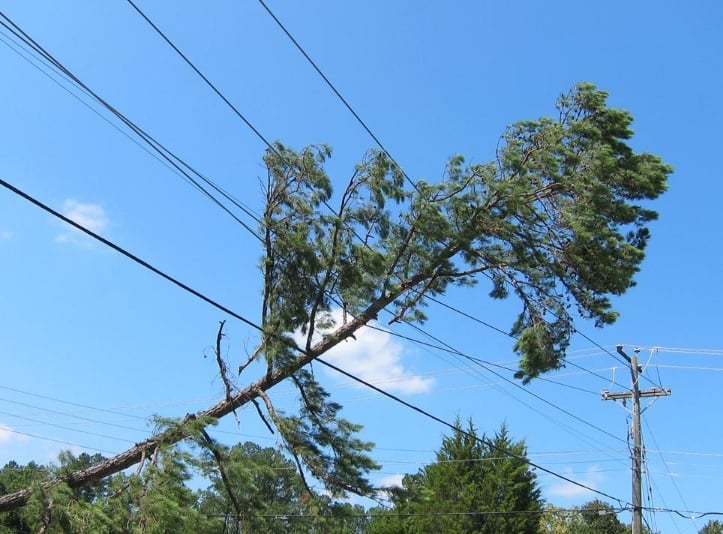
The country’s main electricity distributor said falling trees and branches are responsible for most power outages during the current rainy season, as storms disrupt electricity supply across several regions.
As Nairobi’s death toll from seasonal flooding rose to 23 this week, Kenya Power managing director Joseph Siror said up to 70% of outages recorded during storms are caused by trees and branches falling onto overhead lines.
The statement comes as many households and businesses report intermittent blackouts during the March–May long-rains period, when strong winds and saturated soils increase the likelihood of trees collapsing onto distribution networks.
“The biggest challenge is that about 50 to 70 percent of outages occur because of trees,” Siror said in a televised interview. “When branches or entire trees fall onto power lines during storms, they interrupt supply and sometimes damage infrastructure.”
The nation’s electricity distribution network relies heavily on overhead lines, particularly in residential neighborhoods and rural areas, making it vulnerable to storm-related damage.
Siror said the utility had intensified vegetation management programs aimed at clearing trees growing too close to power infrastructure. However, he noted that efforts to remove or trim vegetation had previously faced resistance from some property owners.
“Initially, some members of the public were opposed to the exercise,” he said. “But where the work has been carried out successfully, customers have seen improved reliability.”
The outages are also being compounded by flooding in several urban areas following days of heavy rainfall.
Over the weekend, a substation in Nairobi’s South C area was temporarily affected after floodwaters entered the facility when a boundary wall collapsed. The incident disrupted power supply to nearby commercial zones, including parts of the Industrial Area and the vicinity of Wilson Airport.
The crisis has also proven deadly with police reports indicating that at least 23 people in Nairobi have died since Friday, mainly from drowning or electrocution caused by damaged power lines.
Kenya Power said engineers had been deployed to pump out water from affected facilities and inspect equipment before restoring electricity.
While major substations have largely returned to service, the company said smaller distribution faults — including damaged poles and transformers — continue to cause localized outages in parts of Nairobi and neighboring counties.
Siror said the company was also expanding the use of smart-metering technology and digital monitoring systems to improve the detection of faults and reduce response times during emergencies.
The utility has mobilized additional field crews to remove fallen branches and repair damaged lines as storms continue across the country.
The long-rains season typically runs from March through May and is often accompanied by strong winds and localized flooding that can affect infrastructure, transport and electricity supply.
Separately, Kenya Power said it is accelerating the rollout of a nationwide Optical Character Recognition (OCR) meter-reading system launched on March 10. The technology allows technicians to scan meter displays using a mobile application, reducing manual entry errors and limiting disputes linked to estimated billing.
With the Kenya Meteorological Department warning that heavy rainfall could persist through the week, the utility said it has mobilized emergency teams while urging residents to report fallen cables through its *977# self-service platform.