Developing states press for grants over loans as COP31 targets resilient cities
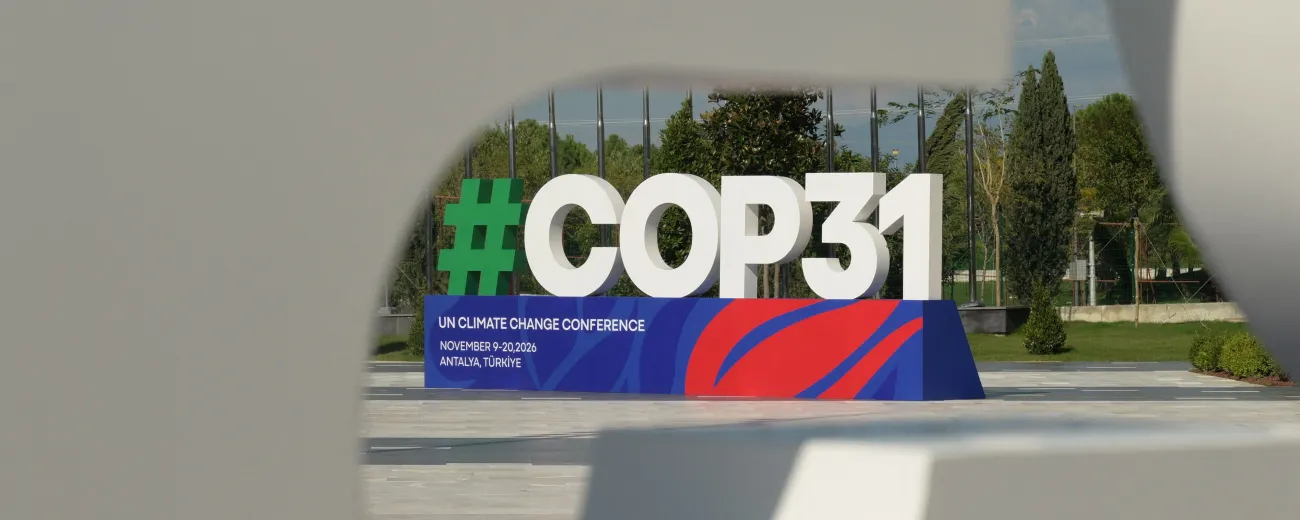
World leaders meeting at the United Nations climate summit in Antalya, Türkiye, have pledged to accelerate investment in cities facing growing threats from floods, extreme heat and other effects of climate change, as African countries press for more accessible funding to protect their populations and infrastructure.
More than 100 national leaders attended the second day of the COP31 World Leaders’ Summit, where discussions focused on turning national climate commitments into practical investments in urban areas. Among the announcements were a new financing facility to help cities develop climate-resilient infrastructure projects and up to $190m in adaptation finance for five countries and a regional programme.
The focus on cities reflects a growing challenge for governments. More than half of the world’s population lives in urban areas, where flooding, heatwaves and damage to infrastructure threaten homes, businesses, transport networks and essential services.
But for African countries, the question is not simply how to make cities more resilient. It is whether governments and local authorities can obtain the financing needed to build that resilience without taking on further debt.
The East African Community has called for more predictable, accessible and grant-based climate finance, warning that support for adaptation and recovery from climate-related losses should not deepen the debt burdens of vulnerable countries.
Its common position, agreed by partner states at a regional meeting in Machakos, Kenya, ahead of COP31, calls on developed countries to meet their public climate finance obligations, triple adaptation finance by 2035 and give national institutions greater direct access to international funds.
The demands come as a new United Nations assessment points to a widening gap between the cost of protecting developing countries from climate impacts and the money currently available.
The UN Environment Programme’s 2026 Adaptation Gap Report estimates that developing countries will need about $305bn annually by 2035 to adapt to climate change. International public adaptation finance from developed to developing countries reached between $28.2bn and $31.7bn in 2024, an increase of only about $1bn from the previous year.
Even if the commitment made at last year’s COP30 to triple international public adaptation finance by 2035 is achieved, it would cover only 20–29% of estimated needs, the report says.
The scale of the urban financing problem is also apparent in the figures. Cities need an estimated $4.5tn to $5.4tn annually through 2030 for climate-resilient infrastructure, including transport, water, energy and waste systems. Yet urban climate finance averaged about $831bn a year in 2021 and 2022, according to the UN-Habitat-supported State of Cities Climate Finance report.
More strikingly, only about $10bn of that annual financing went towards urban adaptation, leaving communities exposed to floods, heat and other climate hazards with a fraction of the investment required to protect them.
The imbalance is particularly significant for developing countries. Emerging and developing economies received only 11% of global urban climate finance in 2021–22, while least developed countries received about 1%.
At COP31, the Turkish presidency has presented the Sustainable Urban Resilience Financing Facility, known as SURFF, as one way to address the problem.
Developed by Türkiye’s municipal development bank, İLBANK, in partnership with UN-Habitat and the World Bank, the initiative is intended to help countries and municipalities turn climate priorities into projects that can attract investment.
The facility will support project preparation, improve coordination between national and local governments and connect cities with existing financing institutions.
But SURFF is not a new climate fund and does not come with a dedicated allocation of money for African cities. Instead, it seeks to make existing financing mechanisms work more effectively by helping municipalities develop projects that lenders and investors can support.
That distinction is important for local authorities that often struggle to access international climate finance because they lack the technical capacity, project preparation resources or financial structures required by international lenders.
A separate announcement at the summit offers a more concrete indication of where adaptation funding could go.
The Climate Investment Funds announced on Thursday that five countries and a regional initiative involving Malawi and Mozambique had been selected for the first phase of its Accelerating Resilience Investments and Innovations for Sustainable Economies programme, known as ARISE.
Bangladesh, Haiti, Kyrgyzstan, Morocco and Sierra Leone will each be able to prepare investment plans seeking up to $30m, while the regional initiative can seek up to $40m.
The programme is backed by contributions from Germany, Ireland and Spain and will work with six multilateral development banks. Forty per cent of its financing is expected to be allocated to the private sector.
The selection process attracted applications from 70 countries, according to the fund’s chief executive, Tariye Gbadegesin. The 25 strongest applications alone represented potential investments worth $700m, she said.
The programme’s first beneficiaries include two African countries and a regional initiative in southern Africa, but no East African country was included in the initial selection. Nor is the $190m a sum already disbursed. The countries and regional initiative must develop investment plans to seek financing under the programme.
For African negotiators, the question of whether international climate finance reaches the countries that need it has been central to the discussions in Antalya.
The African Group of Negotiators, which represents the continent’s 54 countries in the UN climate talks, entered the summit seeking formal discussions on increasing adaptation finance, the funding requirements of the Green Climate Fund and the effects of trade measures on developing economies.
The group did not secure all its proposed issues as separate agenda items. But it secured the inclusion of a Climate Finance Work Programme after negotiations with developed countries, giving developing nations a formal space to scrutinise how existing commitments are delivered.
The group’s chair, Nana Dr Antwi-Boasiako Amoah, has questioned whether the financial commitments made by wealthy countries match the expectations placed on developing nations to implement their climate plans.
“Where is the financial ambition to help developing countries implement those commitments in their national adaptation plans?” he asked.
He has also argued that the financing must be “credible”, “concessional” and “grant in nature”, particularly for adaptation.
The distinction between grants and loans is central to Africa’s position. Governments facing rising climate-related costs and high borrowing obligations argue that they should not have to accumulate more debt to protect their populations from a crisis they have contributed relatively little to causing.
Kenya has raised similar concerns at the summit.
In a statement delivered on behalf of President William Ruto, Environment Principal Secretary Festus Ng’eno called for climate finance to become more accessible and affordable for developing countries, urging international contributors to support an ambitious replenishment of the Green Climate Fund.
Ruto said climate change was placing additional pressure on public finances in developing countries by reducing government revenues and increasing spending on responses, at a time when countries also needed resources to invest in resilience.
“Africa is among the most vulnerable regions but receives less than 5% of global climate finance,” Ruto said in the statement, delivered by Ng’eno at a Green Climate Fund event in Antalya.
The Green Climate Fund, which supports climate projects in developing countries, has also selected Nairobi to host its regional office for East and Southern Africa. A second African office will be based in Abidjan, covering Central, North and West Africa.
The decision was taken by the fund’s board before COP31 and was welcomed by Kenya at the summit. The regional presence is intended to strengthen engagement with governments and institutions and improve support throughout the project development and delivery process.
It does not, however, constitute a new funding allocation to Kenya or its neighbours. The extent to which it improves access will depend on whether national institutions and local project developers can secure funding through the fund’s existing procedures.
The debate over resilient cities also extends beyond the availability of adaptation finance. Buildings, transport, electricity and waste systems determine both how much greenhouse gas cities produce and how well their residents withstand climate shocks.
At COP31, countries endorsed the Antalya Compact for Energy Efficient Buildings, which supports a target to reduce the operational energy intensity of the global building stock by 25% by 2035, compared with 2020 levels.
The compact also seeks to accelerate the electrification of buildings as part of the Turkish presidency’s wider ambition to increase electricity’s share of global final energy consumption to 35% by 2035.
Its six priority areas include building renovation, energy performance, national strategies, electrification and the financing and technical capacity required to implement improvements.
For African cities, the challenge is translating such ambitions into affordable housing, reliable electricity, better drainage and infrastructure that can withstand increasingly severe weather.
The East African Community’s common position ahead of COP31 also calls for stronger early-warning systems, disaster-risk reduction and the full capitalisation of the Fund for Responding to Loss and Damage.
The regional bloc has cited figures from the World Meteorological Organization showing that climate extremes cost African countries between 2% and 5% of gross domestic product annually, while some governments divert up to 9% of national budgets to disaster response.
For governments already struggling to finance essential public services, the cost of responding to repeated climate disasters leaves fewer resources for longer-term investment in water infrastructure, housing, transport and other services.
COP31’s focus on resilient cities has brought the question of implementation closer to the centre of the climate debate. But the announcements in Antalya have yet to resolve the financing problem facing many developing countries.
A facility designed to prepare investment projects cannot by itself fill the funding gap. Nor can a regional office guarantee that money will reach municipalities that lack the resources to develop bankable projects.
For East African governments, the test will be whether international commitments translate into accessible funding for the infrastructure and services their growing cities need, without adding to already substantial debt burdens.
The negotiations, which opened on November 9 and are scheduled to conclude on November 20, enter their ministerial phase next week with core disputes over adaptation finance still unresolved. For developing economies, the test in Antalya will be whether high-level pledges translate into concessional capital for vulnerable cities—without adding to sovereign debt burdens.