Why a U.S. Trade Deal Called AGOA Matters for Kenyan Jobs and Exports
By Chemtai Kirui
Nairobi, Jan. 13 — Tens of thousands of jobs in the export manufacturing sector, particularly in textiles and apparel, depend on the fate of a United States trade arrangement known as the African Growth and Opportunity Act (AGOA), which U.S. lawmakers have now voted to extend for an additional three years.
The decision by the U.S. House of Representatives would preserve duty-free access for thousands of Kenyan products to the American market, shielding export-oriented manufacturers from steep tariffs that were reimposed when AGOA briefly lapsed in September 2025.
The extension bill now awaits consideration by the U.S. Senate and presidential assent.
AGOA is a unilateral U.S. trade preference program, first enacted in 2000, that grants eligible sub-Saharan African countries duty- and quota-free access to the U.S. market for more than 6,000 products.
Unlike a free trade agreement, AGOA does not involve reciprocal market access commitments from African countries and is subject to periodic renewal by the U.S. Congress, making it vulnerable to shifts in American domestic politics.
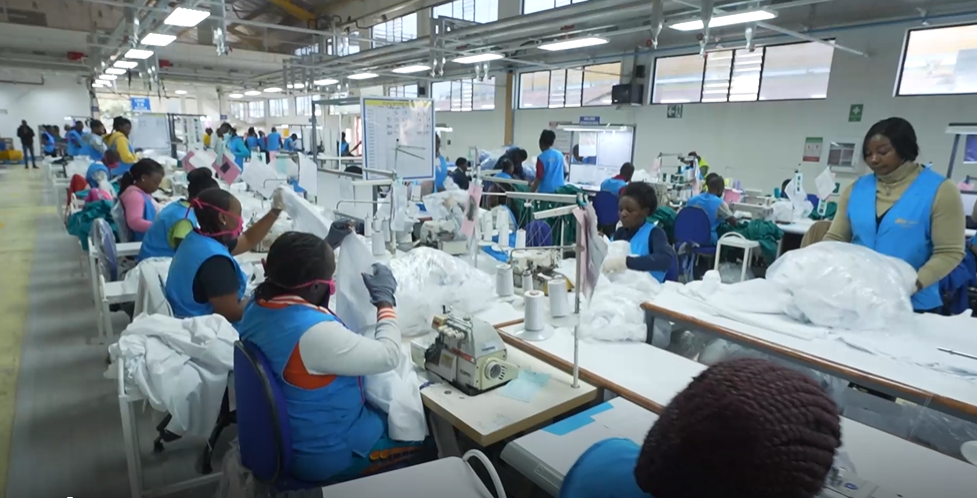
Kenya has been among the program’s largest beneficiaries, particularly in textiles and apparel produced in Export Processing Zones (EPZs).
In 2024, textile and apparel exports to the U.S. were valued at more than KSh 60 billion and supported an estimated 66,800 direct jobs, according to industry data. The sector employs a high proportion of women and young workers, making it a critical source of formal employment.
When AGOA expired at the end of September 2025, Kenyan exports to the U.S. were immediately subjected to full Most Favored Nation tariffs, ranging from 15 to 42 percent depending on product category.
For apparel manufacturers operating on thin margins, the sudden loss of duty-free access sharply eroded competitiveness.
Factories in Athi River, Thika and other industrial hubs warned that higher tariffs had made Kenyan products less attractive to U.S. buyers compared with those from Asian exporters such as Bangladesh and Vietnam, where scale, integrated supply chains and trade agreements already lower costs.
The Kenya Association of Manufacturers has said that the loss of AGOA preferences has exposed exporters to significantly higher U.S. tariffs, including an additional 10 percent charge, eroding competitiveness and making it difficult for firms to plan production and investment amid policy uncertainty.
Over more than two decades, AGOA has played a central role in attracting foreign direct investment into Kenya’s apparel sector, particularly from Asian manufacturers seeking preferential access to the U.S. market. It has also supported exports in horticulture, including flowers, fruits and vegetables, as well as leather and selected manufactured goods.
However, trade analysts say that AGOA’s structure also reflects asymmetric power relations. Because it is a unilateral preference scheme controlled by the U.S. Congress, African exporters bear the risk of sudden policy changes without formal dispute mechanisms or long-term guarantees.
Periodic renewals have become a recurring source of uncertainty for firms making multi-year investment decisions.
Kenya’s Investment, Trade and Industry Cabinet Secretary Lee Kinyanjui has publicly urged prompt renewal of AGOA, saying the imposition of new U.S. tariffs following its lapse has threatened the competitiveness of Kenyan exports and underscored the urgency of securing continued duty-free access.
At industry and business forums in Nairobi, Kinyanjui said the tariff shift risked eroding gains in the textile and apparel sector and could put pressure on jobs if not addressed through trade policy engagement.
The Kenya Private Sector Alliance (KEPSA) on the other hand, proposed a two-year transition period under an extended AGOA framework, allowing Kenya and the U.S. to explore negotiations toward a more predictable long-term trade arrangement.
Business leaders argue that certainty is essential for securing orders, retaining buyers and sustaining employment.
While exporters continue to push for AGOA’s extension, policymakers and trade experts caution against overreliance on preferential access to a single market.
The Kenya Export Promotion and Branding Agency (KEPROBA) has called for diversification of both export products and destinations, including deeper engagement under the African Continental Free Trade Area (AfCFTA) and increased value addition in sectors such as tea, coffee, nuts and livestock products.
Yet analysts say that while AfCFTA offers long-term opportunities, it does not immediately replace U.S. demand, particularly for labor-intensive manufactured goods.
In the near term, AGOA remains a critical bridge between Kenya’s industrial ambitions and global markets.
Critics of preference-based trade regimes also point to recent U.S. tariff actions, including a blanket 10 percent tariff on Kenyan goods, as evidence of the vulnerability inherent in unilateral arrangements.
These shifts showcase the need for Kenya to strengthen competitiveness, deepen local value chains and broaden trade partnerships.
With House approval secured, the AGOA extension now moves to the U.S. Senate, where Kenyan officials and exporters are watching closely for swift action.
U.S. Representative Terri Sewell, a leading advocate for AGOA in Congress, said the three-year extension is intended to give businesses and governments in Africa the stability needed to plan ahead and sustain economic engagement with the U.S. market.
For Kenya’s export manufacturers and workers, the outcome will determine whether recent disruptions remain a temporary shock — or a signal of deeper structural risks in the country’s integration into global trade.