Kenya and Kazakhstan move to deepen trade ties with planned Mombasa logistics hub
By Chemtai Kirui | Astana
Kenya and Kazakhstan moved on Wednesday to deepen economic ties through plans for a dedicated logistics and transit hub at the Port of Mombasa, as President William Ruto sought to position the country as East Africa’s gateway for Central Asian trade and investment.
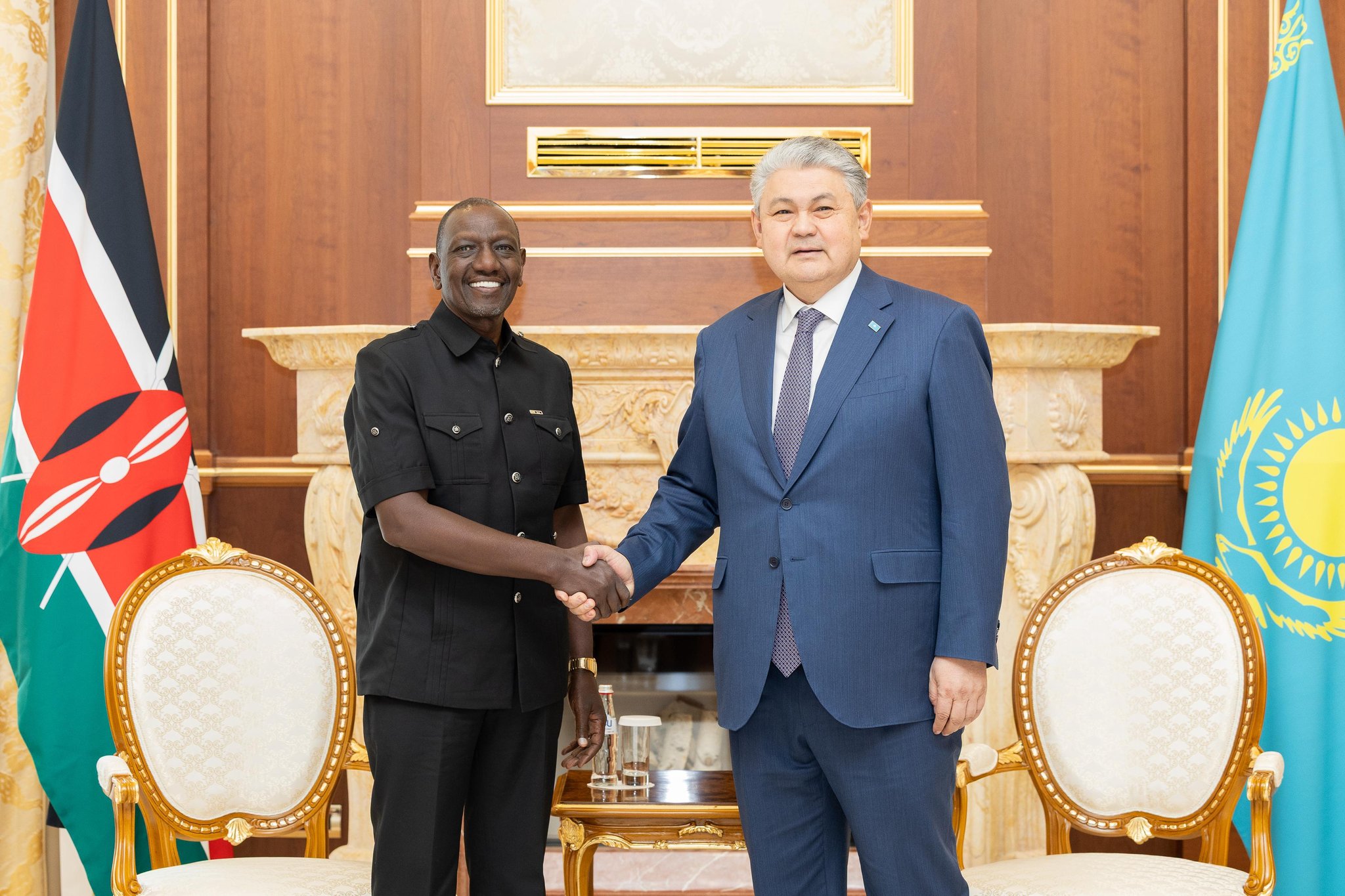
Ruto arrived in Astana on Tuesday for a two-day official visit and was received by Kazakhstan Foreign Minister Yermek Kosherbayev ahead of bilateral talks with President Kassym-Jomart Tokayev. The visit followed his attendance at the World Urban Forum in Baku, Azerbaijan, part of Nairobi’s quiet push into Central Asia and the Caspian trade corridor.
The proposed hub, under discussion during Ruto’s two-day state visit to Kazakhstan, would support the movement of grain, mineral fertilizers and other commodities from the landlocked Central Asian nation into East and Central African markets, according to the bilateral briefings released during the visit.
Kazakhstan, the world’s largest landlocked country and a major exporter of wheat, uranium and mineral fertilizers, is seeking broader access to African markets as global supply chains face mounting geopolitical disruptions.
For the government, the talks form part of a wider push to diversify trade and infrastructure partnerships beyond traditional Western and Asian corridors amid rising concern over energy insecurity, shipping disruptions and inflation linked to instability in the Middle East.
“This partnership is about opening new economic frontiers and strengthening logistics, trade and investment cooperation between our regions,” Ruto said after bilateral talks with Kazakh President Kassym-Jomart Tokayev at the Palace of Independence in Astana.
President Ruto said the two governments were finalizing frameworks for cooperation in logistics, trade, energy, ICT, finance, and education.
At the centre of the negotiations is a proposal to establish a dedicated Central Asian logistics and grain-handling facility at either the Port of Mombasa or the Port of Lamu, providing Kazakhstan with a long-term maritime gateway into Africa.
The discussions come days after French shipping giant CMA CGM announced plans to invest about KES 103.6 billion (USD 800 million) in container terminal upgrades at Mombasa, as Kenya accelerates efforts to position its ports as regional trade hubs.
The foundations for the logistics partnership were first laid in September 2023 during talks between Ruto and Tokayev on the sidelines of the United Nations General Assembly in New York, where the government invited Kazakh investors to participate in grain-handling infrastructure at Mombasa.
The official State House dispatches released during the visit, states that the latest negotiations are intended to move the proposal from diplomatic discussions into operational infrastructure planning.
The country also secured tax incentives aimed at boosting agricultural exports into Central Asia under agreements negotiated earlier this year between Kenya National Chamber of Commerce and Industry (KNCCI) President, Dr. Erick Rutto, Kazakhstan’s ambassador to Kenya Barlybay Sadykov and trade officials from both countries.
The arrangements include customs and import tax exemptions on Kenyan green coffee beans entering Kazakhstan and plans for a Kenyan tea and coffee distribution hub in Astana to serve wider Eurasian markets.
According to Dr. Erick Rutto and Ambassador Sadykov, the strategy is intended to reduce the country’s dependence on intermediary export routes through Europe by establishing direct distribution channels into the Eurasian Economic Union.
Beyond trade and logistics, the talks also touched on long-term energy cooperation, including civil nuclear energy frameworks.
Kazakhstan produces roughly 43% of the world’s uranium and is among the world’s leading suppliers of nuclear fuel materials.
Prime Cabinet Secretary and Cabinet Secretary for Foreign and Diaspora Affairs, Musalia Mudavadi said the discussions focused on technical cooperation around peaceful nuclear energy development as government seeks to diversify its electricity mix and stabilize energy supply amid growing climate pressure on hydropower systems.
Mudavadi, who is accompanying Ruto on this state visit, also confirmed that the two governments are drafting a structured labour mobility framework aimed at expanding opportunities for Kenyan professionals in technical sectors under regulated employment arrangements.
The framework would include labour protections, welfare monitoring and skills-transfer provisions, officials said.
The agreements come as the country faces mounting economic pressure linked to high fuel costs, supply-chain disruptions and transport-sector tensions at home, with parts of Nairobi disrupted this week by a matatu strike and an ongoing legal dispute over management of the Petroleum Development Fund.
“Our trade ties are already blossoming in tea, flowers, fertiliser and logistics, with a growing direct connection between Nairobi and Astana,” Ruto said, adding that the administration now wants to take the relationship “to the next level” through structured infrastructure partnerships.
The country exports tea, coffee and horticultural products to Kazakhstan while importing fertilisers and industrial commodities.
The Astana talks also come amid a steady expansion in bilateral trade. Recent trade data shows exports to Kazakhstan reached about KES 9.13 billion (USD 70.5 million) annually, driven largely by cut flowers and tea, while imports from Kazakhstan stood at about KES 60 million (USD 464,000), mainly raw industrial sulphur.