Shift from aid to investment as Nairobi hosts major deal-making summit
By Chemtai Kirui 25/03/2026
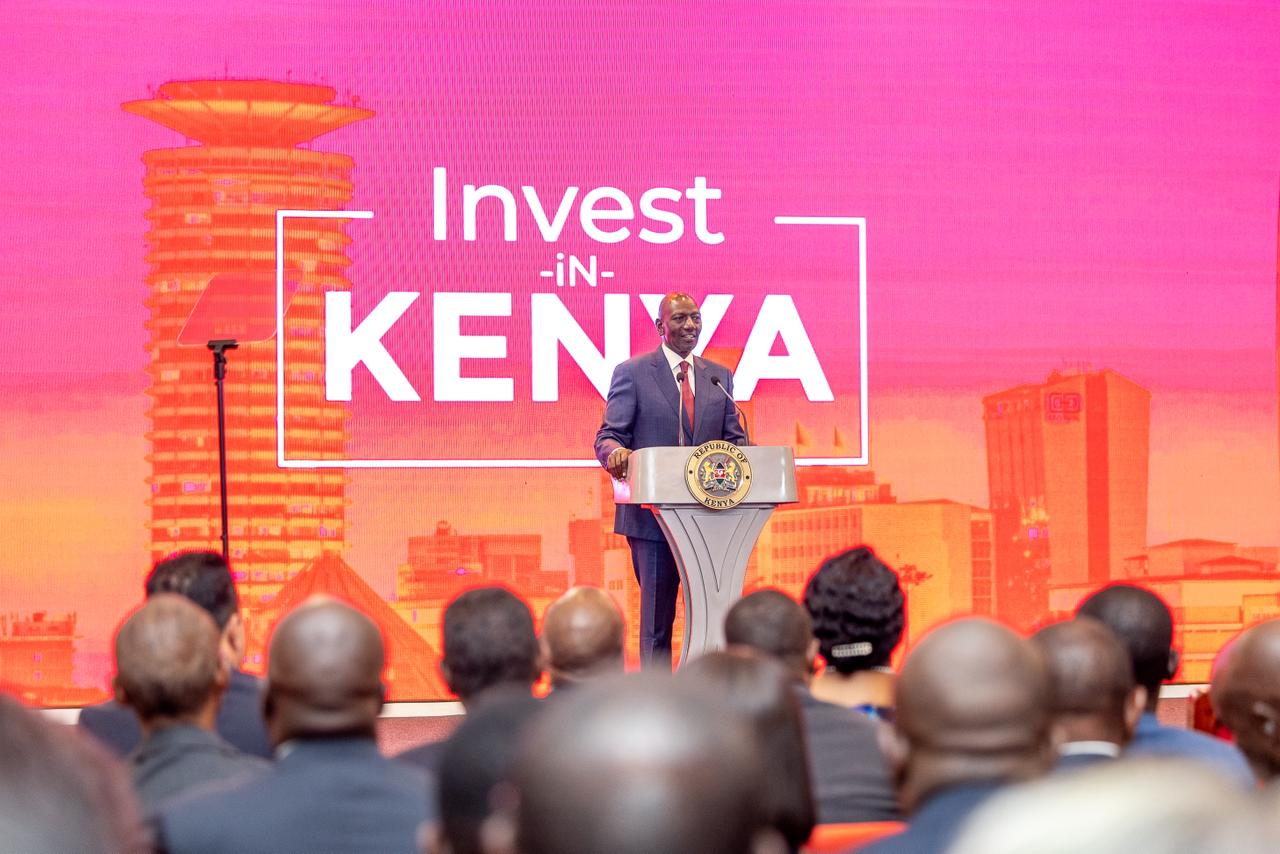
NAIROBI — When the first session opened at the Kenyatta International Convention Centre on Wednesday morning, the mood was less ceremonial than practical. The Kenya International Investment Conference (KIICO) 2026 is no longer being pitched as a showcase. The question hanging over the room was simpler: can any of this turn into real deals?
For President William Ruto’s administration, the timing is tight. Concessional financing is shrinking, global capital is more cautious, and Nairobi is trying to reposition itself—not as a recipient of aid, but as a destination for equity investment and co-financing. Officials say they are targeting more than KSh260 billion (USD 2 billion) in commitments by the end of the three-day meeting.
Speaking at the opening, President William Ruto said the government had already secured pledges beyond that threshold, pointing to commitments worth $2.9 billion from investors across sectors including agriculture, manufacturing and energy.
That shift is visible in how this year’s conference has been put together. Organisers have leaned heavily on a digital One-Stop Centre, designed to address the complaints investors have repeated for years: delays in licensing, land approvals and tax administration. Government officials say dozens of reforms are now in place, including changes to VAT refunds and incentives tied to Special Economic Zones.
Ruto said the government is aligning export processing and special economic zones, alongside investments in infrastructure and workforce training, to make projects easier to execute once approved.
Across sessions, the message is the same: the policy work has been done. What matters now is whether investors are willing to commit.
The programme itself mirrors that shift. The opening sessions focus on domestic sectors such as manufacturing, agriculture and ICT, before widening into regional integration through the Common Market for Eastern and Southern Africa (COMESA). By the final day, attention shifts to the Africa Green Industrialization Initiative, which the government hopes will position it at the centre of a new phase of low-carbon manufacturing on the continent.
Energy is central to that pitch. With most of its electricity generated from geothermal, wind and other renewable sources, the country is presenting itself as a base for industries looking to reduce their carbon footprint. Officials argue that products manufactured locally—from textiles to processed minerals—could carry a competitive edge in markets where environmental standards are tightening.
That argument overlaps with a broader push around critical minerals. Policymakers are encouraging a regional approach in which resources such as copper, lithium and graphite—much of it found in neighbouring countries—are processed within the COMESA bloc rather than exported in raw form. The idea is to keep more value within the region, while reducing exposure to disruptions in global supply chains.
There is also a longer-term ambition behind it. Government is bidding to host the permanent secretariat of the Africa Green Industrialization Initiative, a move that would give Nairobi a role in shaping how climate finance and industrial investment are directed across the continent.
But the success of that vision depends on something more basic: whether policy can be implemented at scale. Investors have long pointed to regulatory fragmentation and administrative delays as barriers to expanding across African markets. The inclusion of the COMESA Investment Forum within this year’s conference is, in part, an attempt to address that concern.
Mining policy is emerging as one of the clearest tests. Proposed changes under the Mining Amendment Bill 2026 aim to formalise artisanal operations, simplify licensing and encourage local processing. For investors, that could mean clearer rules and lower entry barriers. For the government, the goal is to retain more value from mineral resources.
Similar shifts are visible in other sectors. Discussions around agriculture have focused on linking smallholder farmers to carbon markets and digital platforms, while interest in local pharmaceutical manufacturing has grown in the wake of recent global supply disruptions.
Still, much of the real work is happening away from the main stage. Behind closed doors, government officials and investors are negotiating the details that determine whether projects move forward or stall.
That is where the conference will ultimately be judged. Announcements alone carry less weight in a market where capital is cautious and quick to move.
For now, Nairobi is trying to position itself as a hub—linking regional markets, resources and green industry. Whether that translates into sustained investment will depend less on the speeches in the conference hall, and more on what is signed before delegates leave.