
Road Deaths Approach 300 in First Three Weeks of 2026, Police Warn
By Chemtai Kirui
Nairobi, Jan. 22 — Nearly 300 people have died on roads in the first three weeks of 2026, according to official police statistics, underscoring persistent dangers for pedestrians, drivers, and motorcyclists alike.
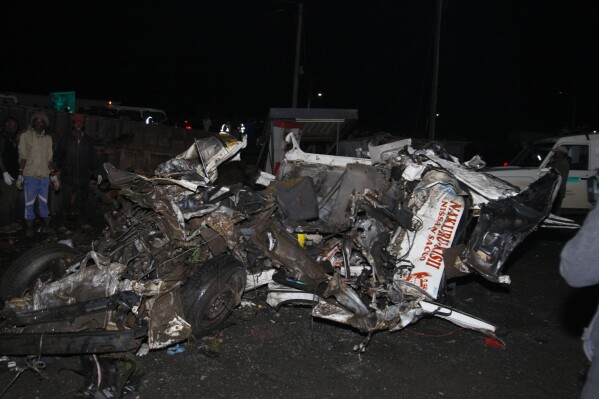
The toll was tragically felt earlier this month when visiting U.S.-based family lost three children in a highway crash outside Naivasha.
Emmanuel DeLeon, 13, his sister Njeri, 16, and younger brother Kairu, 6, were killed on Jan. 4 while on a family holiday from Iowa. The crash has reverberated across local and diaspora communities, putting a human face to the rising number of road fatalities.
Data compiled by the National Police Service indicate that 294 people died between Jan. 1 and 21, up from 276 during the same period last year. Victims include 99 pedestrians, 30 drivers, 61 passengers, 24 pillion riders, six cyclists, and 67 motorcyclists. On Jan. 21 alone, seven more deaths were recorded.
Deputy Commandant of Traffic, Joel Kirui, attributed the surge to a mix of human error and hazardous conditions.
“Our goal is simple: save lives and prevent injuries,” Kirui said during a multi-agency meeting this week aimed at enhancing enforcement and coordination on road safety.
Authorities cited speeding, reckless overtaking, drunk driving, driver fatigue, mechanical failures, and poor road infrastructure, including potholes and inadequate lighting, as major contributors to the spike.
Road safety experts say most accidents are preventable.
The Kenya Driving Schools Association estimates that over 80 percent of crashes result from unsafe driver behavior, including overloading and use of unroadworthy vehicles.
In response, the National Police Service’s Traffic Department has been coordinating with the National Transport and Safety Authority (NTSA), Nairobi City County, the National Environment Management Authority (NEMA), and the Office of the Director of Public Prosecutions (ODPP).
Officials stress that effective enforcement must balance public safety with citizens’ rights.
County authorities are also taking action.
In Nakuru, for example, officials have launched a pedestrian action plan to identify high-risk zones and improve infrastructure for people on foot.
The human toll is felt in hospitals and homes across the country. Families face medical expenses, funeral costs, and emotional strain, while emergency services manage a steady stream of injured victims, often stretching limited resources.
Authorities have urged motorists, passengers, and other road users to exercise caution, particularly in the early months of the year when traffic volumes are high.