Kenya says Africa’s needs overlooked as COP31 ends without deal
The Environment, Climate Change and Forestry, Dr. Deborah Mlongo Barasa, said the COP31 climate summit had failed to deliver for Africa, as the European Union, the UK and other countries rejected a proposed agreement that made no explicit reference to moving away from fossil fuels.
“We will not pretend that Antalya delivered for Africa. It leaves without agreement on what mattered most,” Barasa told the closing plenary in Antalya, Turkey.
She said the draft recognised the particular circumstances of least developed countries and small island states but did not mention Africa’s “special needs and circumstances”. Countries that had contributed most to greenhouse gas emissions, she said, should take the lead in providing support.
The Kenyan delegation reaffirmed its commitment to multilateralism but said it must deliver results. It called on international partners to provide the finance needed to turn climate commitments into action and said Kenya stood with the African Group in seeking to make COP32 “the COP of delivery”.
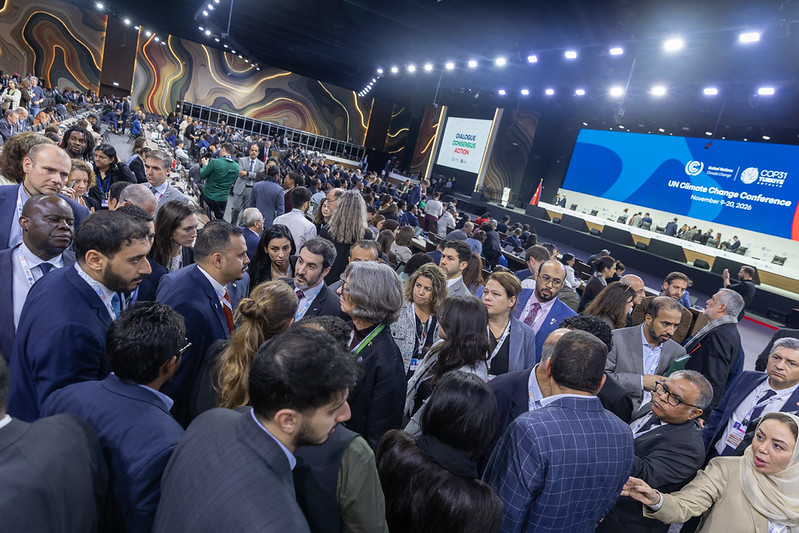
The talks, scheduled to end on Friday, continued into Sunday afternoon. Nearly 200 countries had spent more than two weeks negotiating the proposed Antalya pact, drafted by the Turkish and Australian presidencies, but the summit ended without the consensus needed to adopt its main political text.
The European Union, the UK and countries including Panama, the Marshall Islands, Norway and Vanuatu rejected the draft because it did not carry forward the commitment made at COP28 in Dubai to transition away from fossil fuels in energy systems. More than 130 countries had called for that language to be included.
The proposed pact called for countries to increase electricity’s share of global final energy consumption to 35% by 2035. It also encouraged carbon capture and storage, a technology that can prevent some emissions from reaching the atmosphere but which critics say could allow continued use of coal, oil and gas without a firm commitment to reduce fossil fuel production.
The draft also proposed work on mountains and stronger action on oceans. But the failure to adopt the cover decision meant those proposals were not included in an overarching political agreement. Fiji had sought a separate decision on oceans, while landlocked developing countries had called for one on mountains.
The collapse did not mean that every negotiation at the summit failed. Countries adopted separate decisions, including one on the just transition work programme, which addresses how workers and communities can be supported as economies move away from high-emission industries.
Africa’s finance demands
For African countries, the breakdown came as governments pressed for more funding to prepare for climate impacts and protect infrastructure, agriculture and water supplies.
At COP30 in Belém, countries called for efforts to at least triple international public adaptation finance to developing countries by 2035. But they did not settle the baseline against which the increase would be measured, or establish a clear pathway for delivering it.
The Antalya draft proposed a technical report to identify possible baselines and an implementation pathway for the tripling target. It also proposed an Antalya-to-Addis Ababa roadmap to identify sources of adaptation and resilience finance and ways to improve access. Those proposals were not adopted as part of a COP decision after the cover text failed.
The scale of the funding gap is set out in the UN Environment Programme’s 2026 Adaptation Gap Report. It estimates that developing countries will need about $305bn a year by 2035 to adapt to climate change. International public adaptation finance from developed to developing countries stood at between $28.2bn and $31.7bn in 2024.
Even if the COP30 aspiration to triple those flows is achieved, it would cover only 20% to 29% of estimated needs, UNEP says. The report also warns that the figure excludes much of the private sector’s own adaptation needs.
For countries such as Kenya, the shortfall has consequences for efforts to protect farming, water supplies, roads and settlements from droughts and floods. The government must finance adaptation while managing competing demands on public spending, and international support remains far below the amount developing countries are estimated to need.
Kenya’s objection was separate from concerns raised by the African Group of Negotiators over the handling of other negotiations, including long-term climate finance. The group’s chair, Ghana’s Nana Antwi-Boasiako Amoah, criticised the way African representatives had been treated during the closing discussions, after Ghana’s environment minister, Zanetor Agyeman-Rawlings, was interrupted while speaking for the group.
Ghana said Africa had chosen to support multilateralism rather than walk away from it. Its position did not mean that every African country supported the proposed pact. Kenya’s intervention directly challenged the omission of Africa’s needs from the text, while the African Group raised wider concerns about the process and the substance of separate negotiating decisions.
The disagreement also exposed the difficulty of turning broad promises on climate finance into arrangements that developing countries can measure and rely on. The proposed roadmap and technical work on adaptation finance were intended to address some of those questions, but the summit ended without agreement on them in the cover decision.
Decisions adopted, but key questions remain
The adoption of the separate just transition decision kept some work moving despite the failure to agree on the Antalya pact. The decision continued the UAE Just Transition Work Programme for a further three years, while the proposed Belém-Antalya Mechanism was left to a phased process.
The mechanism is intended to support international cooperation, technical assistance, capacity building and knowledge sharing as countries plan transitions to lower-emissions economies. But its functions and operating arrangements still need to be worked out. Further discussions are expected at the UN climate meetings in June 2027, with a decision on its development due at COP32.
For African countries, the mechanism’s design matters because the transition involves more than replacing fossil fuels with cleaner energy. It also concerns industrial development, jobs, technology, affordable energy and the resources available to countries seeking to change their economies without deepening poverty or debt.
More than 90 countries also backed a separate initiative to increase electricity’s share of global final energy consumption to 35% by 2035. The pledge was not part of the rejected cover decision and does not bind all parties to the Paris Agreement.
The Paris Agreement and commitments made at earlier climate summits remain in force. The failure to adopt the Antalya pact did not cancel the COP28 commitment to transition away from fossil fuels or the COP30 call to increase adaptation finance. But governments left Turkey without a new overarching political agreement on how to advance those commitments.
The scientific case for faster action is also becoming harder to ignore. UNEP’s 2026 Adaptation Gap Report says global warming is now expected to exceed 1.5C, increasing the need for countries to prepare for climate impacts even as they cut emissions.
Ethiopia will host COP32 in Addis Ababa from 8 to 19 November 2027. The next summit will inherit the disputes left unresolved in Antalya, including the role of fossil fuels, the scale and delivery of adaptation finance and the support available to developing countries seeking a just transition.
Kenya has called for COP32 to be “the COP of delivery”. But the failure in Antalya leaves the incoming Ethiopian presidency facing the same unresolved disputes over fossil fuels, climate finance and the support developing countries need to act.