
Government turns to private capital to expand irrigation under 10-year plan
By Chemtai Kirui
NAIROBI, Feb 19 — The government is placing irrigation at the center of its agricultural strategy, launching a 10-year investment plan that leans heavily on private capital and farmer-led expansion.
The National Irrigation Sector Investment Plan, (NISIP), sets out to increase developed irrigation to 1.5 million acres by 2030. The program carries a price tag of KSh 598 billion, with about 61 percent expected to come from private investors and the rest from public funds and development partners, according to official documents.
At a recent consultative meeting in Nairobi, Principal Secretary for Irrigation Ephantus Kimotho said the shift reflects a recognition that reliance on seasonal rainfall can no longer guarantee stable production.
“For us to be able to protect production and increase output, it’s high time we embrace irrigation,” he said.
The strategy marks a departure from a model dominated by large public schemes. Instead, it places farmer-led irrigation development at the core of expansion. Under this approach, smallholders and farmer groups invest in pumps, drip systems and other micro-infrastructure close to water sources, often supported by private suppliers and service providers.
Officials say the government’s role will focus on creating an enabling environment through land access, water allocation frameworks, targeted subsidies and credit guarantees aimed at reducing risk for small farmers.
Development partners have signaled support. Pieter Waalewijn, the World Bank’s lead water resources specialist for the country, described farmer-led irrigation as a pathway to job creation and rural growth, adding that the bank would provide technical expertise and financing instruments to support implementation.
Current estimates place the area under irrigation at roughly 747,000 acres. National assessments suggest potential for more than 3 million acres based on available water resources and harvesting capacity, leaving a significant gap the new plan seeks to narrow over time.
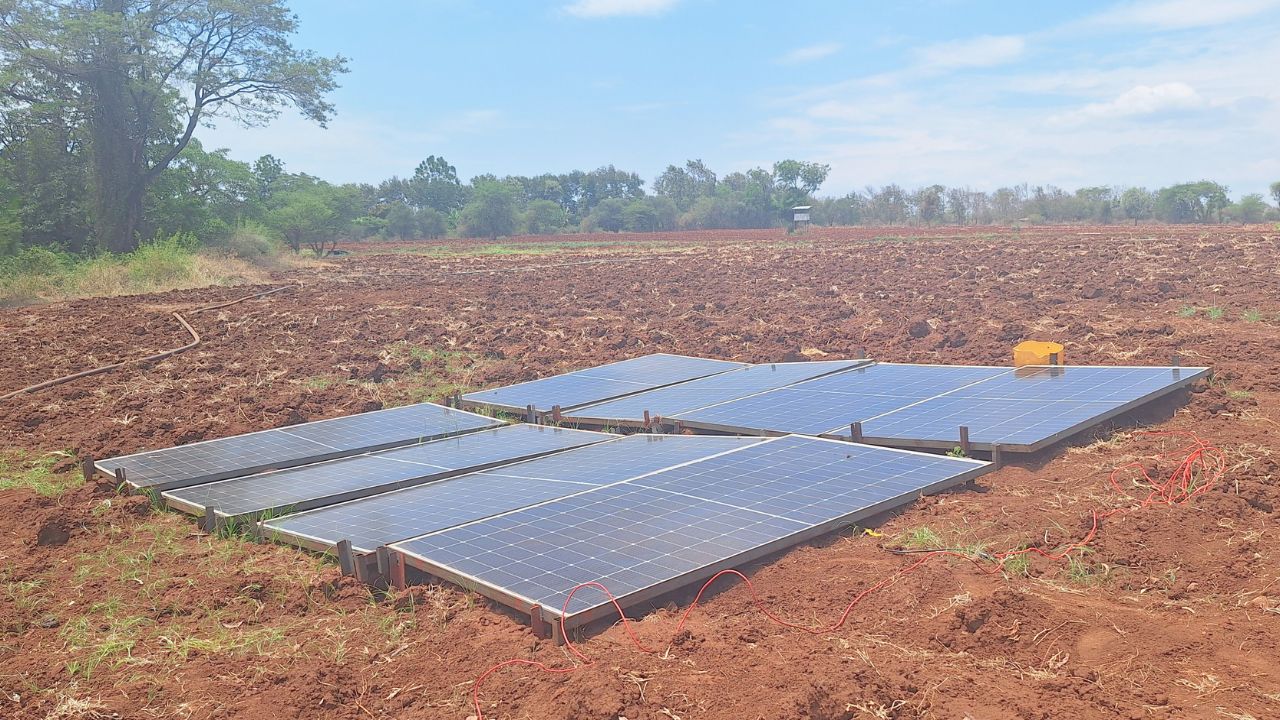
The program also prioritizes energy-efficient technologies such as solar-powered pumps and drip irrigation systems to lower operating costs. Digital tools are being developed to manage subsidies and speed up reimbursements, officials said.
Access to affordable finance remains a central challenge. Many smallholders lack collateral to secure loans. The plan proposes using contract farming arrangements, aggregator-based financing and blended finance mechanisms to help unlock credit.
Land tenure and water-use coordination, particularly in arid and semi-arid areas, will require close collaboration with county governments to avoid disputes and over-extraction.
The National Irrigation Authority and the Ministry of Water say environmental safeguards will be integrated into project design, including measures to strengthen groundwater recharge and water storage.
If implemented as outlined, officials project higher domestic food production, reduced reliance on imports and more stable farm incomes.
Expansion of rice and horticulture production is among the priority targets, alongside improved fodder supply in pastoral areas vulnerable to drought.
The consultations now move into detailed project preparation and financing design. For farmers accustomed to planning around uncertain rainfall, the coming decade could bring a gradual shift toward more predictable harvests, provided capital flows and institutional coordination keep pace with ambition.