
African Climate and Labor Groups Warn of Legal Risks to ‘Gender-Blind’ Green Investments
By Chemtai Kirui
NAIROBI, Feb 16 – Multi-billion dollar green energy and mining investments across Africa face a new wave of legal risks as labor and climate groups move to use the COP30 just transition framework as a basis for challenging projects in national courts where social protections are ignored.
Regional experts warn that billions in climate finance could face court challenges if social protections for informal workers are ignored, citing the Belém Action Mechanism (BAM), adopted at COP30 in Brazil, as a potential legal basis for communities to challenge projects lacking human rights and gender safeguards.
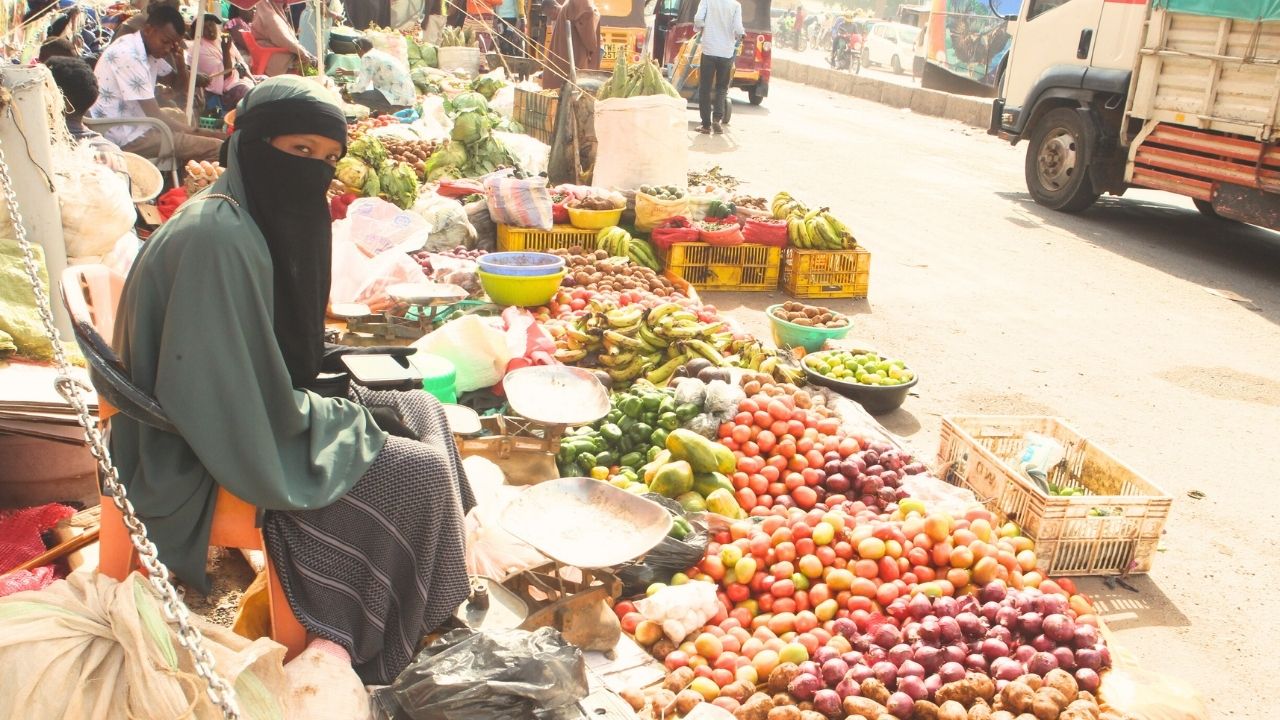
Governments have until an upcoming March 15 deadline to submit national implementation plans for the mechanism. The outcome will dictate how rights for informal workers, who comprise over 80% of Africa’s workforce, are integrated into national climate policies and energy transition models.
“It’s not enough that these principles are agreed internationally,” said Teresa Anderson, Global Lead on Climate Justice at ActionAid International. “The years after COP30 require us to use these outcomes to deliver action on the ground. Governments can now be held accountable to these principles when implementing climate action.”
The shift toward litigation comes amid a stark disparity in how climate funds are allocated.
Research from ActionAid’s ‘How the Finance Flows’ report indicates that only 2.8% of multilateral climate mitigation finance has supported ‘just transition’ approaches over the last decade.
“That is underfunded,” Anderson said, adding that only one dollar in every $35 of climate finance has supported populations at the center of the global energy shift.
The legal momentum is reinforced by a July 2025 advisory opinion from the International Court of Justice (ICJ), which found that states have binding international obligations to prevent climate harm, elevating the 1.5°C target from a political commitment to a legal benchmark.
African environmental lawyers say the opinion could serve as persuasive precedent in domestic cases challenging projects that undermine climate and social protections.
Negotiators at COP30 also finalized 59 technical indicators under the Global Goal on Adaptation, covering sectors including water, agriculture and health.
Legal experts say these UN-agreed metrics could provide tangible benchmarks in court to argue that projects are failing to protect vulnerable communities.
Speaking at a regional science café organized by the Media for Environment, Science, Health and Agriculture (MESHA), advocates argued that current government responses remain dangerously ‘gender-blind.’
Imali Ngusale, Strategic Lead at the African Centre for Health, Climate and Gender Justice Alliance (ACHCGA), said that a policy focus strictly on physical infrastructure ignores ‘non-economic’ tolls, such as a spike in gender-based violence (GBV) following climate-induced displacement.
“Climate change deepens existing gender inequalities by interacting with social, economic, and political power structures,” Ngusale said, adding that current Loss and Damage mechanisms must be reformed to address these gendered health impacts and provide rights-based support.
The United Nations Population Fund has warned that climate-linked domestic violence could triple by 2060 in parts of sub-Saharan Africa without urgent gender-responsive policies.
The ‘Blue Economy’ is emerging as a primary front for this new legal accountability. Audrey Masitsa of Mission Inclusion pointed to women-led mangrove restoration in coastal Kenya as a template for the participatory governance models now required under the Belém Action Mechanism.
By shifting local stakeholders from mere “consultation” to active decision-making, Masitsa said projects can de-risk against opposition and litigation that have historically stalled infrastructure investments.
“We need to move to solutions,” Masitsa said, adding that inclusive governance is a prerequisite—not a barrier—to securing high-value climate investment.
Speaking to participants in the regional forum, which connected over 80 reporters and experts across Eastern and Southern Africa, Masitsa called for a shift in how African women are represented, moving away from narratives of vulnerability toward their roles as decision-makers in marine governance.
As delegates prepare for COP31 in Antalya, Türkiye — with Australia presiding under a co-hosting arrangement — participants in Nairobi argued that the real battleground is no longer the negotiation halls, but domestic courts where climate and labor rights are tested.
The consensus among participants was that the success of the continent’s multi-billion dollar energy ambitions will be decided in national courts and local communities, not international plenary halls.
Without integrating the economic rights of the informal majority, the legal challenges mounted today could become the primary bottleneck for green investment across the region.