East Africa’s integration ambitions collide with trade reality
By Chemtai Kirui | Nairobi | Feb 26, 2026
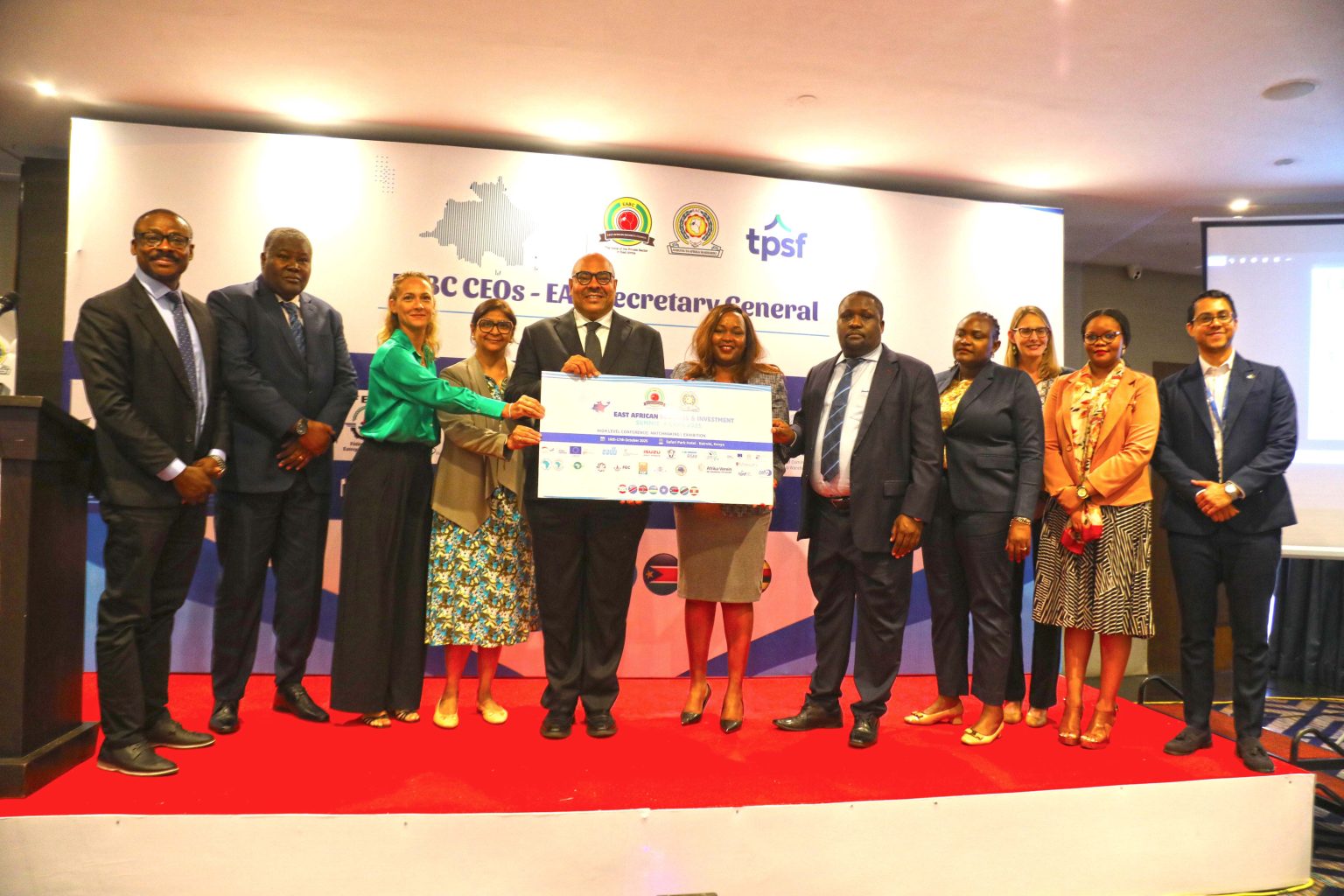
East Africa’s private sector leaders gathered in Nairobi this week to say regional integration remains more promise than practice.
At the East African Business and Investment Summit & Expo 2026, business executives and policymakers reiterated commitments to eliminate non-tariff barriers, harmonise domestic taxes, liberalise air transport and accelerate implementation of the Single Customs Territory.
But the numbers tell a less flattering story: intra-East African Community (EAC) trade remains below 15 per cent of total trade, far short of the bloc’s 40 per cent target by 2030.
The EAC Customs Union has been in place since 2005 and the Common Market Protocol since 2010. The region has also adopted a Monetary Union roadmap and aligned itself with the African Continental Free Trade Area., what this reflects is that the architecture exists, but the integration does not.
Business leaders acknowledged the gap between policy commitments and trade outcomes, calling for the elimination of non-tariff barriers and urged partner states to refrain from introducing new ones, a sign that many of these barriers remain despite earlier commitments to remove them.
Regulatory inconsistencies, unpredictable tax regimes and fragmented customs procedures continue to raise transaction costs for firms operating across borders.
The emphasis on harmonising domestic taxes and uniformly applying the Common External Tariff reflects ongoing tensions around the treatment of regionally manufactured goods, with private sector representatives urging the governments to treat goods originating within the EAC as transfers rather than imports, showing private sector frustration that fiscal and administrative practices continue to complicate free circulation.
The repeated calls for operationalising the Single Customs Territory suggest that while the framework exists on paper, implementation gaps remain. Delays at border posts, duplicative inspections and differing valuation practices continue to weigh on supply chains, particularly for manufacturers seeking to build regional value chains in sectors such as textiles, leather and pharmaceuticals.
The recent expansion of the bloc—bringing the Democratic Republic of Congo and Somalia into the fold—has added a layer of logistical and security complexity to these ambitions. While their entry expanded the EAC’s maritime and mineral footprint, persistent insecurity along the Northern and Central corridors continues to stall the ‘frictionless’ movement envisioned in the protocols.
Digitally, the region is moving ahead. Physically, it is still stuck at the border. The success of the EAC Virtual Passport and the expansion of the One Network Area (ONA) have significantly lowered the cost of communication and professional mobility. Yet, this digital fluidity only showcases the friction in the physical world. It is often easier for an entrepreneur to make a cross-border data call than it is for their shipment of milk or sugar to clear a land border without falling victim to localized protectionist disputes.
The same issues on the road are also experienced on air transport. Business persons at the summit urged partner states to adopt the Single African Air Transport Market and extend liberalisation to fifth freedom rights. Aviation has long been cited as a critical enabler of trade and investment, yet protectionist tendencies and high regulatory costs have limited competition and kept travel expensive.
The fact that these recommendations continue to feature prominently suggests that implementation remains uneven.
The summit also renewed calls for interoperable regional payment systems and progress toward a single currency, the third stage of the EAC integration process, but macroeconomic divergence across partner states complicates that ambition. Inflation trajectories, public debt burdens and exchange rate volatility vary widely across the bloc, leaving open questions about how quickly monetary convergence can realistically be achieved.
At below 15 per cent of total trade, the EAC lags behind more integrated blocs where internal trade flows account for a far larger share of commerce. Without meaningful growth in that figure, declarations of a “thriving Pan-African market” risk remaining rhetorical.
The EAC Secretariat has established frameworks for customs cooperation, trade facilitation and regulatory harmonisation, to tackle these issues. Digital trade tools, electronic cargo tracking systems and simplified trade regimes have been introduced, yet implementation has often been uneven, and enforcement mechanisms remain politically sensitive in a bloc where sovereignty concerns frequently resurface.
Businesses require consistent tax treatment, reliable border clearance times and enforceable dispute resolution mechanisms, as investors care less about protocols than predictability.The summit’s emphasis on harmonisation and transparency indicates that these fundamentals remain incomplete.
A new constraint is coming: carbon. With the European Union’s Carbon Border Adjustment Mechanism (CBAM) beginning to take effect, the summit spoke of the urgent need for a regional framework on ‘Green Certificates’ and carbon-neutral manufacturing. Without harmonized environmental standards, the EAC’s exporters risk being locked out of high-value international markets, risking a scenario in which fragmented regional standards become a competitive handicap in global markets.
The Nairobi summit made it clear that the economic logic for a 300-million-person market is undisputed. But until the bloc trades its gentleman’s agreements for a rules-based order with actual penalties for non-compliance, East Africa’s integration will remain a boardroom ambition rather than a market reality.