Mudavadi Heads to Moscow for Talks as Government Seeks Protection for Kenyans in Russia
By Chemtai Kirui | Naivasha | March 14, 2026
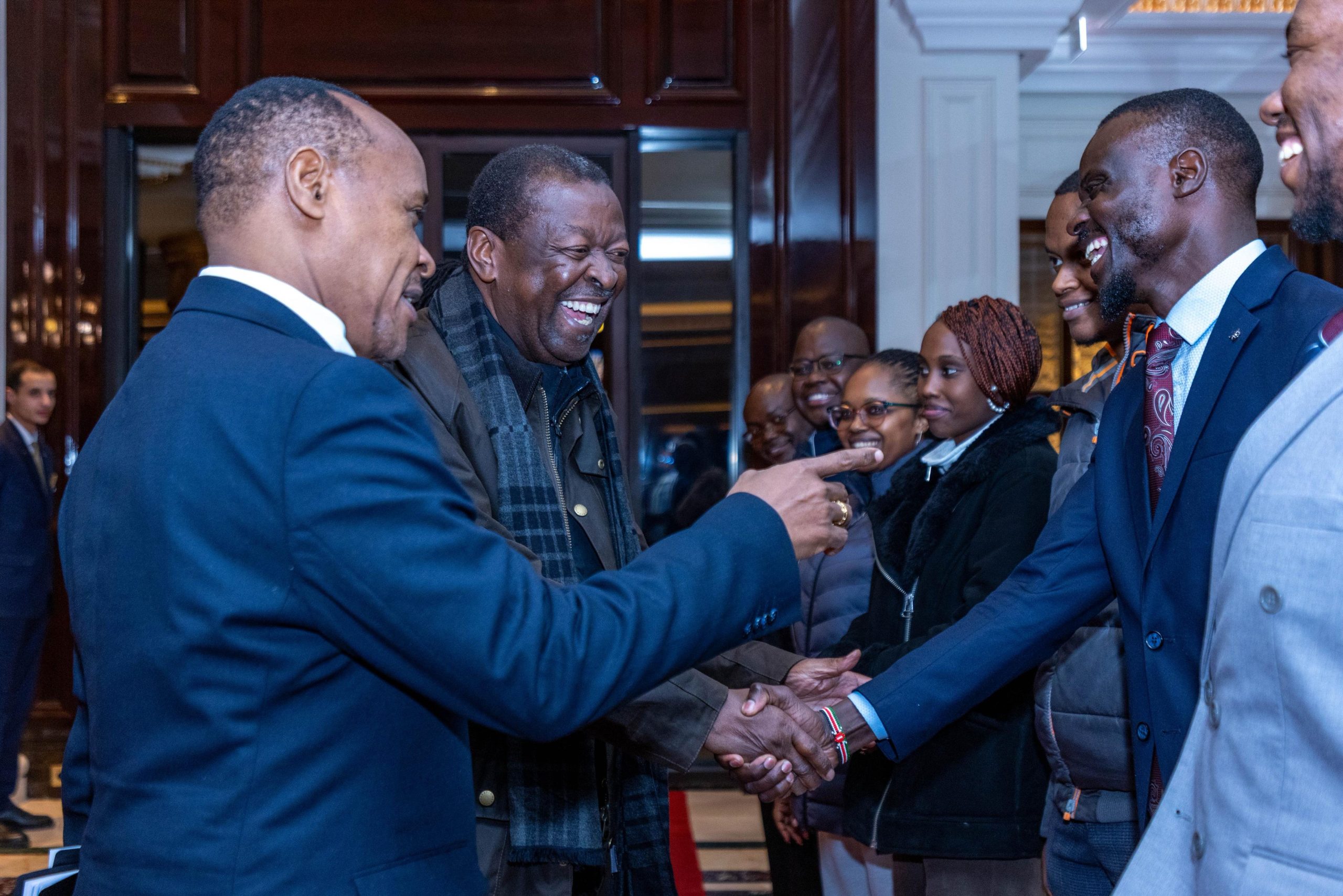
Musalia Mudavadi has arrived in Moscow for bilateral talks expected to focus on trade, education cooperation and the welfare of nationals living or working in Russia.
According to a statement from the Office of the Prime Cabinet Secretary, Mudavadi will meet senior Russian officials, including Sergey Lavrov, during the two-day visit.
The discussions are expected to address cooperation in areas such as education, labour mobility, health, infrastructure and energy, while also examining concerns about nationals who may have been recruited into Russia’s military effort in Ukraine.
Government officials say the visit aims to establish clearer mechanisms for protecting citizens abroad and ensuring that employment and study opportunities overseas are conducted under safe and transparent conditions.
“The engagement is focused on coordinated government action to safeguard Kenyans residing, studying and working in Russia,” the ministry said in a statement released Sunday.
The issue of nationals joining Russian military operations in Ukraine has drawn increasing attention in recent months.
The recruitment allegations emerged during Russia’s ongoing war in Ukraine, which began with the full-scale invasion in February 2022.
A report prepared jointly by the National Intelligence Service and the Directorate of Criminal Investigations and presented to Parliament in February suggests the scale of recruitment may be larger than previously understood.
Investigators estimate that more than 1,000 citizens may have been recruited into the Russian military since the start of the war.
The diplomatic mission in Moscow has identified 252 nationals as directly involved in combat operations. Authorities say 10 are reported missing or dead, while 38 are hospitalized in Russian facilities.
Officials report that 44 nationals have so far been repatriated, though more than 160 are believed to remain in active conflict zones.
Investigators say many recruits were initially drawn by advertisements promising civilian employment in Russia.
Recruitment agents circulated job listings offering positions as security guards, construction workers or logistics personnel with salaries of up to KES 350,000 per month and large sign-on bonuses.
Many applicants travelled to Russia on tourist visas through transit hubs such as Istanbul or Abu Dhabi.
Upon arrival, some reported that their passports were confiscated and that they were asked to sign military contracts written in Russian.
Lawmakers have raised concerns about possible internal collusion within government systems.
Kimani Ichung’wah told Parliament that investigations are examining whether rogue officials within immigration and labour agencies helped facilitate the departures.
According to the intelligence report presented to lawmakers, unlicensed recruitment syndicates may have collaborated with individuals inside the Immigration Department and the National Employment Authority to move recruits through international transit routes.
Authorities have repeatedly warned citizens against accepting overseas job offers that are not verified through official labour migration channels.
Mudavadi’s talks in Moscow are expected to include discussions on establishing clearer bilateral arrangements to prevent misleading recruitment and to facilitate assistance for affected nationals.
Russia has previously stated that foreign nationals may legally enlist in its military if they are residing in the country lawfully.
The Russian embassy in Nairobi has attributed the issue partly to delays in finalizing formal labour agreements governing employment opportunities for foreign workers.
Officials say the government hopes the current talks will lead to improved coordination between the two countries on labour migration and consular protection.
The visit also comes as Nairobi seeks to deepen economic relations with Moscow.
Russia is a key supplier of agricultural inputs, particularly wheat and mineral fertilizers used in domestic food production. Trade data shows the country imported approximately KES 76.2 billion (about $590 million) worth of goods from Russia in 2024.
Officials have also identified opportunities to expand exports to the Russian market, particularly coffee, tea and horticultural products.
The scale of this trade relationship adds a diplomatic dimension to the talks, as Nairobi seeks to address recruitment concerns without disrupting economic flows important to the agricultural sector.
During the visit, Mudavadi is expected to hold discussions with Lavrov on measures to improve coordination over labour migration and consular protection.
Officials say the talks will focus on mechanisms to prevent misleading recruitment practices while also establishing clearer channels for assisting nationals affected by the conflict.
Russia has previously stated that foreign nationals may legally enlist in its military if they are residing in the country lawfully. The embassy in Nairobi has attributed the situation partly to delays in finalizing formal labour agreements governing employment opportunities.
Government officials say Mudavadi is also seeking progress toward a formal labour migration agreement that would establish clearer regulations for overseas employment and help prevent illegal recruitment schemes.
According to the Ministry of Foreign and Diaspora Affairs, such an agreement would require transparent employment contracts and verification by both governments before workers travel abroad.
Authorities have urged citizens seeking employment overseas to verify recruitment agencies and job offers through official government channels before leaving the country.
Mudavadi is also scheduled to deliver a public lecture at the Moscow State Institute of International Relations during the visit.
The country has traditionally pursued a non-aligned foreign policy, maintaining relations with Western partners while also engaging countries such as Russia in areas of trade, education and economic cooperation.
Officials say the Moscow trip reflects the broader effort to expand international partnerships while addressing concerns affecting citizens abroad.