
THE 33-VOTE QUESTION: How Kericho’s Impeachment Saga Is Testing The Limits Of Devolution
By Shadrack Mutai | NAIROBI,
The battle over the impeachment of Kericho Governor Eric Mutai has once again resurfaced, reigniting a constitutional debate about where the authority of County Assemblies ends and the power of the Senate begins.
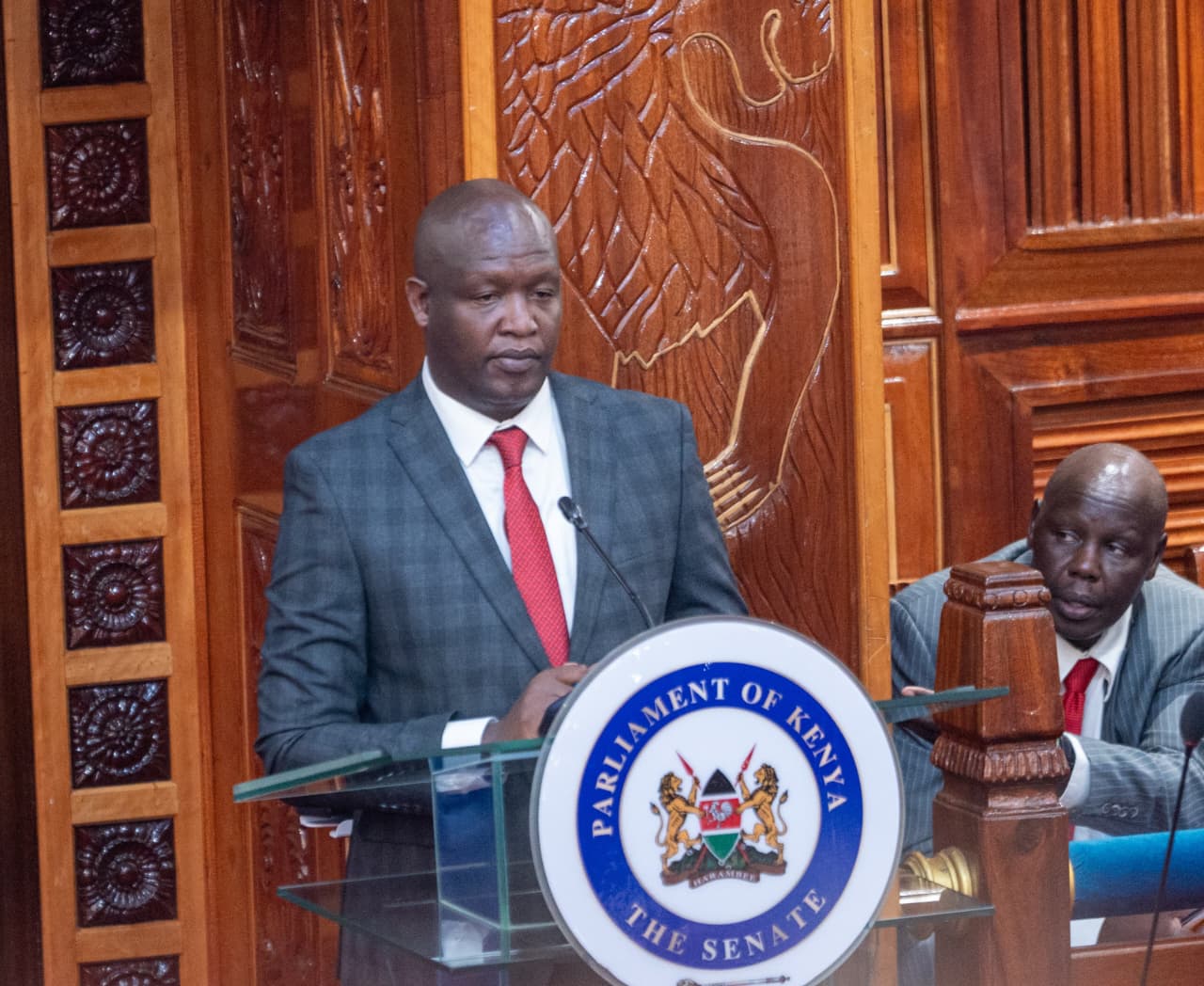
The issue came back into focus when the Kericho County Assembly, led by Speaker Patrick Mutai, appeared before the Senate County Public Accounts Committee (ICPAC) chaired by Moses Kajwang. During the session, the Speaker revived a long-running dispute over whether the Assembly had met the constitutional threshold required to impeach Governor Mutai.

According to the Speaker, the Kericho County Assembly attained the required threshold and the governor was rightfully impeached by the Assembly. At the centre of the argument is a technical but politically consequential question: who ultimately determines whether the impeachment threshold has been achieved — the County Assembly or the Senate?
The tension dates back to the dramatic impeachment motion passed by the Kericho County Assembly against Governor Mutai. Members of the County Assembly accused the governor of misappropriation of public funds, abuse of office and gross misconduct, triggering a vote to remove him from office.
In the Assembly vote, 33 out of 47 MCAs supported the impeachment motion, setting the stage for a Senate trial as required under Kenya’s Constitution. However, the numbers immediately sparked controversy.
Article 181 of the Constitution and Section 33 of the County Governments Act require a two-thirds majority of all MCAs to support an impeachment motion before it is forwarded to the Senate. With 47 MCAs in Kericho, the calculation produced a constitutional puzzle. Two-thirds of 47 equals 31.3.
Supporters of the motion argued that 33 votes clearly met the constitutional threshold, meaning the Assembly had fulfilled its mandate. That numerical debate soon became the defining moment of the entire impeachment process.
When the matter reached the Senate, lawmakers were expected to examine the accusations against the governor. Instead, the debate quickly shifted to the legality of the vote that produced the impeachment motion. Some senators argued that the Assembly had not fully satisfied the constitutional threshold, while others maintained that the vote was sufficient for the process to proceed.
In the end, the Senate voted in a manner that saved Governor Mutai from impeachment, effectively allowing him to remain in office. The outcome left the Kericho County Assembly frustrated, arguing that their constitutional mandate had been undermined.
When appearing before the Senate committee this week, county leaders revived the issue, insisting that the impeachment threshold had indeed been attained. Speaker Patrick Mutai told the committee that experts consulted during the impeachment process had affirmed the legality of the Assembly’s vote. According to the Assembly’s leadership, once MCAs vote and confirm the threshold, the Senate’s role should be limited to investigating the allegations against the governor rather than revisiting the numerical calculations.

For the county leadership, the bigger concern is whether the Senate is gradually expanding its oversight role beyond what the Constitution intended.
Another complex legal issue also emerged during the committee session: whether a governor can face impeachment again based on the same accusations. Members of the Assembly hinted at the possibility of another impeachment attempt centred on the same allegations of financial mismanagement.
Legal experts warn that such a move could trigger another constitutional debate. If the accusations are identical and no new evidence is introduced, the move could be challenged as a form of political double jeopardy, where a governor is repeatedly subjected to the same accusations despite a previous Senate decision. However, if new evidence or additional misconduct is presented, the Assembly could legally pursue another impeachment process.
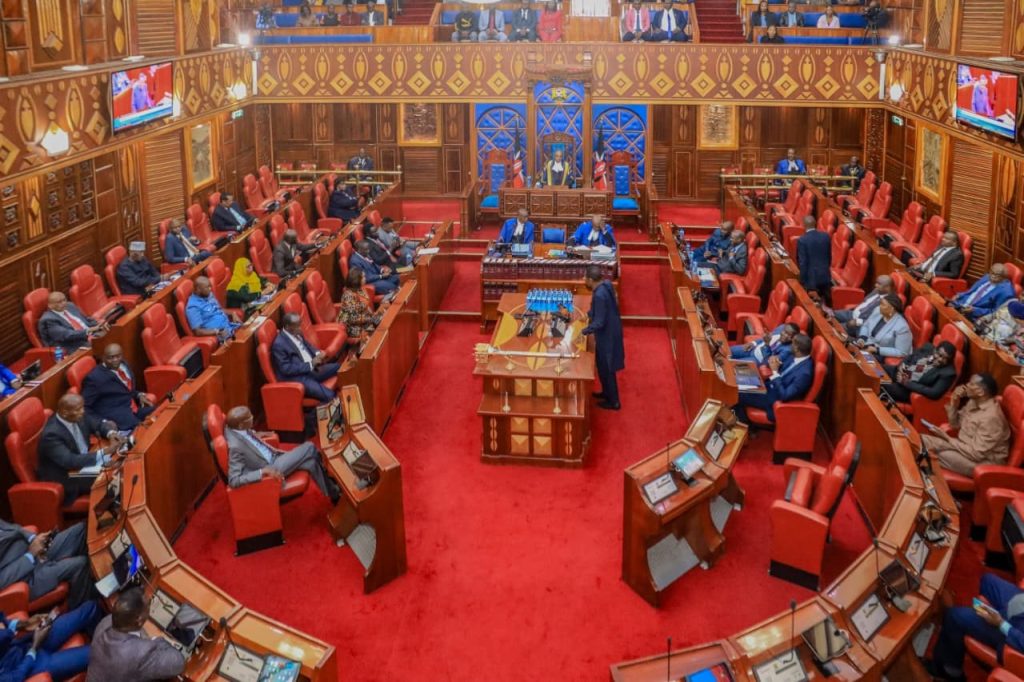
What began as a political dispute in Kericho has now evolved into a broader test of how Kenya’s devolved governance system balances accountability between governors, county assemblies and the Senate. The Constitution created a two-tier process for removing governors, where County Assemblies initiate impeachment motions and the Senate determines whether the governor should ultimately be removed from office.
The Kericho case demonstrates how interpretation of numbers and procedure can ultimately determine the fate of an elected leader. The renewed arguments before the Senate committee highlight a deeper structural issue within Kenya’s governance system. Without clear rules on how to interpret fractional thresholds in impeachment votes, similar disputes could arise in future cases across the country.
Legal analysts say the controversy may eventually require clearer constitutional guidance on rounding off vote thresholds, stronger procedural rules governing Senate trials, and legal clarity on whether repeated impeachment attempts based on similar accusations can stand.