
African Development Bank Moves to Unlock Billions in Carbon Finance for Africa
By Carolyne Tomno
Across Africa’s forests, mangroves and farmlands lies a climate asset worth billions. Yet much of that potential remains untapped.

Despite hosting some of the world’s largest natural carbon sinks, Africa captures only a tiny share of global climate finance and carbon market investment. Now governments and development institutions are trying to change that, by reforming how carbon credits are generated, tracked and traded.
Speaking at a high-level webinar organized by the Africa Sovereign Carbon Registry Foundation, Dr. Al-Hamndou Dorsouma ,a senior expert in climate change and green growth, and acting Director of the Climate Change and Green Growth at the African Development Bank (AfDB) ,said the continent’s carbon potential remains largely unrealized.
“Africa has enormous resources in forests, mangroves and renewable energy,” he said. “But the continent has not yet fully capitalized on the carbon markets.”
The numbers reveal the imbalance. Global climate finance surged to roughly $1.9 trillion in 2023, yet Africa received only $47 billion about 2.7% of the total. At the same time, the continent contributes just around 4% of global greenhouse gas emissions.
For many African countries, the gap represents both a challenge and an opportunity.
The Hidden climate Asset
Carbon credits are generated when projects reduce or remove greenhouse gas emissions, through activities such as forest conservation, renewable energy development or climate-smart agriculture.
Companies or countries that exceed emissions targets can purchase these credits to offset their own pollution.
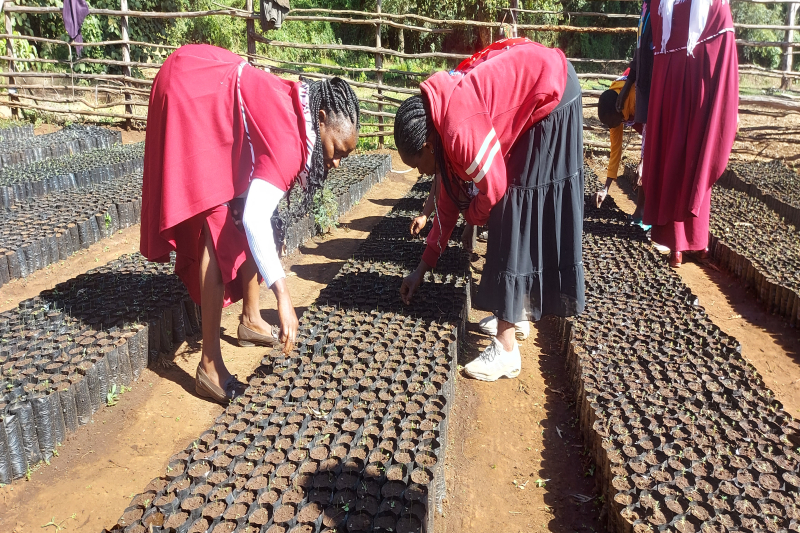
Most of Africa’s carbon credits today come from forestry, land use and agriculture projects.But according to Dorsouma, the majority are sold on voluntary carbon markets, where prices are relatively low.
Embedding these credits in formal compliance markets or stock exchanges, he argued, could significantly raise their value, potentially by up to ten times.
“Africa is currently monetizing only a small portion of its carbon potential,” he said. “With stronger systems and market access, the continent could mobilize far greater climate finance.”
The global carbon market itself is expected to expand rapidly, potentially reaching $1.3 trillion by 2026.Yet Africa currently accounts for less than 3% of global carbon credit transactions, highlighting the continent’s marginal position in a rapidly growing industry.
Climate Impacts Hit Hard
In recent years the continent has endured a cascade of climate disasters, from destructive tropical storms in the Madagascar and along the southern African coastline to devastating droughts across the Horn of Africa.
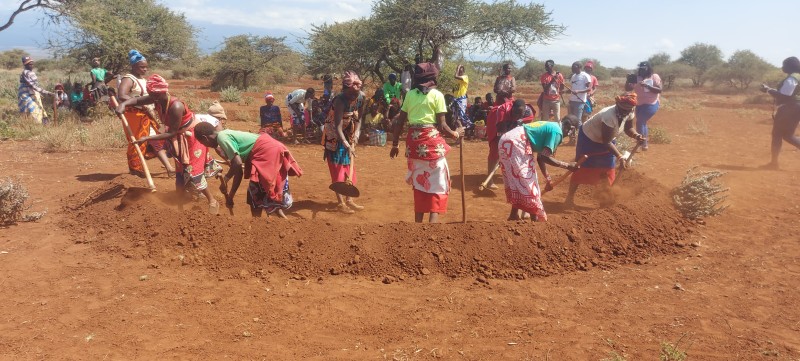
These extreme events have disrupted agriculture, displaced communities and strained already fragile economies.
For a continent contributing only a small share of global emissions, the climate impacts are disproportionately severe.
That reality has intensified calls for African countries to secure a larger portion of global climate finance, particularly through carbon markets.
Kenya launches Carbon registry
Kenya is among the African countries attempting to seize the opportunity in carbon credit trading .The country, recently launched a national carbon registry designed to track and regulate carbon credit projects.
kenya carbon registry, unveiled in Nairobi , Kenya by the Environment minister, Dr. Deborah Mlongo Barasa, will serve as a central platform to monitor carbon projects, verify emissions reductions and prevent double counting, a problem that has undermined trust in global carbon markets.
The system anchors Kenya’s carbon trading commitments under the Paris Agreement and aims to move the country away from fragmented carbon projects toward a unified, transparent and accountable national framework.
Dr. Barasa described the registry as a digital ledger designed to bring transparency, credibility, and accountability to the carbon trading sector, saying the registry will help position Kenya as a global hub for high-integrity carbon credits at a time when scrutiny of offset markets is intensifying worldwide.
Corporate buyers, increasingly cautious after a series of controversies over low-quality offsets, are now prioritizing projects with stronger verification systems and broader environmental and social benefits.
One major goal of the new registry is to ensure African carbon credits reach compliance offset markets, where prices are far higher than in voluntary markets. Credits sold in compliance markets, often linked to government-regulated emissions systems, can fetch several times the price of those traded voluntarily.
Africa’s Climate Finance Challenge
Weak regulatory frameworks, limited technical expertise and inadequate infrastructure have historically constrained Africa’s participation in global carbon trading.
And the African Development Bank initiatives, hopes to address these gaps by supporting carbon market development, strengthening climate governance and helping countries design bankable climate projects.
As Dorsouma told journalists: “Africa has the potential. What we need now are the systems, the markets and the investments that allow the continent to benefit fully from its carbon wealth.”
Turning Carbon Into Opportunity
For Africa, the promise of carbon markets lies not just in climate mitigation but in economic transformation.
As Dorsouma told journalists: “Africa has the potential. What we need now are the systems, the markets and the investments that allow the continent to benefit fully from its carbon wealth.”
Other Experts who spoke during the webinar concurred that if managed transparently and equitably, carbon credits will generate new revenue streams, support conservation efforts and finance climate resilience across the continent.
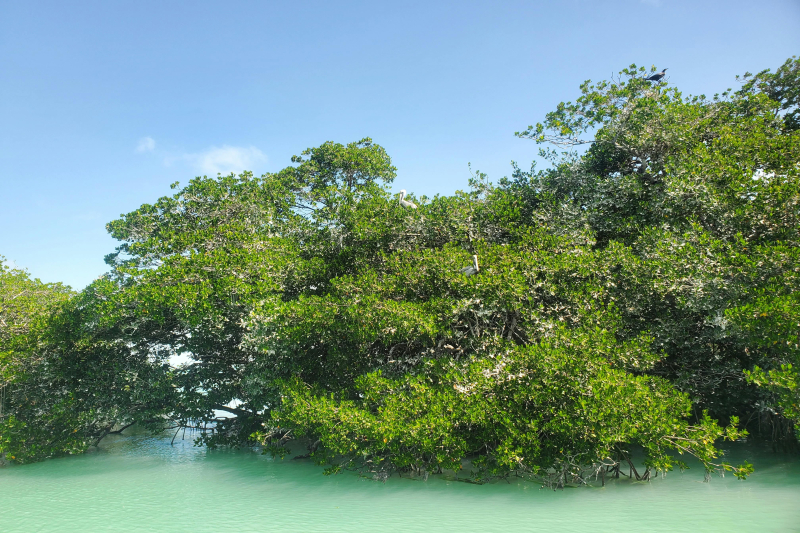
Former French minister for Environment says Africa has the potential to generate carbon credits with high value because it is endowed with outstanding natural resources like mangroves