
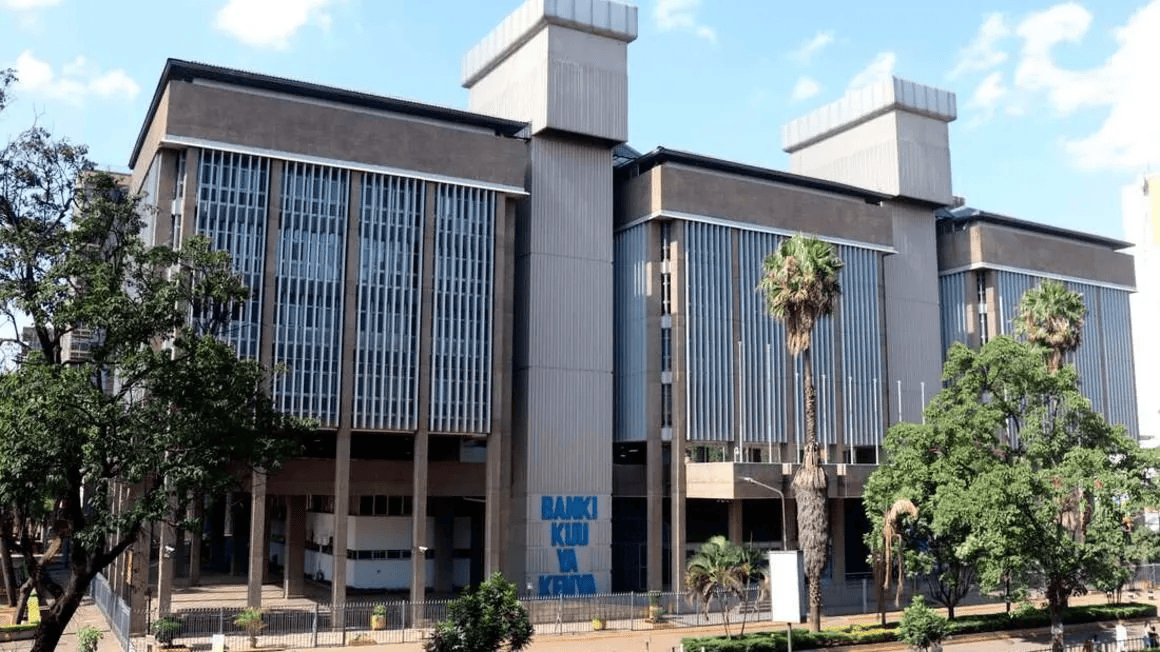
Treasury Anchors Long-Term Debt as Inflation Cools and Fiscal Pressures Mount
By Chemtai Kirui | Nairobi | Feb 27, 2026
NAIROBI — The Central Bank of Kenya (CBK) has signaled a definitive shift in its sovereign debt strategy, inviting bids for a KSh 60 billion reopening of 20-year and 25-year Treasury bonds. The move, announced via a prospectus for March 2026, comes at a delicate moment for the economy as it balances a significant revenue shortfall against the most favorable interest rate environment in years.
By offering FXD1/2019/020 and FXD1/2021/025—instruments with 13.1 and 20.1 years to maturity respectively—the National Treasury is attempting to anchor the long end of the domestic yield curve. The timing is surgical. With the Central Bank Rate (CBR) recently trimmed to 8.75% and inflation stabilizing at 4.4% as of January 2026, the government is looking to “lock in” long-term funding while market yields are on a clear downward trajectory.
The roughly five-percentage-point gap between one-year Treasury bills and 25-year bonds underlines the steepness of the domestic yield curve, despite easing policy. For institutional investors, particularly pension funds and insurance firms, the fixed coupons of 12.8730% and 13.9240% represent a high-yielding refuge in a market where short-term rates are collapsing. The 91-day Treasury bill, a bellwether for liquidity, saw its rate drop to 7.5899% in the final week of February, while the 364-day paper has retreated to 8.90%.
With inflation at 4.4%, the 25-year coupon implies a real return of roughly 9.5% before tax — unusually elevated by recent historical standards.
The primary motive cited in the prospectus is “Budgetary Support.” This is no mere formality. As of December 2025, ordinary revenue collections lagged KSh 115.3 billion behind target. Furthermore, expected flexible budget support from the IMF and other multilateral lenders has faced persistent delays, leaving the domestic market as the primary safety valve for the National Treasury’s cash requirements.
“The government is essentially front-loading its domestic borrowing to bridge the gap left by missing external inflows,” says a senior fixed-income analyst in Nairobi. “They are taking advantage of a liquid banking system where commercial banks, wary of a 16.4% non-performing loan ratio in the private sector, are more than happy to ‘lend to the state’”.
The reopening of these specific papers signals a transition from the emergency “switch” auctions of early 2026 back to standard cash-raising operations. In January, the CBK successfully executed a bond switch to defer KSh 25.17 billion in debt to 2037, effectively smoothing the maturity profile.
By reopening existing lines rather than issuing new securities, the Treasury is consolidating liquidity into benchmark bonds, a move that deepens tradability and strengthens price discovery in the secondary market. The current March offer suggests that while the Treasury remains mindful of rollover risks—the average time to maturity has reached 7.49 years—the immediate priority has shifted to liquidity.
Market sentiment remains cautiously bullish. Secondary market yields on 10-year government debt recently hit an 11-year low of approximately 11.26%, reflecting broader stabilization recognized by Moody’s recent upgrade of the sovereign rating to B3 with a stable outlook.
The March auction presents a compelling proposition. The 25-year bond (FXD1/2021/025) previously cleared at an average yield of 13.7561% in January. Given the further easing of monetary policy in February, market participants expect the March auction to clear at a tighter spread, potentially between 13.3% and 13.5%.
The auction’s outcome will test whether easing inflation and abundant liquidity are sufficient to anchor long-term funding costs as fiscal pressures persist.