Ruto Sends New Ambassadors to Advance Trade, Diplomacy and Economic Interests Abroad
By Chemtai Kirui
Nairobi, Jan. 20 — President William Samoei Ruto has formally dispatched a new cohort of ambassadors, high commissioners and consuls‑general to overseas postings, tasking them with strengthening political ties, expanding trade and investment opportunities, and safeguarding national interests abroad.
Consuls-general head consulates in major foreign cities and oversee citizen services, trade promotion and regional relations.
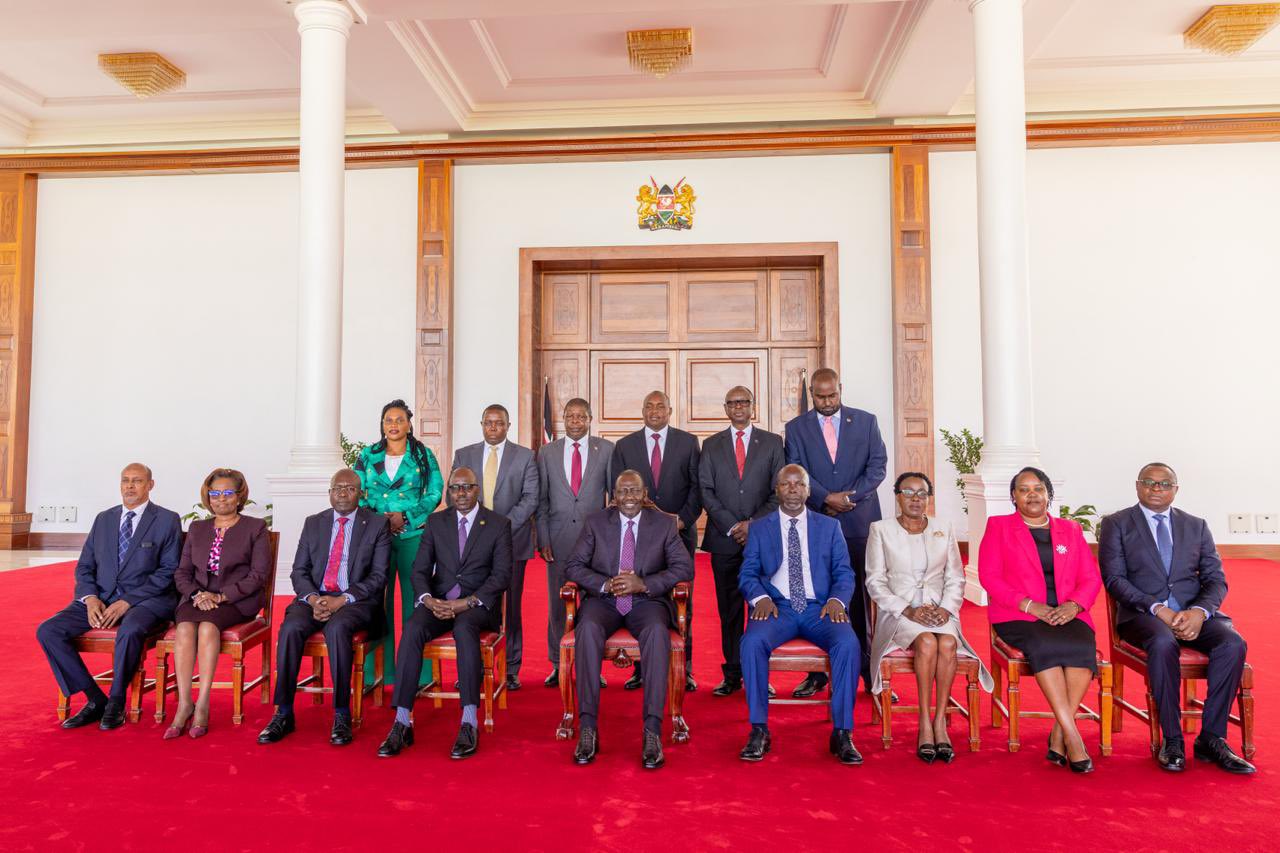
The send‑off ceremony at the State House on Tuesday showcases diplomacy as a critical instrument for national development, particularly amid shifting global economic and political landscapes.
“There is no greater honor in public service than the duty to represent one’s country internationally,” Ruto said, describing the envoys as carriers of the nation’s aspirations. “They have an express mandate to build mutually beneficial relations, protect national interests, and represent the people with dedication and integrity.”
President Ruto told the diplomats their work extends beyond ceremonial representation. Missions abroad are expected to actively pursue trade deals, attract investment, and facilitate strategic partnerships that support the government’s development agenda.
He linked the mandate to initiatives such as the National Infrastructure Fund and the Sovereign Wealth Fund, which aim to transform the economy and create employment opportunities, particularly for young people.
“These diplomats will pursue opportunities that advance our development agenda, create jobs, and accelerate shared prosperity,” Ruto said, pointing to a shift toward outcomes-driven diplomacy where embassies function as active hubs for commercial engagement and bilateral cooperation.
The government is positioning overseas missions as platforms for mobilizing capital, expanding export markets and supporting job creation, particularly for younger workers.
However, former diplomats say past efforts to turn embassies into engines of trade have been constrained by limited staffing and funding.
Before deployment, the envoys underwent a two-week pre‑departure program at the Foreign Service Academy in Nairobi, designed to equip them with skills to navigate a complex international environment.
The training covered trade promotion, climate diplomacy, security, and digital engagement.
“A diplomat is both a negotiator and a bridge-builder,” said Acting Foreign Service Academy Director-General Patrick Wamoto, urging the diplomats to demonstrate cultural intelligence, resilience, and the ability to build consensus in an era of competing global interests.
The curriculum also addressed public diplomacy, digital communications, and countering misinformation, enabling the envoys to project a positive image and strengthen the country’s global profile.
The new cohort includes a mix of career diplomats and experienced public servants whose appointments were approved by parliament in late 2025.
Their postings cover key regions in Europe, the Middle East, Africa, and Asia — areas of strategic economic, political, and cultural interest.
Among the appointments is Anthony Mwaniki Muchiri, the outgoing Chairperson of the Public Service Commission, who will serve as ambassador to Ankara, Turkey, marking a shift from a prominent domestic leadership role to international representation.
Another appointment with public recognition is Florence Chepngetich Bore, a former Cabinet Secretary for Labor and Social Protection who has been named High Commissioner to Namibia.
Other envoys include Lucy Kiruthu in Bangkok, Joseph Musyoka Masila in Riyadh, Edwin Afande in Vienna, Henry Wambuma in Bujumbura, Abdirashid Salat Abdille in Jakarta, Jayne Jepkorir Toroitich as consul general in Dubai, Judy Kiaria Nkumiri in Goma, and David Mwangi in Seoul.
These deployments reflect priorities such as trade expansion, economic diplomacy, and engagement with diverse cultural and political contexts.
Analysts say the expanded mandate comes at a time when international relations are increasingly shaped by economic competition, technology, climate risks, and global health challenges.
“As global dynamics shift, embassies and high commissions are expected to function as economic agents, not only political emissaries,” said a Nairobi-based foreign affairs analyst. “They must help local businesses access new markets while navigating complex multilateral negotiations.”