Germany’s Top Diplomat Visits to Deepen Labour, Trade and Climate Cooperation
By Chemtai Kirui
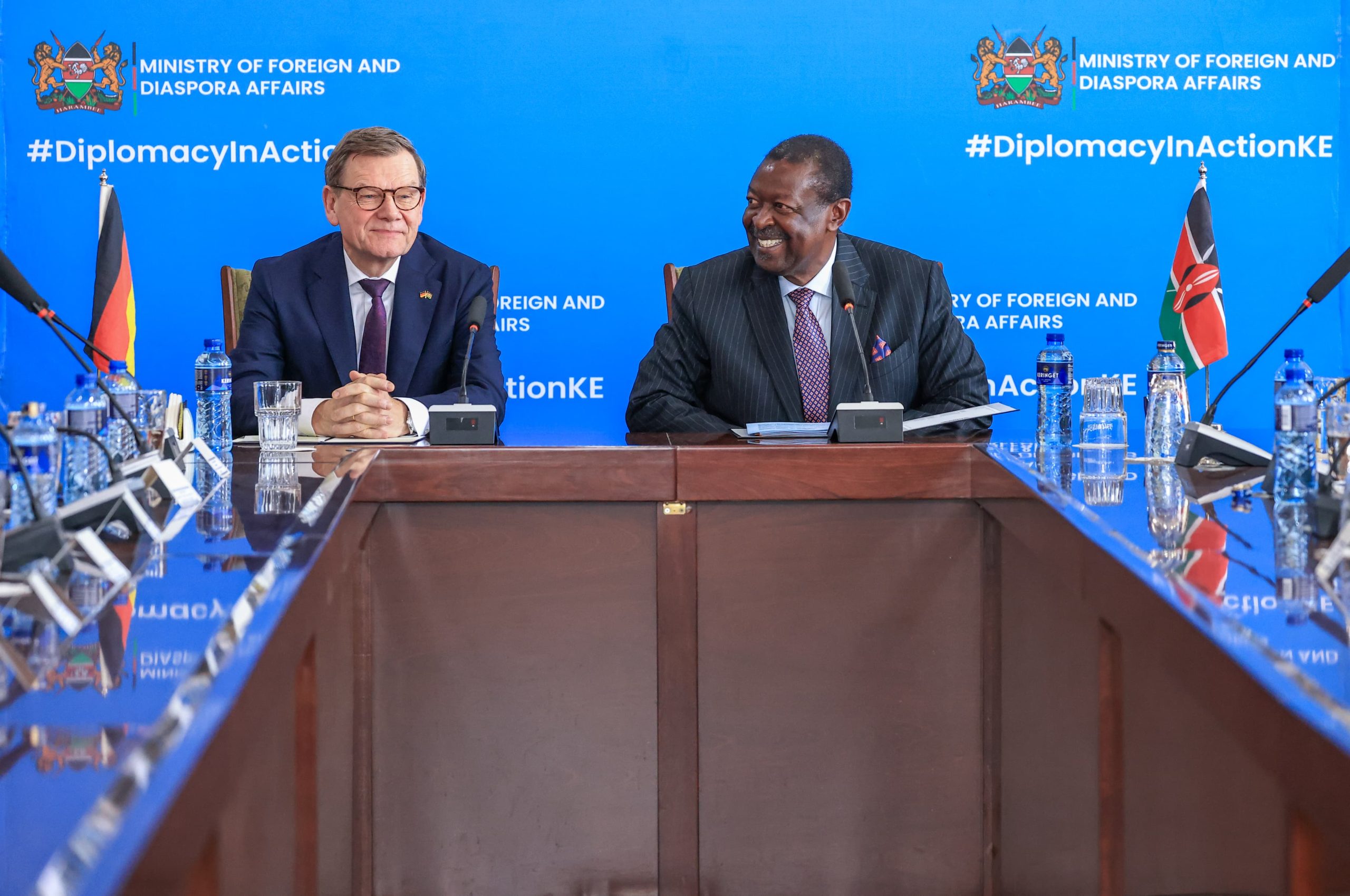
Nairobi, Jan. 21 — Germany’s Federal Minister for Foreign Affairs, Johann Wadephul, arrived earlier on Wednesday for a two-day official visit, with bilateral talks already underway to reinforce political and economic ties, expand labour mobility frameworks and boost cooperation on climate action and regional security.
Wadephul’s visit, his first official visit to Kenya since assuming the foreign affairs portfolio, signals a deepening strategic partnership between the two governments that extends beyond traditional development assistance into areas including structured labour mobility, renewable energy and trade facilitation.
The German minister was welcomed at Jomo Kenyatta International Airport by Kenya’s Ambassador to Germany, Stella Mokaya Orina, and Judy Njau, Deputy Director-General for Europe and Commonwealth Affairs at the Ministry of Foreign Affairs.
A business delegation accompanied Wadephul, underscoring the economic dimension of the visit.
During his stay, Wadephul is holding bilateral talks with Prime Cabinet Secretary Musalia Mudavadi and is expected to pay a courtesy call on President William Ruto, with discussions covering labour mobility, climate action, renewable energy, trade and regional peace initiatives.
In a statement following the talks, Mudavadi said discussions were “focused and wide-ranging,” centring on migration and mobility, climate action, renewable energy, peace and security, and multilateral engagement, building on what he described as a long-standing Kenya–Germany partnership delivering “real impact.”
A priority issue is advancing a Bilateral Labour Mobility Agreement aimed at creating structured pathways for Kenyan workers to fill labour gaps in Germany’s ageing workforce, while safeguarding workers’ rights and expanding legal employment opportunities.
Kenyan officials reiterated the government’s commitment to advancing the agreement, describing it as central to expanding legal employment pathways while protecting workers’ rights, according to a statement from the State Department for Foreign Affairs.
The framework builds on ongoing negotiations and earlier implementation steps under the broader Comprehensive Migration and Mobility Partnership between the two countries.
Officials say the pact is designed to support skilled and semi-skilled workers, enhancing remittances and skills transfer without undermining domestic labour markets.
Climate resilience and green growth are also set to feature prominently during the visit.
Kenya generates more than 90 per cent of its electricity from renewable sources, and Berlin has committed financial and technical cooperation to support Kenya’s transition to 100 per cent renewable energy, including geothermal upgrades and green hydrogen development.
Officials say the collaboration reflects shared interests in sustainable development and technology transfer, linking climate adaptation goals with investment and innovation partnerships that could benefit both countries.
The presence of a German business delegation highlights economic cooperation as a key focus of the visit, with both sides exploring opportunities to deepen trade ties and attract investment.
Germany has historically been among the largest European investors in the region, and expanding commercial engagement is seen as central to the bilateral relationship.
In recent months, Kenyan and German officials have reaffirmed commitments to strengthen cooperation across multiple sectors, including workforce skills development, renewable energy and education exchanges, laying the groundwork for sustained economic links.
Beyond bilateral matters, Wadephul’s agenda is expected to include discussions on regional peace and security, particularly in Sudan, South Sudan, Somalia and the Democratic Republic of Congo.
Both governments have expressed interest in coordinated responses to instability, humanitarian challenges and transnational threats.