Kenya Unveils One of Africa’s Largest Feed Mills as Government Moves to Increase Milk and Meat Output
By Carolyne Tomno
Athi River, 18 February 2026 — Kenya has commissioned one of the largest animal feed manufacturing facilities on the African continent, marking a significant step in the country’s plan to double milk production, tighten feed standards, and strengthen its position as a regional livestock powerhouse.
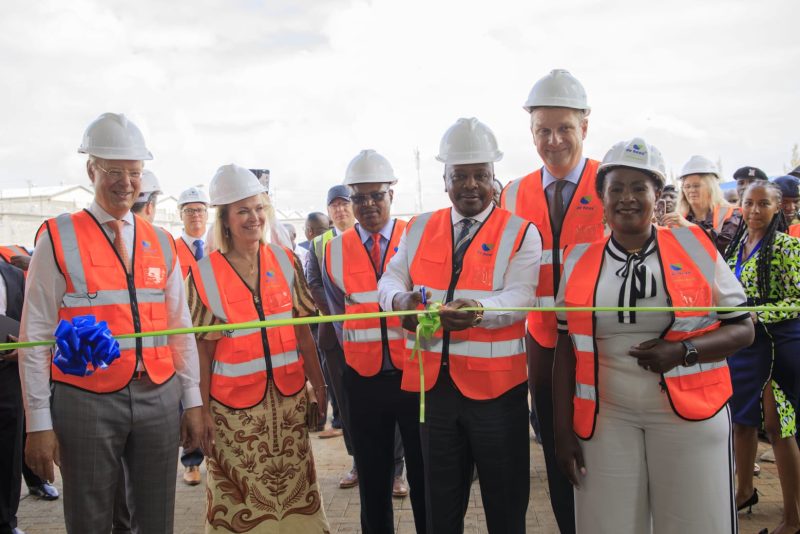
The KSh 3 billion De Heus Animal Nutrition factory in Athi River was officially inaugurated by Agriculture and Livestock Development Cabinet Secretary Mutahi Kagwe, who described the investment as central to broader structural reforms in the livestock sector.
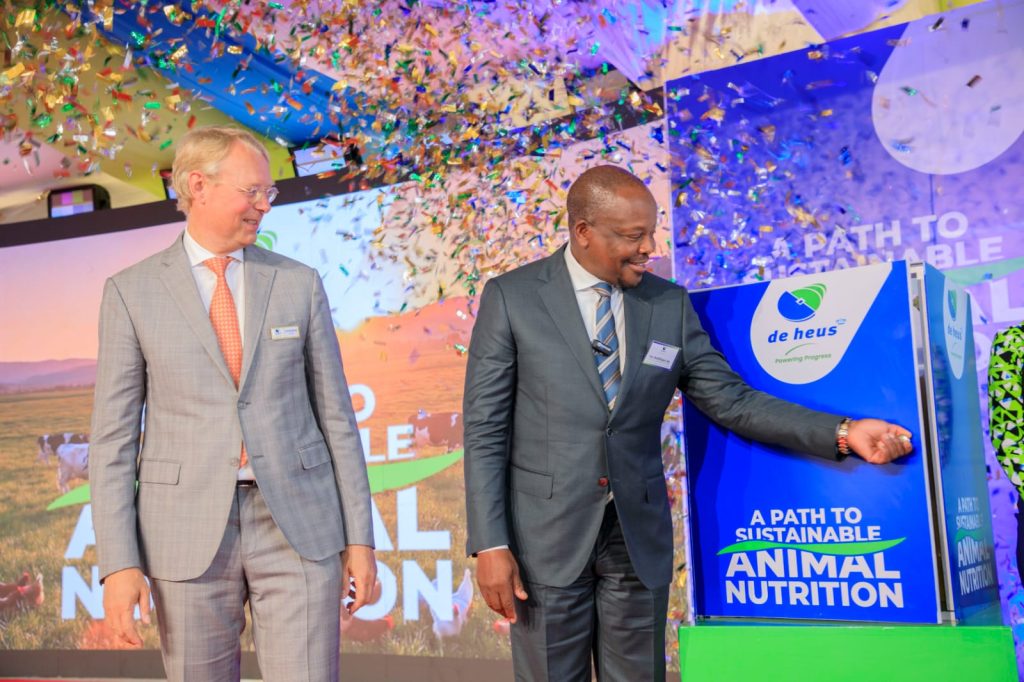
“This is not just the opening of a factory; it is a transformation of Kenya’s livestock economy,” said CS Kagwe. “We will not double production by increasing herd numbers alone. We will do it by improving productivity per animal through better nutrition, genetics, animal health, and, most importantly, quality feed.”
Kenya has set an ambitious target of increasing annual milk production from 5.2 billion litres to 10 billion litres, while also positioning itself as a net exporter of live animals and meat products.
Sector Under Review
The commissioning comes at a time when Kenya’s feed industry is under heightened scrutiny. Farmers have raised concerns over inconsistent feed quality, fluctuating performance between batches, and diluted formulations that undermine productivity.
Feed represents between 60–70 percent of livestock production costs, making consistency and quality essential for profitability.
CS Kagwe announced that government will intensify regulatory oversight and introduce a feed quality index aimed at protecting farmers from substandard products.
“Substandard and diluted feeds designed to maximise profits at the expense of farmers will not be tolerated,” he said. “Export competitiveness in milk powder, meat, and live animals depends on meeting strict quality standards, and feed quality is foundational.”
State-of-the-Art, Research-Driven Plant
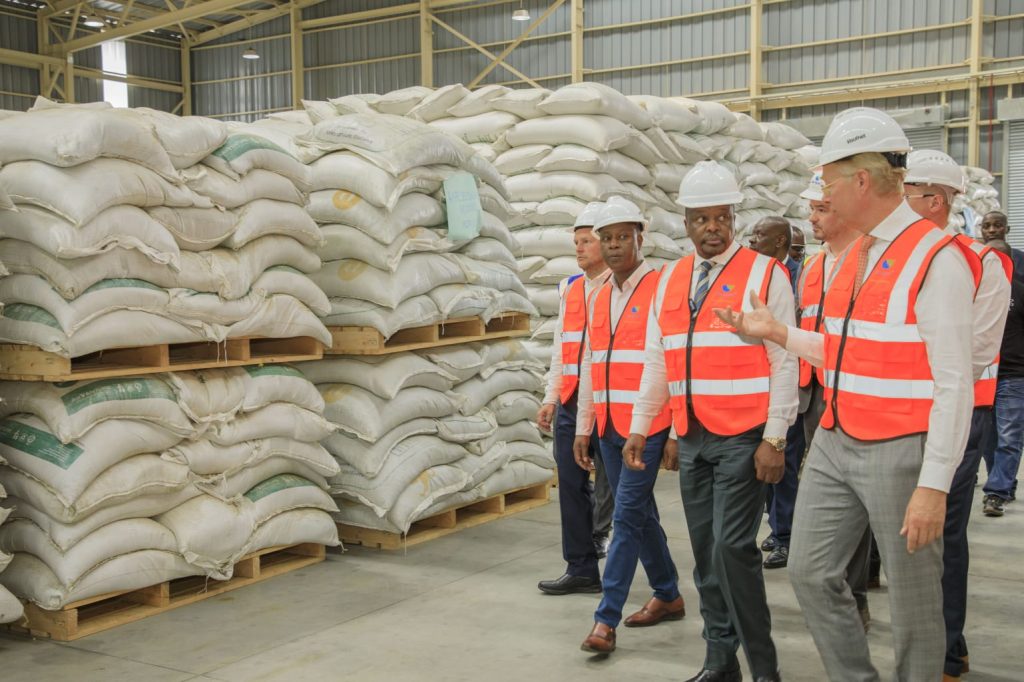
The Athi River plant represents a KSh 3 billion investment with an annual production capacity of 240,000 metric tonnes.
The facility integrates laboratory testing of raw materials, standardised formulation processes, automated manufacturing systems, and rigorous batch verification to ensure uniformity and safety.
De Heus operates as a specialised animal nutrition company rather than a vertically integrated agribusiness, positioning farmers as independent partners supported through technical advisory and knowledge transfer.
Co de Heus, Chairman of the Board, said the company’s focus goes beyond infrastructure.“Our philosophy is not simply to build factories, but to build capacity,” he said. “By working closely with farmers and partners, we transfer technical expertise and practical solutions that unlock agricultural potential.”
Globally, De Heus produces approximately 16 million tonnes of feed annually across more than 100 factories, bringing established quality control systems and technical know-how into the Kenyan market.
Wiehan Visagie, Managing Director of De Heus Kenya, said the decision to invest locally was driven by persistent industry gaps in feed reliability.
“For many farmers, feed has felt like a gamble,” he said. “Our commitment is consistent, laboratory-backed nutrition supported by advisory services and on-farm technical guidance. Productivity happens when quality feed meets knowledge.”
Feed Security and Policy Reform
Private-sector investment is unfolding alongside government reforms aimed at strengthening feed security.
Under the Land Commercialisation Initiative, government is unlocking public land for structured production of yellow maize and soybeans—key ingredients in animal feed—while integrating smallholder farmers through contract farming.
In addition, the construction of 50 dams is expected to expand irrigation capacity and reduce reliance on rain-fed agriculture. Structured feed reserves are also under consideration to cushion farmers during drought cycles.
“Feed security must be localised,” CS Kagwe emphasised. “Kenya must reduce dependence on imported feed inputs.”
Employment, County Impact and Regional Reach
The Athi River facility is expected to generate approximately 280 direct jobs, alongside additional indirect opportunities across logistics and supply chains.
Machakos Governor Wavinya Ndeti described the investment as a catalyst for agro-industrial growth and youth employment.
.
“Quality feed is the backbone of productive livestock,” she said. “Improved nutrition directly translates into better yields for poultry and dairy farmers.”
The Ambassador of the Kingdom of the Netherlands highlighted the broader partnership underpinning the project, describing the facility as a vote of confidence in Kenyan agriculture and economic growth.
Toward a Productivity-Driven Livestock Economy
The combined push for stricter feed standards, localised raw material production, laboratory-verified consistency, and farmer advisory services signals a shift from volume-driven expansion to efficiency-led growth.
The Athi River plant also represents more than a new manufacturing facility. It reflects a convergence of policy reform, private investment, and science-based production aimed at modernising Kenya’s livestock value chain and reinforcing its role in regional agricultural trade.