ODM Moves to Reshape Itself as 2027 Calculations Begin
By Chemtai Kirui
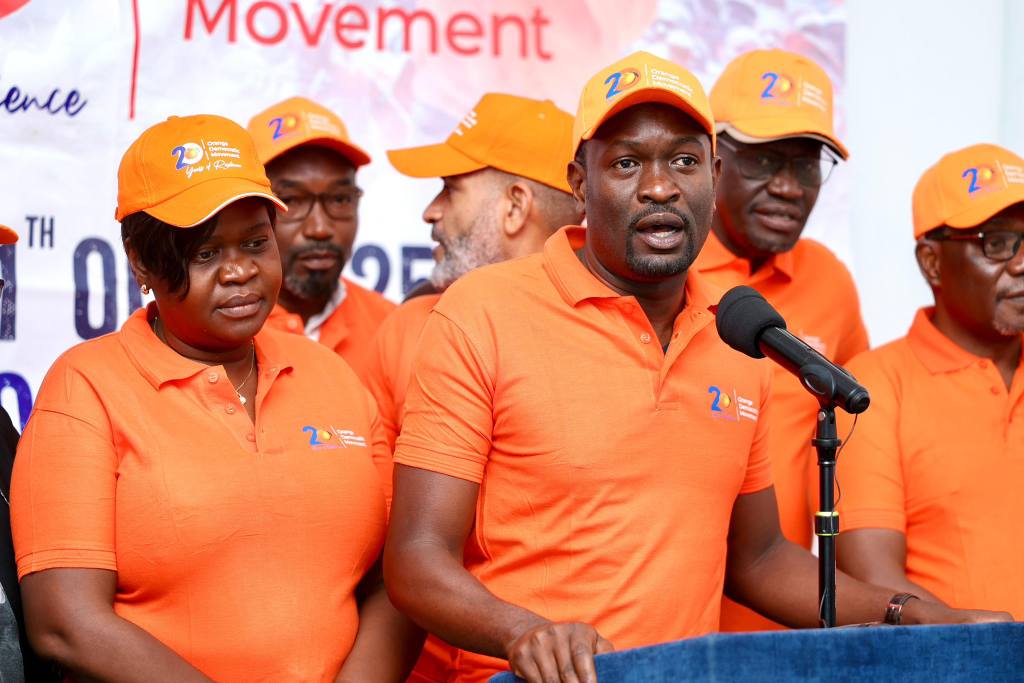
Nairobi, Feb 12 — The Orange Democratic Movement (ODM) has removed Secretary-General Edwin Sifuna and initiated a formal process to withdraw from the Azimio la Umoja One Kenya Coalition, signaling the most consequential internal restructuring within the party since the 2022 general election.
Resolutions issued after a National Executive Committee (NEC) meeting in Mombasa on February 11 said Sifuna had been relieved of his duties “with immediate effect” and that Deputy Secretary-General Catherine Nakhabi Omanyo would serve in an acting capacity pending the election of a substantive office holder.
The personnel change came alongside a decision to begin formal withdrawal from Azimio, with the NEC citing sustained breaches of the coalition’s deed of agreement by unnamed partners.
In the same sitting, the party leader was mandated to oversee pre-election coalition negotiations on behalf of ODM — consolidating strategic authority as the party recalibrates its position ahead of 2027.
Taken together, the resolutions point to institutional repositioning rather than an isolated administrative dispute.
The NEC cited “rising levels of indiscipline, particularly at the senior leadership level” and said its decision followed deliberations relating to the conduct of the Secretary-General. No further particulars were included in the statement.
Sifuna, who also serves as Nairobi Senator, has been among ODM’s most visible national figures. His removal does not affect his elective office, but it removes him from the party’s central administrative command at a pivotal pre-election stage.
Within Kenyan political parties, the Secretary-General oversees day-to-day operations, regulatory compliance, nomination coordination and internal communications discipline. Adjusting that office well ahead of primaries suggests a leadership intent on resetting command structures before coalition negotiations intensify.
ODM’s constitution permits removal of office-bearers through NEC resolutions. Article 74 outlines circumstances under which officials may cease to hold office, including disciplinary determinations.
The same provisions require that an affected office-holder be afforded an opportunity to respond — a procedural safeguard that could become relevant should the decision be formally challenged.
Precedent exists. Ababu Namwamba was removed as Secretary-General in 2016 amid internal disagreements, underscoring the role as both administrative fulcrum and political flashpoint.
Legal analysts note that while the NEC possesses internal authority, national standards of fair administrative action — including written reasons and procedural fairness — remain applicable under the Political Parties Act. Any dispute could ultimately be ventilated before the Political Parties Tribunal.
Omanyo’s elevation is structurally significant. A former educator and school founder elected in 2022 as Busia County Woman Representative, she has maintained a lower national media profile than some predecessors. Her political strength has largely been organizational rather than rhetorical.
That distinction matters at this stage of the electoral cycle.
The acting Secretary-General now assumes responsibility for regulatory filings with the Registrar of Political Parties, coordination of party organs, and oversight of nomination procedures — functions that become critical as coalition documentation and candidate preparations advance.
Appointing a sitting deputy rather than introducing a new political heavyweight limits the risk of an immediate succession contest ahead of the National Delegates Convention scheduled for March 27, where broader structural questions are expected to be addressed.
The coalition dimension carries equal weight. Under the Political Parties Act, coalitions are formal legal arrangements governed by registered agreements. Withdrawal alters parliamentary alignments, affects entitlement to coalition-linked resources and reshapes negotiation leverage.
ODM officials have written to the Registrar of Political Parties challenging recent leadership changes within Azimio, arguing they were effected outside agreed procedures.
Initiating withdrawal therefore engages a regulated legal process, not merely a political declaration.
While smaller parties have exited Azimio in previous cycles, ODM’s position as a founding pillar gives its potential departure greater consequence. The move would recalibrate opposition arithmetic ahead of 2027 and could produce multiple centres of negotiation within the opposition landscape.
Kenya’s opposition alliances have historically been fluid in the approach to elections. Realignments preceded the 2013 polls following the 2010 Constitution. The National Super Alliance (NASA) consolidated opposition forces in 2017. Further restructuring ahead of 2022 produced Azimio as the principal opposition vehicle.
What distinguishes the current episode is the simultaneous restructuring of both administrative leadership and coalition alignment well before nomination season begins.
The NEC’s language remains procedural and institutional rather than ideological. There is no public denunciation of Sifuna, no articulated break in policy direction, and no inflammatory rhetoric toward coalition partners.
The tone is constitutional, not emotional.
If ODM proceeds with formal withdrawal, the opposition framework will fragment into more autonomous negotiating blocs. That could enhance ODM’s bargaining leverage — or weaken collective cohesion in a system where unified fronts have historically shaped electoral outcomes.
The March 27 National Delegates Convention is likely to clarify whether the party’s recalibration evolves into full strategic realignment.
For now, the removal of Edwin Sifuna stands less as a personal rupture than as part of a broader institutional reorganisation unfolding within ODM — an adjustment that, in Kenya’s electoral politics, rarely occurs without calculation.