
The Confederation of African Football Hands AFCON 2027 Hosting Flag to East Africa
By Chemtai Kirui
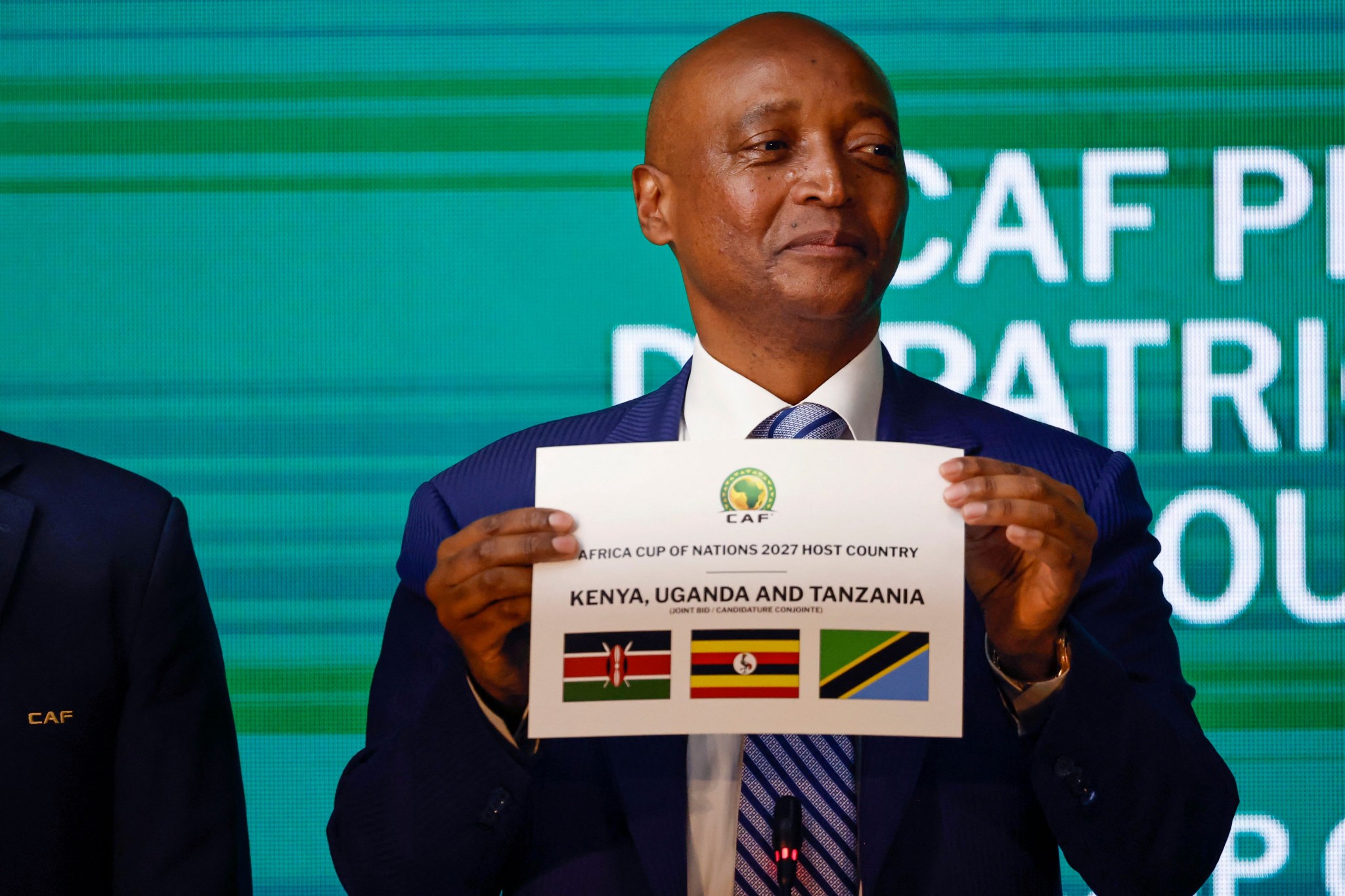
Nairobi, Jan. 19 — Kenya, Uganda and Tanzania have formally assumed responsibility for hosting the 2027 Africa Cup of Nations (AFCON) after the Confederation of African Football (CAF) handed over the official hosting flag to East African officials in Rabat, Morocco, signaling the start of full-scale tournament preparations.
The handover ceremony took place on Sunday night at Prince Moulay Abdellah Stadium shortly after Senegal defeated hosts Morocco 1–0 to win the 2025 AFCON title.
CAF President Patrice Motsepe presented the flag to representatives of the three co-hosting nations, marking the conclusion of Morocco’s hosting cycle and the official transition to East Africa.
Under the joint hosting arrangement, official AFCON matches will be played across Kenya, Uganda and Tanzania, with each country responsible for delivering CAF-certified stadiums, training facilities and tournament operations within its borders.
AFCON 2027 will mark the first time the tournament’s finals are played in East Africa. Since its launch in 1957, Africa’s flagship football competition has never been staged in the region.
The tournament has historically rotated among North, West, Central and parts of Southern Africa, with East Africa largely absent due to infrastructure limitations and hosting capacity gaps in earlier decades, even as its national teams competed regularly in continental qualifiers.
As the 36th edition of the competition, AFCON 2027 places the three host nations under sustained continental scrutiny. For Kenya, it presents a rare opportunity to demonstrate its capacity to host major international sporting events.
The handover also marks a shift from political commitment to operational delivery, placing preparations under closer CAF supervision as the country enters the technical phase of hosting, including stadium readiness, security planning, transport logistics and tournament operations.
Under CAF regulations, the flag handover activates binding host agreements that subject the three countries to scheduled inspections and performance benchmarks.
Football Kenya Federation (FKF), working alongside the Ministry of Sports, now enters a monitored period during which CAF will assess progress on infrastructure, training facilities, accommodation, transport networks and fan management.
FKF President Hussein Mohammed, who received the flag on Kenya’s behalf, said the ceremony represented the start of accountability rather than celebration, noting that the region will now be judged on delivery.
“This is where commitments are tested,” Mohammed said. “CAF will evaluate each host on what is actually completed, not what is planned.”
AFCON 2027 will be the first edition of the tournament to be hosted by three countries, under a shared hosting model approved by CAF to distribute financial and infrastructural demands.
Kenya is expected to host a portion of the group-stage matches, with Nairobi positioned as one of the tournament hubs.
Planned venues include the under-construction Talanta Sports Stadium, Nyayo National Stadium and Kasarani Stadium, which previously hosted the 2017 IAAF World Championships.
CAF rules require each host nation to present at least two fully certified stadiums and multiple training grounds that meet international standards before final match allocations are confirmed.
Sports Principal Secretary Elijah Mwangi, who attended the handover, said that the immediate focus would be meeting CAF’s inspection criteria rather than expanding venue ambitions.
“CAF does not sign off on intentions. They sign off on finished facilities,” Mwangi said.
East Africa’s joint hosting of the 2025 African Nations Championship (CHAN) served as a preparatory exercise for CAF, particularly in cross-border coordination, security management and fan movement.
While CHAN operates under lower technical and commercial demands than AFCON, CAF officials have said the tournament provided useful insights into the region’s hosting capacity.
AFCON, however, presents significantly higher requirements, including global broadcasting obligations, commercial partnerships and larger team delegations, standards that CAF has said will not be diluted.
Concerns have been raised publicly about the pace of stadium development in Kenya, particularly the construction timeline of Talanta Stadium. CAF has maintained that hosting rights remain intact but has stressed that progress will be assessed against strict milestones.
The CAF regulations states that ‘failure to meet agreed deadlines can result in matches being reassigned within the host bloc, potentially reducing Kenya’s share of fixtures if facilities are not completed on time.’
Motsepe, addressing the ceremony, said CAF remains committed to expanding major tournaments across the continent but warned that hosting standards would not be compromised.
“We want AFCON to grow across Africa, but the requirements remain firm,” he said.
With the hosting flag now officially transferred, CAF inspection teams are expected to begin routine site visits across Kenya, Uganda and Tanzania later this year.
Final venue approvals, match allocations and tournament scheduling will follow once facilities are certified.